 QIDAMT
304 Stainless Steel Sheet 2B Finish: Thickness Tolerance, Flatness and Cutting
304 Stainless Steel Sheet 2B Finish: Thickness Tolerance, Flatness and Cutting
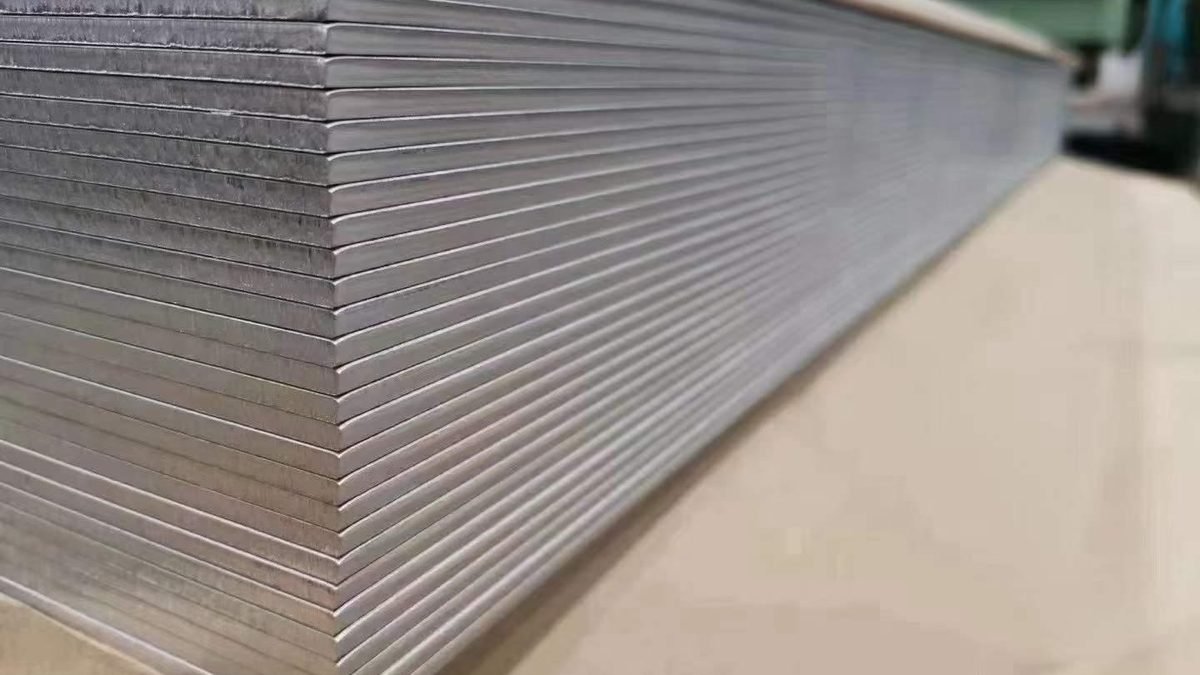
A 304 stainless steel sheet with a 2B finish is the standard cold rolled, annealed and skin passed product that most fabricators mean when they ask for stainless sheet. It is grey white, mildly reflective, smooth to the touch and free of the directional grit lines that a No.4 brushed finish leaves. It is produced in coil and supplied either as coil or as cut to length sheet, and it is the material behind kitchen equipment, commercial sinks, food machinery panels, process tanks, elevator car interiors and a very large share of general sheet metal work.
The 2B designation describes a surface condition, not a thickness, not a grade and not a flatness class. A purchase order that says only “304 2B sheet 1.2 mm” leaves three things open: the thickness tolerance, the flatness and the edge condition. Those three variables decide whether the sheet will run through a laser cutter without lifting, whether a welded tank will come out square, and whether a visible facade panel will show oil canning under site lighting. This guide works through each of them.
Only one product is covered here: flat rolled 304 sheet in the 2B condition, in the thickness range normally supplied as sheet rather than plate. Coil slitting, plate in the 3 mm and above range, BA finish and No.4 finish are separate products with their own tolerances and should be ordered against their own specifications.

What 2B Actually Means in Production
The sequence is fixed. A hot rolled black coil is pickled to remove scale, then cold rolled on a reversing mill to the ordered thickness, which work hardens the strip and destroys the ductility. The coil is then annealed at 1040 to 1120 degrees Celsius to restore the austenitic structure and soften it, pickled again to remove the oxide that the anneal leaves, and finally skin passed through a two high mill with polished rolls at a light reduction.
That skin pass is what makes the finish 2B rather than 2D. It flattens the surface, removes the dull grey appearance left by pickling, and imposes a small, controlled amount of work hardening that helps the sheet resist handling marks. The reduction is small, typically under 1.5 percent, so the mechanical properties remain those of an annealed product. After skin passing the strip is tension levelled, which is the step that decides flatness, and then either coiled or cut to length and filmed.
Two consequences follow. First, 2B is not a polished finish, so it cannot be used where a mirror reflection is specified. Second, the skin pass and tension level are the reason two suppliers can quote the same nominal specification and deliver sheets that behave differently on a press brake: the chemistry and thickness may match while the residual stress pattern does not.
Grade and Chemistry
The common grade is 304, the 18 percent chromium, 8 percent nickel austenitic alloy. Sheet for welding is frequently ordered as 304L to avoid sensitisation in the weld and heat affected zone. The limits below are the standard ones for flat rolled product to ASTM A240.
| Element, percent | 304 | 304L |
|---|---|---|
| Carbon, max | 0.07 | 0.030 |
| Manganese, max | 2.00 | 2.00 |
| Phosphorus, max | 0.045 | 0.045 |
| Sulphur, max | 0.030 | 0.030 |
| Silicon, max | 0.75 | 0.75 |
| Chromium | 18.0 to 20.0 | 18.0 to 20.0 |
| Nickel | 8.0 to 10.5 | 8.0 to 12.0 |
| Nitrogen, max | 0.10 | 0.10 |
The carbon difference looks trivial and is not. A 304 sheet welded into a tank wall at 3 mm thickness will cool fast enough that sensitisation is limited, but a 304 sheet welded repeatedly in a heavy fabrication, or stress relieved at 600 degrees Celsius, can precipitate chromium carbide at the grain boundaries and lose corrosion resistance exactly where the weld is. Ordering 304L costs a small premium and removes the argument about whether the weld was properly annealed.
Nickel at 8 percent is the minimum that keeps the structure fully austenitic at room temperature after cold rolling and annealing. Cheaper sheet with nickel at the low end of the range and manganese pushed high will still pass a certificate and may still be called 304, but it will be more magnetic after forming, will work harden faster, and will be less forgiving in deep drawing. Buyers who form the sheet heavily should ask for the nickel and copper values, not only the chromium.
Mechanical Properties in the 2B Condition
Skin passing raises the yield strength slightly relative to a fully soft annealed sheet, but the product is still supplied against the annealed property requirements. Use these values for design and for setting press brake tonnage.
| Property | 304 sheet | 304L sheet |
|---|---|---|
| Tensile strength, min | 515 MPa | 485 MPa |
| Yield strength, min (0.2 percent offset) | 205 MPa | 170 MPa |
| Elongation in 50 mm, min | 40 percent | 40 percent |
| Hardness, max | 92 HRB | 92 HRB |
| Density | 7.93 g per cubic centimetre | 7.93 g per cubic centimetre |
| Mass of 1 mm sheet, 1 square metre | 7.93 kg | 7.93 kg |
The mass figure is the one to keep in mind when comparing quotes. A 1.2 mm sheet at 1219 by 2438 mm weighs 7.93 times 1.2 times 1.219 times 2.438, which is about 28.3 kg. A supplier who quotes a price per sheet at a nominal thickness of 1.2 mm but delivers at the minus tolerance of 1.15 mm has delivered about 27.1 kg, roughly four percent less metal for the same price. That is not fraud; it is the tolerance system working as written. The remedy is to order on minimum thickness when the weight matters, or to buy on actual weighed mass.
Thickness, Width and Flatness Tolerances
The table below reflects normal commercial practice for cold rolled 304 sheet in widths up to 1250 mm. The governing standard and the mill’s own tolerance table always take precedence, and the purchase order should name the standard rather than assume it.
| Characteristic | Typical requirement | How it is checked |
|---|---|---|
| Thickness, 0.4 to 0.5 mm | plus or minus 0.03 mm | Micrometer, 10 mm in from the edge, five points |
| Thickness, 0.5 to 1.0 mm | plus or minus 0.04 mm | Micrometer, mid width and quarter points |
| Thickness, 1.0 to 1.5 mm | plus or minus 0.05 mm | Micrometer, five points per sheet |
| Thickness, 1.5 to 2.0 mm | plus or minus 0.06 mm | Micrometer or ultrasonic gauge |
| Thickness, 2.0 to 3.0 mm | plus or minus 0.08 mm | Micrometer, both ends and centre |
| Width, slit sheet | plus 0.5 mm, minus 0 mm | Tape or laser gauge at three positions |
| Length, cut to length | plus 5 mm, minus 0 mm | Tape measure, both diagonals |
| Squareness, diagonal difference | 3 mm maximum on a 1219 by 2438 mm sheet | Measure both diagonals and compare |
| Flatness, standard | 6 mm per metre of length | Sheet on a flat table, feeler gauge under a straight edge |
| Flatness, tension levelled | 3 mm per metre of length | Same method, table checked first |
| Camber | 3 mm maximum in 2 m | String line along the edge |
| Surface | No scratches, roll marks, pits or inclusions visible at 300 mm | Visual under diffuse light, film removed |
Flatness is the tolerance that buyers underestimate. A sheet within 6 mm per metre will cut and weld, but a sheet at the edge of that allowance will rock on the laser bed, lift between the clamps on a press brake, and show a visible wave when installed as a flat panel. If the sheet is destined for a visible surface, specify the tension levelled flatness class and inspect it on a known flat table before accepting the delivery. A sheet that has been stored on an uneven rack for weeks will take a set that no tolerance clause covers, which is why storage belongs in the purchase conversation.
Cutting, Forming and Welding the Sheet
Laser cutting is the normal process for 2B sheet up to about 3 mm, and the finish tolerates it well because the surface is smooth and the oxide is thin. The practical issues are focus, assist gas and nesting. Nitrogen gives a clean, oxide free cut edge on 304 and is the correct choice where the edge will be visible or welded without pickling. Oxygen gives a faster cut but leaves an oxidised edge that must be removed before welding.
Bending 304 requires more force than bending carbon steel of the same thickness, roughly 1.5 to 1.7 times, because the yield strength is higher and the work hardening rate is steeper. Springback is significant: a 90 degree bend on 1.5 mm sheet may need 2 to 3 degrees of overbend to land at 90 degrees after release. The bend radius should be at least the sheet thickness for a sharp bend and at least twice the thickness where cracking is a risk, and the bend line should run across the rolling direction rather than along it where the part geometry allows. Bending along the rolling direction concentrates strain at the edges and produces edge cracking on tight radii.
Welding 304 sheet means TIG or laser with a matching filler, a clean joint, and an argon purge on the back where the weld will see product or moisture. Heat input should be low and the interpass temperature controlled. After welding, the heat tint must be removed by pickling or by mechanical means followed by passivation, because the tinted zone is chromium depleted and will corrode first. A tank that is welded and left with blue and straw coloured welds will show rust at the welds within months even in fresh water.
Deep drawing is where the grade and the nickel content matter most. 304 draws well but work hardens quickly, so a multi-stage draw needs an intermediate anneal. Sheet with nickel at the bottom of the range and high manganese will need more stages and will show more earring. For a deep drawn sink bowl or a cookware shell, buy from a mill that publishes forming data rather than from a stockist who can only supply chemistry.
How to Select Thickness and Finish
Start from the application, not from the gauge the last job used. For a commercial sink or a kitchen worktop, 1.2 mm is the common choice: thick enough to resist denting and to carry a welded bowl without distortion, thin enough to form. For a large tank wall, thickness is a structural decision driven by hydrostatic pressure and stiffener spacing, and 2 mm to 3 mm is typical for tanks up to a few cubic metres. For architectural cladding and elevator panels, 1.0 mm to 1.5 mm is normal and flatness matters more than strength.
Finish selection is a separate decision. 2B is the default for anything that will be formed, welded or machined after delivery, because it is the cheapest and the most forgiving. BA is a brighter, smoother finish produced by bright annealing, and it is chosen for appliances and reflectors where appearance matters and forming is light. No.4 is a brushed finish with visible directional grain and is chosen where scratches must be masked and a matte look is wanted. 8K is a mirror polish and belongs only on flat, visible, non-structural surfaces.
Thickness should be ordered in millimetres, not in gauge. Gauge numbers are not consistent across suppliers, and a “20 gauge” request can produce 0.8 mm from one mill and 0.9 mm from another. The order should state the nominal thickness, the tolerance class and whether the requirement is nominal or minimum. Where the sheet will be rolled or formed, the thickness tolerance also sets the springback, so a change of 0.05 mm in a 1.0 mm sheet changes the bend allowance noticeably.
Edge condition belongs on the order as well. A mill edge is the coil edge as produced and may carry a slight burr or a rolled over lip. A slit edge is sheared and straighter but may have a small burr on one side. A laser cut or machined edge is the cleanest and the most expensive. For sheet that will be handled by operators without gloves, specify a deburred slit edge; for sheet that will be welded edge to edge, specify the edge condition and the allowable burr height.
Common Mistakes in 2B Sheet Ordering and Use
The first mistake is expecting 2B to look like a mirror. It is a skin passed, pickled surface with a diffuse sheen; under direct light it will show a soft reflection and not a clear image. A buyer who rejects a compliant 2B delivery for not being reflective has ordered the wrong finish.
The second is ordering by gauge. The third is ignoring flatness until the laser cutter jams. The fourth is leaving the protective PVC film on the sheet through welding or through a summer on site. The adhesive cures under heat and sunlight, and removal then takes the surface with it or leaves a residue that cannot be cleaned without abrasive. Film should be removed within the manufacturer’s stated period, and always before welding, because the film traps heat and its residue contaminates the weld pool.
The fifth is measuring thickness at the very edge of a slit sheet, where the shear can leave a slight lip. Measure 10 mm in from the edge. The sixth is accepting a certificate that lists only chemistry and no mechanical properties; a 2B sheet certificate should show tensile, yield, elongation and hardness, because the anneal and skin pass are the process that the buyer is paying for.
The seventh is storage. Sheets stored flat on timber, under cover, with the film intact and the edges protected, will arrive at the fabricator in the condition they left the mill. Sheets stored on edge against a wall, or on uneven ground, take a permanent set; sheets stored with water between them develop stain and pitting that no tolerance clause covers. The eighth is mixing 304 and 304L on one project without marking them, which ends with the wrong grade in the wrong weld.
Frequently Asked Questions
Is 2B sheet the same as cold rolled sheet? 2B is the finish applied to cold rolled sheet after annealing and pickling. Cold rolled describes the rolling route; 2B describes the final surface. A cold rolled sheet can also be supplied as 2D, BA or No.4 depending on the last operation.
What is the difference between 2B and BA? Both are smooth and bright, but BA is produced by bright annealing in a controlled atmosphere without pickling, so it has a higher reflectivity and a cleaner surface. BA costs more, is less available in heavy thicknesses and shows handling scratches more readily. 2B is the workhorse and BA is the appearance grade.
Can I weld 304 2B sheet without pickling afterwards? You can weld it, but the weld and the heat tint will corrode first if the oxide is left. Pickle the weld zone and passivate, or use a low heat input process and mechanical cleaning followed by passivation where pickling is not practical.
How do I convert thickness to weight? Multiply the thickness in millimetres by 7.93 to get kilograms per square metre. A 1.5 mm sheet is 11.9 kg per square metre; a 1219 by 2438 mm sheet at that thickness is about 35.4 kg.
Why does my sheet show a wave after installation? Either the flatness was at the loose end of the tolerance, or the sheet was stored badly, or the fixing method pulls the panel against an uneven frame. Check the sheet on a flat table before installation, and specify tension levelled flatness for visible surfaces.
Does 2B sheet need to be passivated before use? A mill supplied 2B sheet is already passive. Passivation is needed after welding, after mechanical cleaning with iron-bearing tools, or after the surface has been contaminated. Cleaning with a non-chloride detergent is enough for normal fabrication.
Need 304 2B Sheet Cut to Size?
We supply 304 and 304L sheet in 2B finish, slit to width or cut to length, with thickness and flatness inspection reports and protective film applied. Send the thickness, the flatness class, the sheet size and the edge requirement, and we will confirm stock and lead time.
Related products on this site: 304 2B cold rolled stainless sheet and 316L stainless steel plate.

