 QIDAMT
C12200 Copper Tube: Temper, Grain Size and Bend Formability
C12200 is the phosphorus-deoxidised copper that almost every HVAC and refrigeration tube is made from. The phosphorus does two jobs: it deoxidises the melt so the tube does not suffer hydrogen embrittlement when brazed, and it leaves a small residual that slightly reduces conductivity without harming formability. What makes or breaks a coil is the annealed temper and the grain size behind it, because those two numbers decide whether the tube bends without splitting.
What C12200 Tube Is
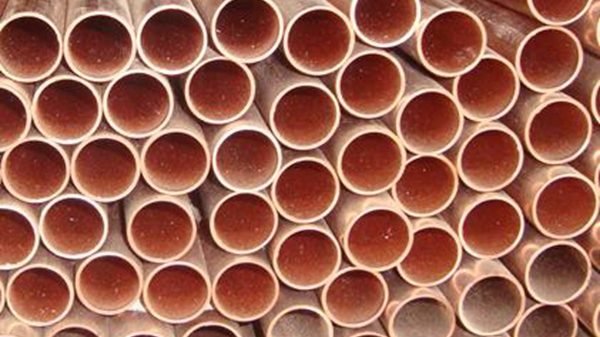
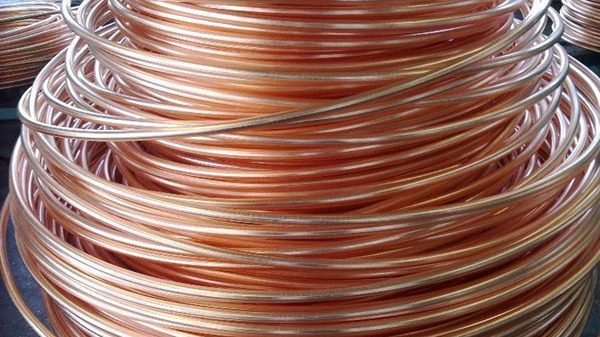
C12200, also called DHP copper (deoxidised high phosphorus), is a 99.9 percent copper with 0.015 to 0.040 percent phosphorus. It is produced as hard-drawn straight length, as soft annealed pancake coil, and as level-wound coil for large refrigeration charges. In the soft temper the tube is annealed after the final draw, so the whole cross-section recrystallises and the tube can be bent, flared and swaged on site without cracking.
The grade is specified under ASTM B280 for air-conditioning and refrigeration field service, ASTM B88 for water tube, EN 1057 for European plumbing, and GB/T 18033 in China. They describe the same family of tube but differ in temper designations, wall tolerances and cleanliness limits, so the standard must be named on the purchase order rather than implied by the word “copper tube”.
Where It Is Used
The largest use is refrigerant line sets and evaporator or condenser coils in split air-conditioning, chillers, heat pumps and commercial refrigeration. A second group is potable water and heating pipe in the soft or half-hard temper, where the tube is bent around obstructions and joined by capillary fittings. A third group is medical gas and oxygen service, which uses the same alloy with a much tighter cleanliness and capping specification.
C12200 is chosen for thermal conductivity, corrosion resistance in fresh water, and the fact that it can be brazed without flux in a nitrogen purge. It is not the right grade for seawater, where 90-10 cupronickel or aluminium brass is used, and it is not the right grade for high-pressure steam, where the wall and temper must be engineered rather than selected from a catalogue.
Grade and Chemical Composition
The phosphorus range is narrow for a reason. Below about 0.015 percent the deoxidation is incomplete and the tube is vulnerable to hydrogen embrittlement during brazing; above about 0.040 percent the phosphorus starts to depress conductivity and can form brittle phosphide films at grain boundaries. The balance is copper plus a small allowance of impurities.
| Element | Cu | P | Ag | Bi | Pb | Fe | Others |
|---|---|---|---|---|---|---|---|
| Wt. % | 99.90 min | 0.015-0.040 | 0.015 max | 0.0005 max | 0.01 max | 0.01 max | 0.05 max total |
ASTM B280 / B88 limits for C12200. Conductivity is typically 99.9 percent IACS at the low end of the phosphorus range.
Mechanical Properties
The temper designation is the one line that decides how the tube behaves in the hand. O60 is soft annealed, suitable for bending; H58 is hard drawn, suitable for straight runs that do not need forming. A soft coil that has work-hardened in storage or been re-drawn will crack at the first bend, and a hard length bent on site will split along the seam.
| Property | O60 soft annealed | H58 hard drawn | Basis |
|---|---|---|---|
| Tensile strength | 205-250 MPa | ≥ 310 MPa | ASTM B280 |
| Yield strength, 0.2% | ≥ 60 MPa | ≥ 250 MPa | Typical |
| Elongation in 50 mm | ≥ 40% | ≥ 12% | ASTM B280 |
| Hardness | ≤ 55 HRF | ≥ 75 HRF | Typical |
| Grain size | 0.040 mm max average | Not specified | ASTM B601 |
| Thermal conductivity | 99.9% IACS | 99.9% IACS | At 20 °C |
| Density | 8.89 g/cm³ | 8.89 g/cm³ | Nominal |
Grain size is the hidden variable: a coarse grain gives a rough surface and orange-peel on bending, a very fine grain gives higher strength but less ductility.
Dimensions and Tolerances
Air-conditioning tube is bought in imperial outside diameters because the flare and braze fittings are imperial. Plumbing tube is increasingly metric in Europe and Asia. The wall is specified as average or minimum, and the difference matters at the brazed joint, where a thin wall will not support the capillary gap.
| Parameter | Imperial ACR | Metric | Tolerance |
|---|---|---|---|
| Outside diameter | 1/4″ to 1-5/8″ | 6-54 mm | ±0.05 mm up to 12 mm |
| Wall thickness | 0.76-1.32 mm | 0.6-2.0 mm | ±10%, min wall governs |
| Coil length | 15 / 25 / 50 m | 25 / 50 m | ±1% |
| Coil inner diameter | 150-300 mm | 150-300 mm | Free |
| Straight length | 3-6 m | 3-6 m | +10 / -0 mm |
| Ovality, as supplied | ≤ 3% | ≤ 3% | At coil ends |
| Ovality after 3D bend | ≤ 10% | ≤ 10% | Measured at the bend |
| Camber | ≤ 5 mm per 3 m | ≤ 5 mm per 3 m | Straight length |
ACR dimensions follow ASTM B280; metric dimensions follow EN 1057 or GB/T 18033. Do not mix fitting standards on one job.
How the Tube Is Made
Casting and extrusion
The billet is continuously cast or vertically cast, then extruded through a mandrel to form a hollow shell. Extrusion temperature is about 750 to 900 °C, and the shell is quenched and pickled before drawing. A clean billet with controlled phosphorus gives a uniform grain after the final anneal; a billet with lead or bismuth above the limit will crack during drawing.
Drawing and annealing
The shell is cold drawn through a series of dies and plugs, with intermediate anneals, down to the finished wall. The final anneal for soft coil runs at about 600 to 650 °C in a bright-annealing atmosphere of nitrogen and hydrogen, followed by controlled cooling. Temperature above about 700 °C coarsens the grain and produces a rough inner surface; too low a temperature leaves the tube partially work-hardened and it will crack at a tight bend.
Coiling, cleaning and capping
Soft tube is coiled on a mandrel, then cleaned and dried. ACR tube is purged with dry nitrogen and capped at both ends so that the bore stays at a dew point below -40 °C until the cap is removed. The cap is part of the product, not a shipping convenience: a coil that sits open in a humid store will absorb moisture and ice up the expansion valve on first start-up.
Bending, Flaring and Brazing
Soft coil bends around a mandrel or a spring bender. The minimum bend radius is about 3 times the outside diameter for a hand bender and 1.5 to 2 times the OD for a powered bender with a mandrel. A tighter radius flattens the bore and reduces flow; a bend that collapses more than 10 percent ovality should be cut out and remade. Annealed tube can usually be bent once without re-annealing, but a second bend in the same place work-hardens the wall.
Flaring is a strain operation. Use the flare block matched to the tube OD, lubricate the cone, and stop when the flare seat contacts the fitting. Over-flaring splits the tube behind the flare; under-flaring leaves too little sealing surface. For a 1/2 inch tube, the flare should be about 45 degrees and the wall behind it should not thin below the minimum.
Brazing uses a copper-phosphorus filler such as BCuP-2 or BCuP-5 for copper-to-copper joints, with no flux required, and a silver-phosphorus filler where the joint is copper to brass. Purge with dry nitrogen at a low flow during heating; an oxidised bore will shed scale into the refrigerant circuit and block the strainer. Heat the joint evenly, not the fitting alone, and let it cool in air rather than quenching.
Cleanliness, Dew Point and Evacuation
ACR tube is sold clean and dry, and the specification has numbers behind those words. The bore must be free of drawing lubricant, oxide and particulate, and the sealed coil must hold a dew point below -40 °C. A residue limit of about 0.038 grams per square metre of internal surface is the usual acceptance figure in ASTM B280 practice. That sounds trivial until a 50 metre coil with a dirty bore deposits its residue in a 0.8 mm capillary and blocks the metering device.
Field cleanliness is a separate problem. Once the cap is removed, the clock starts. Purge the line with dry nitrogen while brazing, keep the open end capped when the joint is not being made, and do not leave a coil lying open on a site overnight. Before charging, evacuate to below 500 microns and hold for at least 30 minutes with the pump isolated; a rise above 1,000 microns in ten minutes means moisture or a leak is still present.
If the system has been open for a long time, triple evacuation with nitrogen breaks between stages is more effective than one long pull. Each nitrogen break raises the pressure and helps sweep moisture out of the oil and the tube bore. Do not use a refrigerant flush to “dry” a wet line; it moves the moisture rather than removing it.
Pressure, Wall and Safety Factors
The wall thickness is not decorative. For R410A systems running at higher pressures than R22, the same OD needs a heavier wall, and the allowable pressure falls as the temperature rises because copper softens above about 100 °C. A 3/8 inch tube with 0.81 mm wall is common for R22; the same OD in R410A work often moves to 0.91 mm or thicker. Check the system design pressure against the tube’s allowable pressure at the maximum operating temperature, not at ambient.
Brazed joints are usually the limiting feature, not the tube. A joint that is overheated loses temper locally, and a joint that is underfilled has a stress concentration at the fillet toe. Pressure-test at 1.5 times the design pressure with dry nitrogen, hold for the specified period, and soap-test every joint rather than sampling. A leaking joint found at commissioning costs far more than the hour spent testing.
Coil Handling and Jobsite Storage
A pancake coil is a spring. Dropping it or letting it unwind under tension puts a kink in the tube that cannot be straightened without reducing the wall. Store coils upright on their side, on a pallet, with the cap in place, and lift with a cradle rather than a single hook. When pulling a coil, rotate it on a turntable or a de-reeler so the tube comes off straight; pulling over the edge of the coil work-hardens the outside wall and ovalises the bore.
Cut the tube with a rotary cutter set for copper, then ream the burr and blow through with dry nitrogen before connecting. A burr left in the bore acts as a throttle and a wear point. Do not use a hacksaw if a rotary cutter is available; the saw leaves chips that end up in the metering device.
Selection and Ordering Rules
- State the standard: ASTM B280 for ACR, ASTM B88 for water, EN 1057 or GB/T 18033 for metric plumbing.
- State the temper: O60 for bending, H58 for straight runs.
- State average wall or minimum wall, and the value in millimetres, not just the OD.
- For ACR, require nitrogen purge and capped ends on every coil.
- For medical gas, add the cleanliness and dew-point requirement to the order.
- Ask for the grain size on the certificate when the tube will be bent on a powered bender.
- For long coils, agree the coil ID and weight so the uncoiler and the crane can handle them.
Common Mistakes
- Using hard-drawn tube for a bend because the store had no soft coil. It will split at the crown.
- Bending below 3D without a mandrel, then wondering why the system loses capacity.
- Leaving the coil uncapped in a humid workshop overnight; the bore absorbs water and the first evacuation takes hours.
- Brazing without a nitrogen purge and trusting the filter drier to catch the oxide.
- Using a phosphide filler on copper to brass without flux; the joint looks fine and leaks at pressure test.
- Over-annealing to make the tube softer, which coarsens the grain and roughens the bore.
- Mixing imperial and metric fittings on one line; the flare seats do not match and the joint leaks at the cone.
- Storing coils on a concrete floor where the bottom layer takes the weight and ovalises.
FAQ
What does DHP mean in C12200?
Deoxidised high phosphorus. The phosphorus removes oxygen from the melt so the copper does not embrittle when it is heated for brazing. The residual phosphorus is deliberately kept in a narrow range so conductivity stays high.
Can I bend hard-drawn C12200 tube?
Not to a tight radius. Hard-drawn tube has about 12 percent elongation and will crack or split at the crown. Use soft O60 coil for any bend below about 5D, or anneal the length before bending.
What bend radius should I allow?
Three times the OD for hand bending, 1.5 to 2 times the OD for a powered bender with a mandrel. Check ovality after the bend; above 10 percent the bore is restricted and the bend should be replaced.
Why does the tube need caps?
The cap keeps dry nitrogen in the bore. An uncapped coil absorbs atmospheric moisture, which freezes at the expansion valve and can also oxidise the inner surface. Keep caps on until the moment of joint assembly.
Is C12200 suitable for seawater?
No. Copper-nickel 90-10 or aluminium brass is used for seawater because C12200 pits and erodes in flowing chloride water, especially at velocities above about 1.5 m/s.
What grain size should a soft coil have?
An average of 0.040 mm or finer, measured per ASTM B601. Coarse grains give orange-peel and a rough bore; very fine grains raise strength and reduce ductility. Ask for the value on the certificate.
For the matching flat copper products, see the C12200 DHP copper tube page and the C11000 copper plate page. Send OD, wall, temper, coil length and standard with your enquiry.
Send Your C12200 Tube Specification
OD, wall, temper, coil length and standard are enough for a quotation.

