 QIDAMT
ASTM A36 Carbon Steel Plate
Hot-rolled structural plate from 3 mm to 150 mm — cut to size, mill test certificate, export packing.
ASTM A36 is the reference general-purpose carbon steel plate grade in North America and in much of the export market. It combines a 250 MPa minimum yield strength with wide availability, predictable welding behaviour and a low cost per tonne. QIDAMT supplies A36 plate hot rolled, optionally pickled and oiled, cut to width and length, with mill test certificates to EN 10204 3.1 on request.
This page explains what the grade actually guarantees, which sizes are practical to buy, how the plate behaves in cutting, welding and forming, and which mistakes cause rejections at goods-in inspection. It is written for buyers, fabricators and engineers who need plate that arrives flat, within tolerance and ready to mark out.
What ASTM A36 Plate Is and Where It Is Used
ASTM A36/A36M is a specification for carbon structural steel covering shapes, plates and bars. The grade is defined by chemical limits and by minimum mechanical properties measured on a tensile test. It is not a fine-grain, low-temperature or high-strength grade: it is the everyday structural steel against which other grades are compared.
Because the specification is performance-based rather than tied to one mill practice, A36 plate is produced by many mills and is easy to source in small and large quantities. Typical applications include:
- Base plates, anchor plates and connection plates in steel frames
- Platform decks, walkways, stair stringers and machine guards
- Brackets, gussets, jigs, fixtures and temporary works
- Support structures for tanks, silos, conveyors and crushers
- Repair plate, patch plate and general maintenance fabrication
- Trailer decks, chassis reinforcement and agricultural equipment
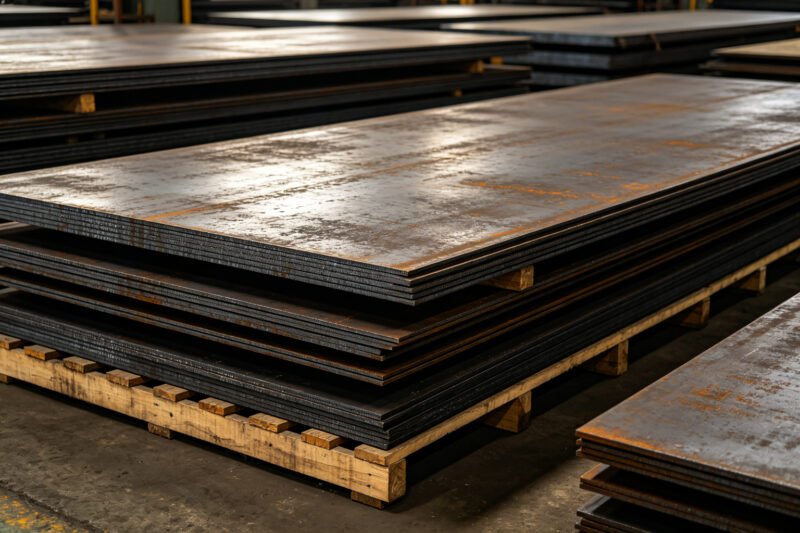
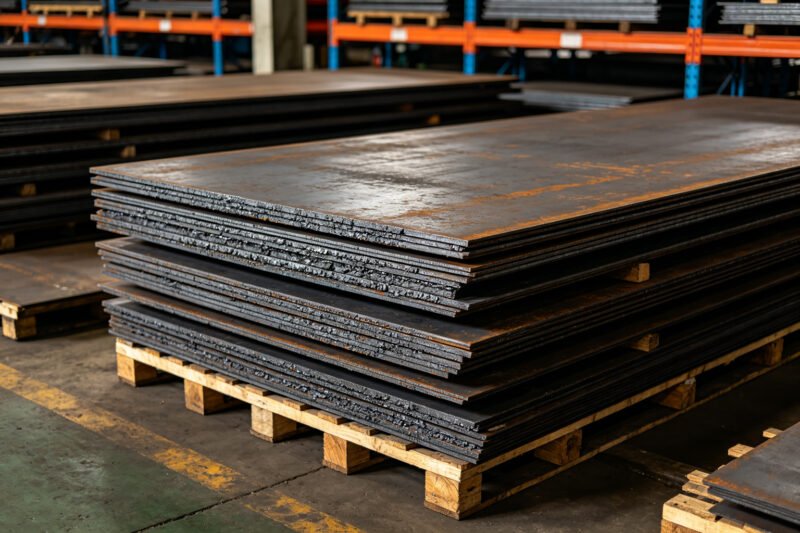
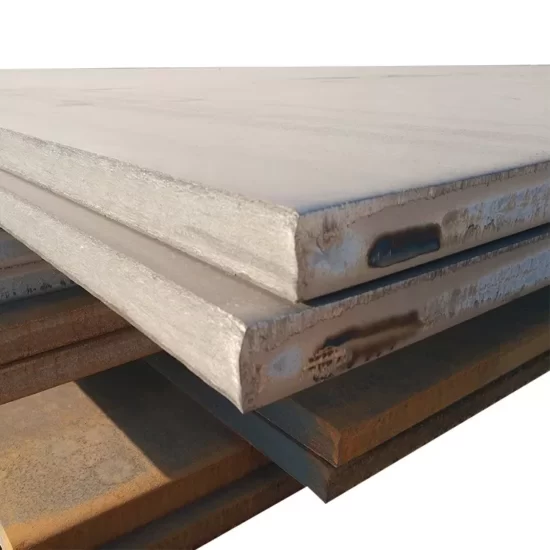
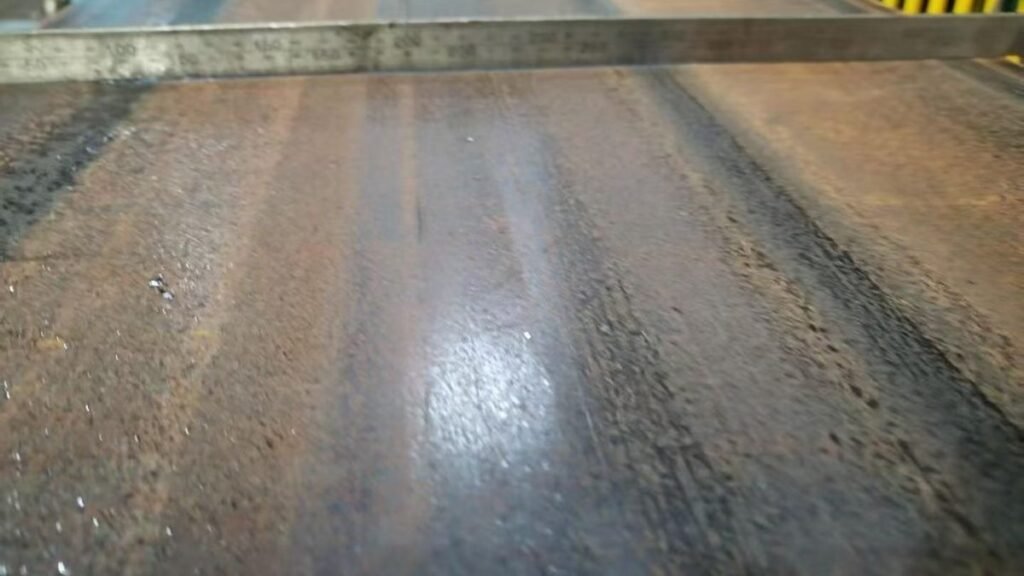
A36 is normally supplied in the as-rolled condition with a dark mill scale surface. For painting, the scale should be removed by blasting or pickling; for unpainted structural work it is usually acceptable as rolled, provided the surface is dry and free of loose rust.
Chemical Composition
The table below gives the heat-analysis limits of ASTM A36. Product analysis tolerances over the heat analysis are permitted under ASTM A6, so a certificate may show values slightly outside these ranges while still conforming.
| Element | Limit (%) | Practical note |
|---|---|---|
| Carbon (C) | 0.26 max | Keeps weldability acceptable without preheat for normal sections |
| Manganese (Mn) | 0.80 – 1.20 | Provides strength and toughness balance |
| Phosphorus (P) | 0.040 max | Residual element; higher values reduce ductility |
| Sulphur (S) | 0.050 max | Residual element; controls inclusion level |
| Silicon (Si) | 0.40 max | Deoxidation residual |
| Copper (Cu) | 0.20 min when copper steel is specified | Improves atmospheric corrosion resistance |
Carbon equivalent is not specified by A36, but for thickness above roughly 25 mm the combination of carbon and manganese still matters for welding. If the plate will be welded in a restrained joint, ask for the actual heat chemistry rather than only the grade statement.
Mechanical Properties
| Property | Requirement | Test basis |
|---|---|---|
| Yield strength | 250 MPa (36 ksi) minimum | 0.2% offset method |
| Tensile strength | 400 – 550 MPa (58 – 80 ksi) | Transverse or longitudinal specimen |
| Elongation, 200 mm gauge | 20% minimum | ASTM A370 |
| Elongation, 50 mm gauge | 23% minimum | ASTM A370 |
| Density | 7.85 g/cm³ | Used for weight calculation |
The 250 MPa yield is a minimum, not a typical value. Commercial A36 plate usually tests between 250 and 320 MPa yield and 450 and 520 MPa tensile, which is why the grade feels soft under a drill and bends readily. Do not use the minimum value as an expected value for deflection calculations; use the mill certificate for the heat actually supplied.
Thickness, Width and Length Range
The specification does not fix a stock range; what is available depends on the mill. The following range is what QIDAMT can normally offer from stock or on short lead time.
| Item | Range | Common stock sizes |
|---|---|---|
| Thickness | 3 – 150 mm | 6, 8, 10, 12, 16, 20, 25, 30, 40, 50 mm |
| Width | 1000 – 3000 mm | 1500, 2000, 2200, 2500 mm |
| Length | 3000 – 12000 mm, or cut to length | 6000, 12000 mm |
| Edge condition | Sheared or flame cut | Sheared up to about 25 mm |
| Surface | As rolled, pickled and oiled, primed | Pickled and oiled on request |
Thickness is the first cost driver, followed by width and cut pattern. If you need many small pieces, buying a wider plate and nesting can be cheaper than buying pre-cut strips, but only when the scrap pattern is planned. Ask for a nesting sketch before fixing the order size.
Tolerances, Flatness and Surface Condition
A36 plate is ordered to ASTM A6 dimensional tolerances unless the purchase order states otherwise. The values below are typical mill practice and are given for planning; for a contractual order, quote the ASTM A6 table that applies to the thickness and width you are buying.
| Characteristic | Typical value | What it means in the workshop |
|---|---|---|
| Thickness, 3 – 6 mm | ±0.4 mm | Check with a micrometre, not a tape |
| Thickness, 6 – 12 mm | ±0.6 mm | Undersize plate reduces section capacity |
| Thickness, 12 – 25 mm | ±0.8 mm | Allow for it in machined parts |
| Thickness, 25 – 50 mm | ±1.0 mm | Flame-cut edge quality also varies |
| Width, sheared | +5 / 0 mm | Trim allowance for square edges |
| Length, sheared | +10 / 0 mm | Order net length plus trim |
| Camber | About 1% of length, max | Straighten before layout on long rails |
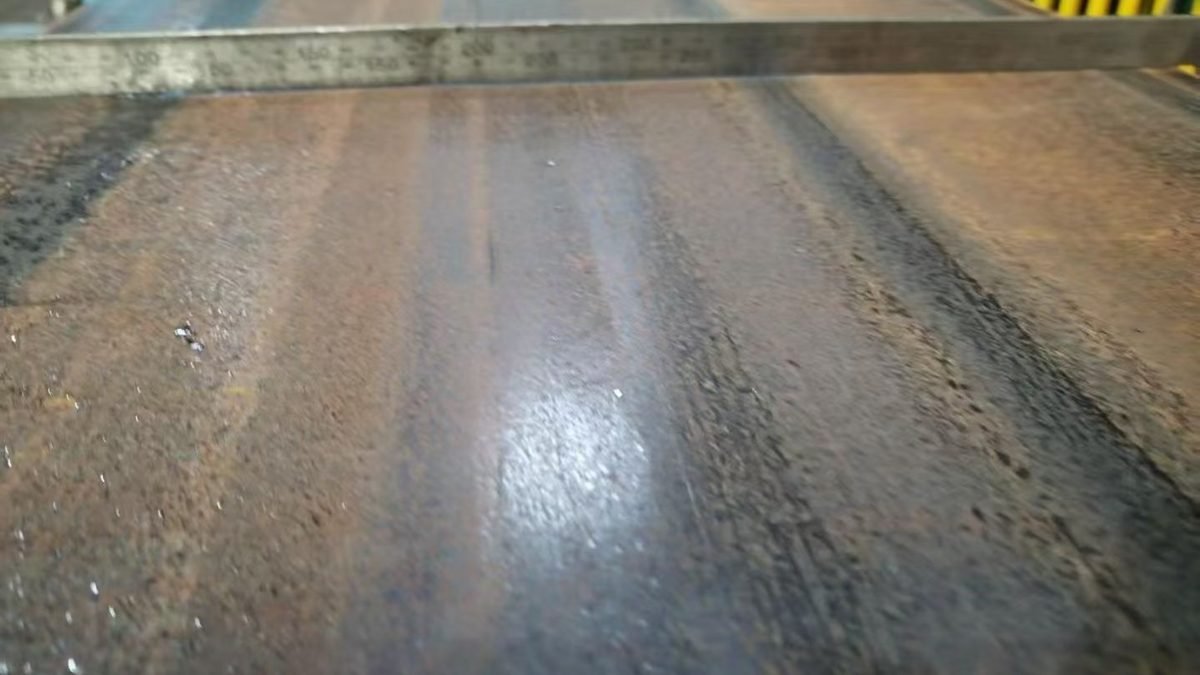
Flatness is the tolerance most often ignored and most often disputed. A plate that is within thickness tolerance can still be bowed enough to rock on a table. If the plate will be machined flat or used as a reference surface, specify flatness explicitly and expect to pay for straightening or for a thicker starting section.
Surface condition matters for coating. Mill scale is tightly adhered oxide; painting over it without blasting gives premature adhesion failure. Pickled and oiled plate removes scale and leaves a light oil film that must be degreased before welding or painting.
Fabrication Notes
Cutting
Shearing is economical up to about 25 mm and gives a clean square edge with slight edge distortion. Above that, flame cutting is normal; plasma cutting is faster and gives a narrower heat-affected zone on thinner plate. Laser cutting is practical on thin A36 but the oxide edge can affect subsequent welding if not cleaned.
Whatever the process, remove the dross and scale from the cut edge before welding. A wire brush on a grinder is enough; a flap disc is better where the edge will be visible.
Welding
A36 welds readily with covered electrodes, MIG/MAG or submerged arc. For matching strength, use E70XX electrodes (70 ksi tensile). For thin plate and general fabrication, E6013 or E7018 both work; E7018 low-hydrogen electrodes are preferred for thicker sections, restrained joints and structural work.
Preheat is not normally required below about 25 mm for routine fabrication, but thick plate, high restraint, low ambient temperature and wet conditions all increase cracking risk. In those cases preheat to 100 – 150 °C, keep the interpass temperature under control and use low-hydrogen consumables stored dry.
Forming and machining
A36 bends easily. Minimum bend radius depends on thickness and direction relative to the rolling direction; as a rule of thumb, allow 1.5 – 2 times thickness for a 90° bend with a generous inside radius, and more for thick plate or tight radii. Cold bending across the rolling direction reduces the safe radius.
The grade machines acceptably but produces a built-up edge on high-speed tooling. Use sharp HSS or carbide, flood coolant and a slightly positive rake. Do not expect the dimensional stability of a pre-machined plate: stress relief may be needed for close-tolerance parts cut from thick plate.
How to Specify and Select A36 Plate
Thickness selection
Choose thickness from the load case, not from what is on the shelf. For a base plate under a column, bearing pressure on concrete usually governs; for a bracket, bending and bolt tear-out govern; for a deck, deflection usually governs. A useful first check is to keep deflection under L/250 for walkways and L/360 for sensitive equipment, then confirm stress.
A36 against Q235B and A572 Gr. 50
A36 and Q235B are both 250/235 MPa class structural steels and are often treated as interchangeable. They are not identical: the chemistry limits, tolerance tables, certification language and marking differ. If the drawing cites ASTM A36, supply A36 with an A36 certificate; substituting Q235B without written approval creates a traceability problem at inspection.
When strength rather than cost governs, A572 Gr. 50 (345 MPa yield) or Q355B (355 MPa) allows a thinner plate and lower weight, but welding consumables and preheat rules change accordingly. Do not simply swap a 20 mm A36 plate for a 16 mm Gr. 50 plate without rechecking stiffness: yield strength does not improve deflection.
Edge, finish and documentation
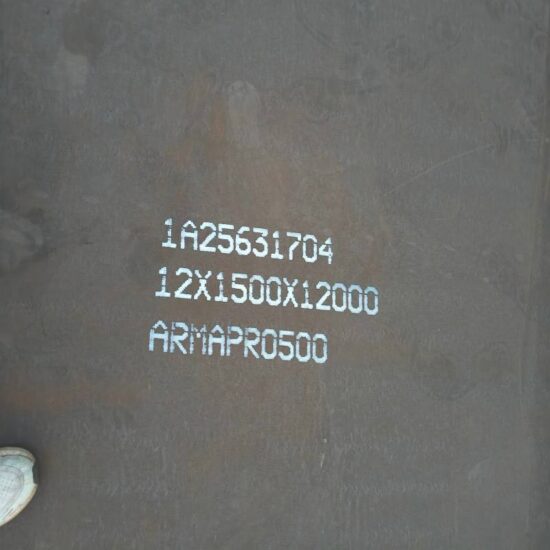
State the edge process (sheared, flame cut, machined), the surface (as rolled, pickled and oiled, primed) and the documentation (mill test certificate, heat number traceability, third-party inspection). If the plate will be exported, confirm that the certificate format is accepted by the destination authority before the mill rolls the heat.
Common Mistakes
- Treating A36 and Q235B as the same grade on a certified job. The mechanical class is similar; the specification is not.
- Ordering by nominal thickness only. Undersize plate at the tolerance limit can fail a section check.
- Welding thick, restrained joints without preheat or low-hydrogen consumables, then blaming the steel for cracking.
- Painting over mill scale without blasting, then reporting poor paint adhesion six months later.
- Cutting with a worn shear and accepting a rolled-over edge that will not sit flat in a jig.
- Storing plates on uneven ground so that the stack takes a permanent set before delivery.
- Using A36 for low-temperature service without impact testing. A36 is not an impact-tested grade.
Packing, Marking and Export Delivery
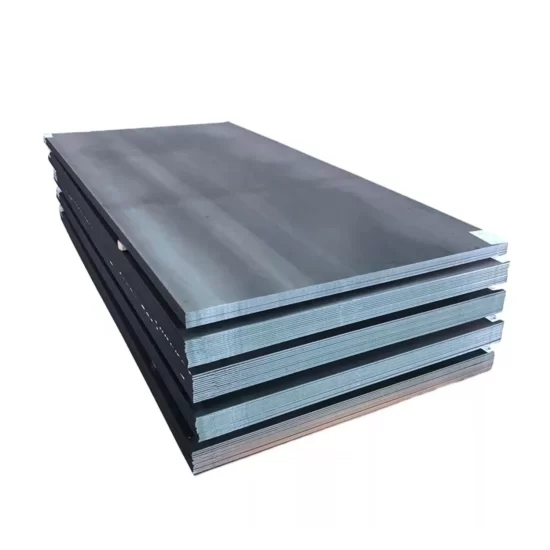
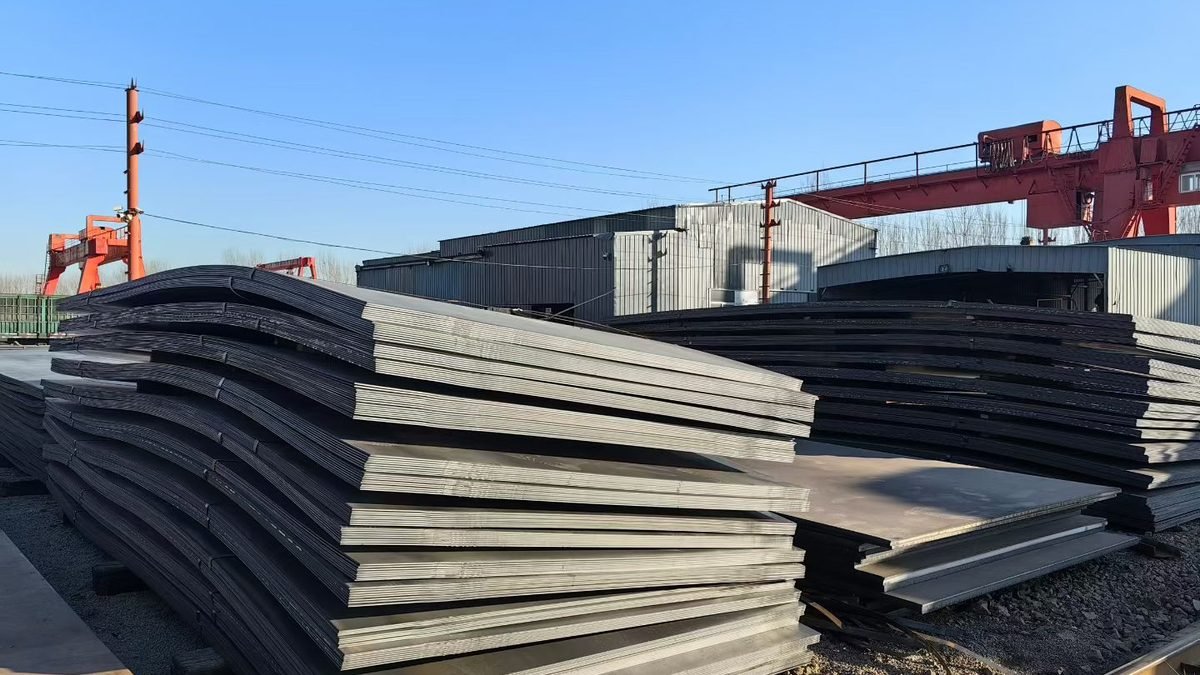
Plate is packed in strapped bundles with timber dunnage between layers, sized to suit the container or flat rack. Each bundle carries the grade, size, heat number and piece count. For container loading, plates are usually loaded on the floor with timber bearers and blocked against movement; long plates may need a flat rack rather than a standard container.
Standard export documentation includes the packing list, commercial invoice, mill test certificate and, where required, certificate of origin. If you need third-party inspection before shipment, book it before the bundle is closed — reopening a strapped bundle for inspection adds cost and risk.
Frequently Asked Questions
Is ASTM A36 plate equivalent to Q235B?
For many non-critical applications they behave similarly, and both are carbon structural steels with a yield strength in the 235 – 250 MPa class. They are not formally equivalent: chemistry limits, tolerances and certificates differ. On a job that names A36, supply A36.
What is the maximum thickness you can supply?
Standard stock runs to 150 mm; heavier plate can be rolled on request. Above 50 mm, confirm flatness, edge condition and ultrasonic inspection requirements before ordering.
Can A36 plate be galvanized?
Yes. A36 is suitable for hot-dip galvanizing provided the silicon content is controlled. Very high silicon can give a thick, brittle coating; if the plate is for galvanizing, tell us at the enquiry stage so the heat can be selected.
Do you supply cut-to-size pieces?
Yes. We cut to width and length, and can supply nested blanks or profile-cut parts. Send a DXF or a dimensioned sketch with quantities and edge requirements.
What documentation comes with the plate?
A mill test certificate showing chemistry and mechanical properties, with heat number traceability, is standard. EN 10204 3.1, third-party inspection and pre-shipment photos are available on request.
Related Products
- Q235B Hot Rolled Carbon Steel Plate
- Q355B Low Alloy High Strength Steel Plate
- Q235B Carbon Steel Channel
Send thickness, width, length, quantity, edge condition and destination port. We confirm price, tolerance and lead time within 24 hours.
REQUEST A QUOTE