 进步
镀锌钢管: Threaded vs Grooved Connection
镀锌钢管: Threaded vs Grooved Connection
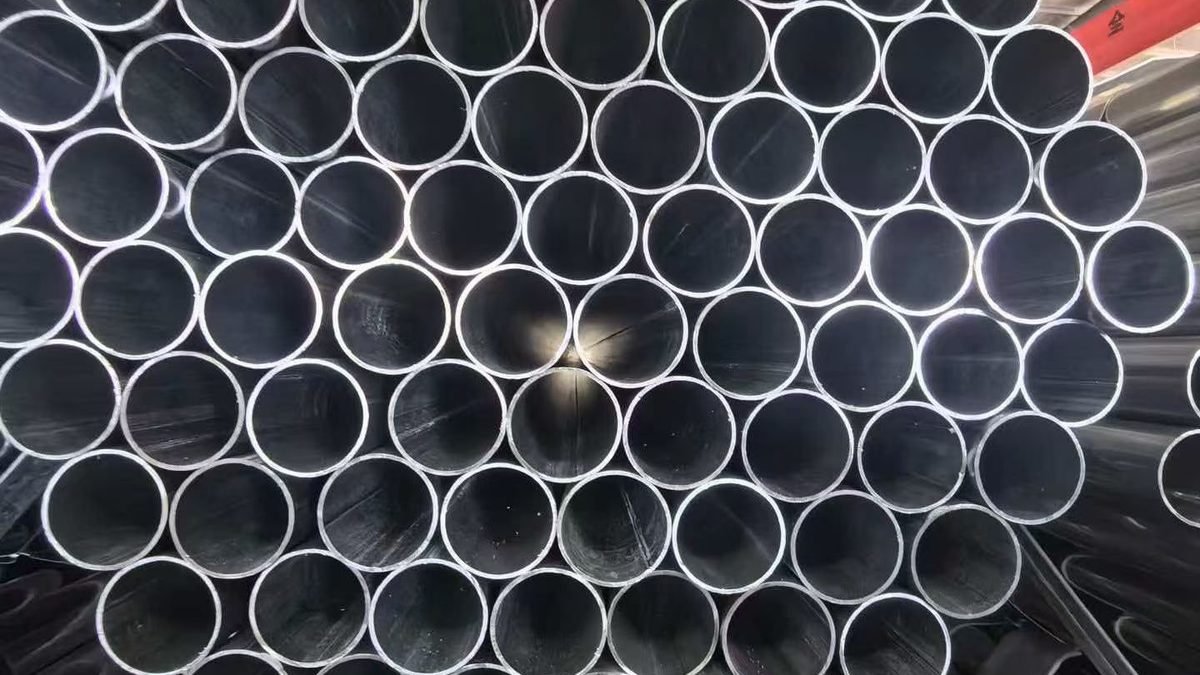
Galvanized steel pipe is still the default material for fire sprinkler mains, standpipes, compressed air lines, plant water services and temporary structures. The pipe itself is simple: a welded carbon steel tube, hot-dip galvanized inside and out. The decision that shapes cost, schedule and service life is how the joints are made.
Two methods dominate: threaded joints and grooved mechanical joints. Both are code-recognised, both are used on the same project, and both can fail in ways that have nothing to do with the pipe. This guide compares them on material loss, pressure rating, installation labour, corrosion behaviour, maintenance and the site conditions that should push you to one or the other.
1. The Pipe Itself
Galvanized pipe for building services is normally made from Q235B or S195T welded tube, galvanized after welding by the hot-dip process. The zinc layer is typically 60–85 µm thick on the outside and 40–70 µm inside, corresponding to a coating mass of about 400–600 g/m² total. Hot-dip galvanizing after welding is what seals the weld seam; pre-galvanized coil that is welded into tube leaves a bare strip at the seam that rusts first.
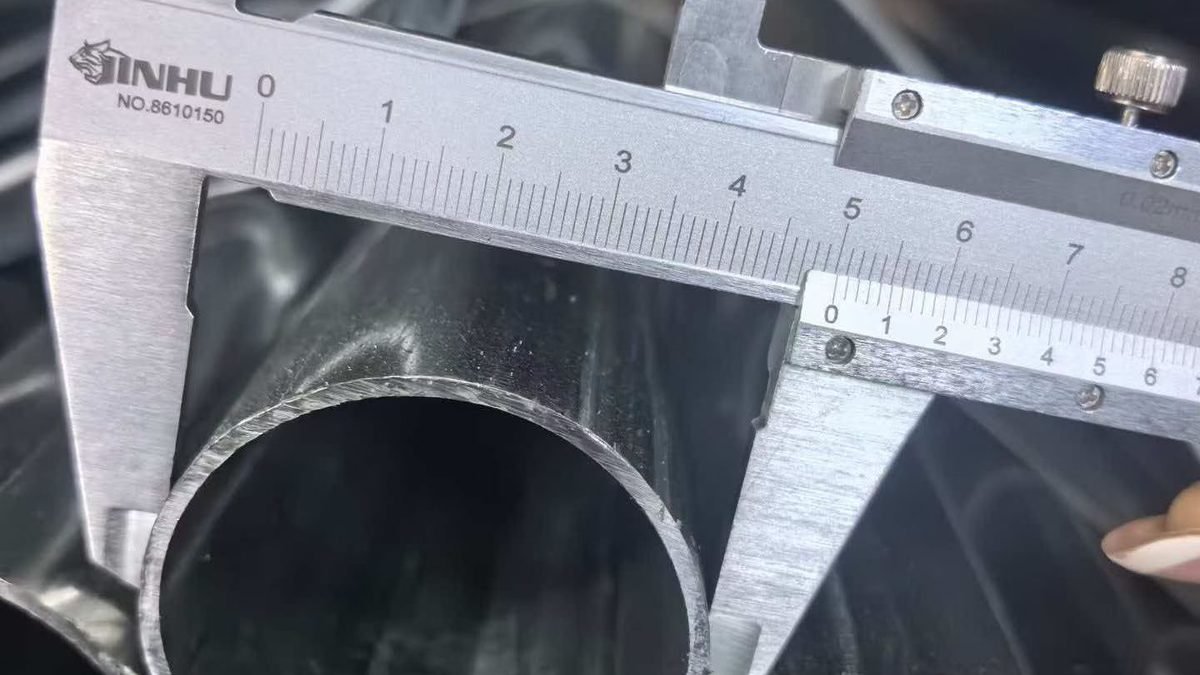
Pipe is specified by nominal bore (DN) with an outside diameter that is larger than the bore, so that a DN50 pipe measures 60.3 mm outside. Wall thickness is specified by schedule or by class: 日程 40 for standard pressure service, 日程 80 for higher pressure, and light/medium/heavy classes under EN 10255.
The galvanized coating is both a barrier and a sacrificial anode. Where the coating is intact, it isolates the steel from water and oxygen. Where it is scratched or cut, the zinc adjacent to the exposed steel corrodes first and protects the steel at the edge of the damage. That is why a cut thread or a groove is not automatically a corrosion failure, and also why the repair detail at a cut end matters so much.
2. Threaded Joints
A threaded joint is cut into the pipe wall with a die head, and the fitting is screwed on. The thread is tapered (NPT to ASME B1.20.1, or BSPT to ISO 7-1), so the joint seals by wedging the male thread into the female thread, with sealant filling the spiral gap.
The critical fact is that threading removes metal. A standard Schedule 40 pipe loses about 10 % of its wall at the thread root, and the effective pressure rating of a threaded joint is therefore lower than the rating of the plain pipe. That loss is accounted for in the code ratings, but only if the thread is cut to the correct length. Over-threading — running the die too far — removes more wall than the fitting can cover, and the joint fails at the unthreaded portion just behind the last engaged thread.
Threading also strips the galvanized coating from the thread and from the cut face. The exposed steel at the thread root is protected only by the sealant and by the zinc on the pipe adjacent to it. In dry compressed air service that is usually acceptable. In a wet sprinkler main, the uncoated thread root is the first place to rust, and the rust products eventually block the smallest sprinkler orifices.
Practical rules for threaded work: cut threads with sharp dies and a good cutting oil; use the correct thread length for each size (大致 10 mm for DN15 to 25 mm for DN80); chamfer the pipe end before threading to avoid a raised lip; apply a zinc-rich repair compound to the exposed thread and cut face before assembly; use PTFE tape or anaerobic sealant compatible with the service; and tighten with a proper wrench, not a pipe extension, because over-torque splits fittings.
Threaded joints are cheap in material and expensive in labour. A fitter with a portable threader can make a joint in two to four minutes, but the work is repetitive, physically demanding and hard to inspect. On large projects, thread-cutting stations are usually set up off-site, with pipe cut and threaded in batches.
3. Grooved Joints
A grooved joint uses a mechanical coupling with an elastomer gasket. The pipe end is either roll grooved or cut grooved, and the coupling housing engages the groove and compresses the gasket against the outside diameter.
Roll grooving is the standard method for building services. A roll groover presses a forming wheel into the rotating pipe, displacing metal rather than removing it. The wall is not cut, the zinc coating is compressed but not stripped over most of the circumference, and the groove depth is shallow — typically 1.5–2.5 mm depending on size. Cut grooving removes metal like a lathe tool and is used where the wall is thick enough and where the pipe is not going to be galvanized again.
The pressure rating of a grooved joint depends on the coupling, the wall thickness and the gasket material, not on the groove alone. Standard couplings on Schedule 40 pipe are rated to 2.0–2.5 MPa for small sizes and lower for large sizes; the manufacturer’s data sheet governs. Grooved joints also allow angular deflection of 1–2° per joint and limited axial movement, which is useful for long runs and for accommodating thermal expansion.
Installation is fast. A crew with a roll groover and a wrench can complete a joint in under a minute, and the coupling can be installed with the pipe in place, which matters on retrofit work where the pipe cannot be rotated. The joints are also visually inspectable: a gasket that is not seated shows immediately.
The limits are equally clear. Roll grooving needs a minimum wall thickness; thin-wall or light-class pipe can deform or collapse under the roll pressure, and the groove may not be deep enough for the coupling. Very hard or heavily scaled pipe damages the roll. Grooving near a weld seam or a bend requires a minimum straight length, usually 50–100 mm from the end, or the groove will distort. And the gasket material must match the service: EPDM for water up to about 110 °C, nitrile for oil and air, and silicone or fluoroelastomer for higher temperatures.
4. 并排比较
| Criterion | 螺纹式 | Grooved |
|---|---|---|
| Wall loss at joint | 关于 10 % of wall at thread root | 没有任何; metal displaced by rolling |
| Coating damage | Thread and cut face stripped | Compressed, largely intact |
| Joint time, DN50 | 3–5 分钟 | 在下面 1 minute |
| 压力等级 | Derated for thread loss | Coupling rating, often higher |
| Skill requirement | Trained threader operator | Basic tool training |
| Adjustability after assembly | Rotate only until tight | Rotate and deflect 1–2° |
| Dismantling | Slow; thread damaged on repeat | Fast; coupling reusable |
| Minimum wall | 日程 40 practical | Depends on size; thin wall limits apply |
| Corrosion at joint | Bare steel at thread root | Gasket isolates the gap |
| Best fit | Small bore, short runs, repairs | Large bore, long runs, sprinkler mains |
The cost picture follows the table. Threaded joints have low material cost and high labour cost; grooved joints have higher material cost per joint and much lower labour cost. The crossover is usually around DN50–DN65. Below that, threading is cheaper and the fittings are more widely available. Above that, grooving wins on installed cost, and the gap widens as the pipe size increases.
5. Standards and Ratings
The two joint types are governed by different documents, and a specification that names the wrong one creates a dispute at inspection.
| 物品 | 参考 | Scope |
|---|---|---|
| 管道 | ASTM A53 / 在 10255 / 国标/T 3091 | Galvanized welded and seamless tube |
| 镀锌层 | ASTM A53 / 国际标准化组织 1461 / 在 10240 | Coating mass and adhesion |
| Threads | ASME B1.20.1 / 国际标准化组织 7-1 | NPT and BSPT taper threads |
| Grooved couplings | ASTM F1476 / IAPMO / UL 213 | Coupling performance and fire approval |
| Fire systems | NFPA 13 / FM / UL listing | Approved pipe, couplings and fittings |
For fire protection work, the listing matters more than the catalogue. A coupling that is UL-listed for Schedule 40 steel is not automatically approved for Schedule 10 薄壁, for galvanized pipe, or for the specific gasket compound in a dry system. Verify the listing against the actual pipe and service, and keep the approval documents on site for the inspector.
6. Dimensions and Coating
| 公称尺寸 | 外径 | 施 40 墙 | Typical zinc mass |
|---|---|---|---|
| DN15 (1/2″) | 21.3 毫米 | 2.8 毫米 | 400 g/m² |
| DN25 (1″) | 33.4 毫米 | 3.4 毫米 | 450 g/m² |
| DN50 (2″) | 60.3 毫米 | 3.9 毫米 | 500 g/m² |
| DN80 (3″) | 88.9 毫米 | 5.5 毫米 | 550 g/m² |
| DN100 (4″) | 114.3 毫米 | 6.0 毫米 | 600 g/m² |
| DN150 (6″) | 168.3 毫米 | 7.1 毫米 | 600 g/m² |
| DN200 (8″) | 219.1 毫米 | 8.2 毫米 | 610 g/m² |
Coating mass is the number to put on the purchase order, not “镀锌”. A 400 g/m² coating and a 610 g/m² coating both pass a casual visual inspection, but the service life in a wet environment differs by years. For buried or constantly wet service, specify the higher mass and verify it with a magnetic thickness gauge or a strip test on a sample.
Also specify the internal coating. Many mills galvanize the outside only and leave the bore with a thin, uneven layer. For water and sprinkler service, the internal coating is the one that matters, because that is where the water sits. Ask for the internal coating mass separately.
7. Installation Practice Common to Both
切割. Cut square with a pipe cutter or a band saw, then remove the internal burr with a deburring tool. A burr left inside the pipe disturbs flow, collects debris and, in a fire main, can damage the sprinkler head during flushing.
Support and expansion. Galvanized pipe expands about 1.2 mm per 10 m per 100 °C rise. Long straight runs need expansion allowance, either through grooved couplings that permit movement or through loop offsets. Threaded joints do not accommodate movement, so a long threaded run in a heated space will either loosen or crack a fitting.
Dissimilar metals. Do not connect galvanized pipe directly to copper or brass in a wet system without a dielectric union. The zinc becomes the anode, the copper the cathode, and the joint corrodes from the inside out within a few years.
Pressure testing. Test at 1.5 times the working pressure, or as the code requires, and hold for the specified period. A threaded joint that leaks under test usually has an over-cut thread or insufficient sealant; a grooved joint that leaks usually has a mis-seated gasket or a groove that is too shallow.
Repair of coating damage. Any cut, weld or deep scratch should be repaired with a zinc-rich cold compound to at least 90 % zinc in the dry film. Painting with ordinary enamel hides the damage and stops the sacrificial protection at exactly the place it is needed.
8. Which Method to Specify
- Below DN50, short runs, repairs, small contracts: 螺纹式. Lower material cost and universal fitting availability.
- DN50 and above, or more than a few hundred joints: 有凹槽的. Labour saving dominates the material premium.
- Sprinkler mains and standpipes: 有凹槽的, with UL/FM-listed couplings and the gasket compound specified for wet or dry service.
- Compressed air: either, but grooved with nitrile gaskets is preferred because it tolerates vibration and minor movement.
- Retrofit inside an occupied building: 有凹槽的. Couplings can be installed without rotating the pipe, which threading cannot.
- Thin-wall or light-class pipe: neither without checking. Threading removes too much wall; roll grooving may collapse the pipe. Verify the wall against the coupling manufacturer’s minimum.
- High-temperature service above 110 °C: grooved with a suitable gasket, or welded. Standard EPDM is out.
9. 常见错误
Over-threading to make the fitting “sit tight”. The thread is tapered by design; driving the die deeper removes wall and creates a failure point behind the fitting.
Leaving the cut thread bare. The thread root is the most corrosion-prone part of the joint. Zinc-rich compound costs almost nothing and is routinely skipped.
Grooving a pipe that is out of round. The coupling seals on the outside diameter; an oval end will leak regardless of torque.
Using the wrong gasket. EPDM in an oil line swells and fails; nitrile in a hot water line hardens and loses sealing force.
Mixing galvanized and copper without a dielectric break. The corrosion is hidden inside the joint and appears as pinholes a few years later.
Specifying “镀锌” without a coating mass. The cheapest compliant coating will be supplied, and the service life will be the shortest compliant life.
10. 常见问题解答
Can threaded and grooved joints be mixed in one system? 是的, with adaptor couplings or threaded-to-groove transitions. Keep the transition at a convenient location and check the pressure rating of the adaptor, which is often lower than either joint type.
Which joint is stronger? The grooved joint, in most sizes, because the pipe wall is not reduced. But the coupling rating governs, and a poorly installed groove is weaker than a well-cut thread.
Can galvanized pipe be welded? 是的, but welding destroys the zinc locally and leaves a bare heat-affected zone. Grind back, 焊接, and repair with zinc-rich compound; do not weld galvanized pipe in a confined space without ventilation, because the zinc fume is toxic.
How long does galvanized pipe last? In neutral water at moderate temperature, 20–40 years for a 500 g/m² 涂层. In aggressive water, soft acidic supply or high chloride, expect far less, and consider a lining.
Is grooving allowed on Schedule 10 管道? Only with couplings specifically listed for thin-wall pipe and within the manufacturer’s size and wall limits. Check the listing, not the catalogue photo.
What pressure should the system be tested at? Typically 1.5 times the working pressure for the code-required duration; confirm against the applicable standard and the client’s specification.
11. Sourcing Galvanized Pipe
QIDAMT supplies hot-dip galvanized round steel tube in Q235B from DN15 to DN200, 日程 40 and light/medium classes, with internal and external coating mass reported on the mill certificate. Pipe is supplied in 6 米长, 平尾, threaded or grooved to order, with caps and bundles for export.
Send the size range, coating mass, joint method and quantity. We will confirm wall class, thread standard and the coupling compatibility notes for your project.
Need galvanized pipe threaded or grooved?
Send the sizes, wall class and joint method for a quotation with coating mass on the certificate.
Related specifications: hot-dip galvanized round steel tube Q235B, galvanized steel strip DX51D, 和 Q235B碳钢扁钢.

