 ความคืบหน้า
ท่อตกแต่งสแตนเลส: ระดับ, กฎการตกแต่งและการประดิษฐ์
ท่อตกแต่งสแตนเลส: ระดับ, กฎการตกแต่งและการประดิษฐ์
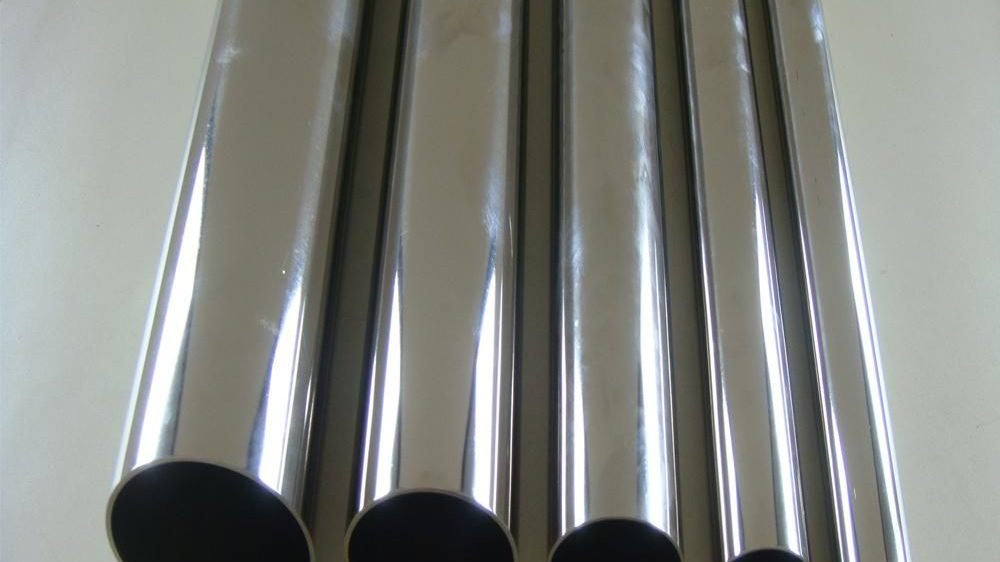
Stainless steel decorative tube is the round, square or rectangular hollow section used for balustrades, ราวบันได, shop fittings, โครงเฟอร์นิเจอร์, curtain walls and architectural trim. It is visually exposed, so it is judged almost entirely on surface appearance and dimensional consistency, but it also has to carry real structural and durability requirements.
The three decisions that determine whether a decorative tube looks right after installation are grade, surface finish and weld seam treatment. Get any of them wrong and the tube will discolour, telegraph, or fail at a bend. This guide explains each, plus the dimensional tolerances and fabrication practices that keep a finished railing looking like one continuous piece of metal.
Grade Selection: 304, 316L and the Ones to Avoid
304 is the default for interior decorative work. It resists general atmospheric corrosion, polishes well, and is available in every finish from 2B to mirror. For exterior handrails in coastal areas, swimming pool surrounds, or anywhere chlorides are present, 316L is the correct choice because its molybdenum content suppresses pitting corrosion.
201 is a lower-nickel, manganese-bearing grade that is widely sold as a budget alternative for decorative tube. It polishes to a similar appearance and costs noticeably less, but its corrosion resistance is substantially lower, and it becomes noticeably magnetic after forming. On an interior balustrade in a dry building, 201 can work. On an exterior railing, a bathroom fitting, or a kitchen environment, it will show rust spots within a year or two, and professional specifiers should avoid it.
| ระดับ | ใน | โม | Best use |
|---|---|---|---|
| 304 | 8.0 - 10.5% | — | Interior railing, เฟอร์นิเจอร์, เล็ม |
| 316ล | 10.0 - 14.0% | 2.0 - 3.0% | ชายฝั่งทะเล, pool, ทางการแพทย์, อาหาร |
| 201 | 3.5 - 5.5% | — | Interior, dry, budget only |
| 430 | — | — | Interior trim, magnetic required |
A practical field test for grade is a magnet plus a spot of copper sulphate solution. 304 and 316L are essentially non-magnetic in the annealed condition; 201 becomes magnetic after drawing. Neither test is definitive, so for project work require a PMI (positive material identification) report on the delivered lot.
พื้นผิวเสร็จสิ้น: The Part Buyers Actually See
Decorative tube finishes are graded by appearance and by roughness. The common options are:
2บี is the cold-rolled, annealed and skin-passed finish. It is smooth but matte, with a slight grey cast. It is the cheapest decorative option and is often used where the tube will be painted or powder coated.
ปริญญาตรี is bright annealed, produced in a controlled atmosphere furnace. It has a uniform, mirror-like but slightly diffused reflectivity and is the standard for visible architectural tube where a true mirror is not wanted.
เลขที่. 4 / hairline is a brushed finish with unidirectional grain, โดยทั่วไป 180 ถึง 320 ขบ. It hides fingerprints and small scratches better than a mirror finish, which makes it the most practical choice for handrails and door hardware.
เลขที่. 8 / กระจกเงา is a polished finish with roughness below 0.05 ไมครอน, produced by sequential grinding and buffing. It shows every fingerprint and every handling mark, and it requires protective film for transport.
Finish consistency across a batch is the real specification issue. Two tubes both described as “กระจกเงา” can differ visibly in reflectivity and in the direction of residual polishing lines. Require a roughness value (Ra) and a gloss reading, and require that all tubes for one project come from one polishing campaign.
The Weld Seam Problem
Decorative tube is made by continuous roll forming of strip into a tube shape, welding the longitudinal seam, การหลอม, then sizing and polishing. The seam is the weakest point visually and metallurgically.
In the as-welded condition, the seam has a cast dendritic structure that polishes differently from the parent metal. When the tube is polished, the seam often remains visible as a faint line, ก “ghost seam”, especially on mirror finish. The remedy is to ensure the weld is fully consumed during polishing by removing enough wall thickness, or to use a tube made from a strip that has been edge-prepared so the weld is narrow and clean.
On square and rectangular decorative tube, the seam is usually placed on a face that will be hidden or on an edge, but the corner radius makes polishing the seam harder. Specify seam position on the drawing, and specify whether the seam is polished flush or left visible.
For bending, the seam should be on the neutral axis or on the inside of the bend, never on the outside where it will be in tension. A seam on the outside of a bend is the standard origin of “orange peel” and split seams on handrails.
Dimensional Tolerances That Matter
| มิติ | Normal tolerance | Why it matters |
|---|---|---|
| Outer diameter | ±0.15 mm | Fitting and connector fit |
| ความหนาของผนัง | ±10% | Bend collapse, thread depth |
| ความตรง | 1 mm/m | Visible waviness in long runs |
| Roundness | ≤ 0.3 มม | Connector and cap fit |
| Square corner radius | Per drawing | Visual consistency at joints |
| ความยาว | +5 / 0 มม | Cutting waste |
Straightness deserves emphasis because it is the defect most visible in a finished balustrade. A tube that is 1 mm per metre out of straight will show a visible bow over a 4-metre run, and no amount of careful installation will hide it. If the project has long visible runs, ระบุ 0.5 mm/m and require the tubes to be straightened after polishing rather than before.
ดัด, Welding and Joining
Decorative tube is frequently bent. The minimum bend radius depends on wall thickness and on the bending method. For rotary draw bending, a radius of 2.5 times the diameter is achievable on 304 with a wall thickness of at least 1.2 มม; below that, the tube ovalises and the inner wall wrinkles.
For square tube, bending is harder because the flat faces tend to collapse. A bend radius under three times the width usually requires internal mandrel support or a welded fabrication instead of a bent section. Specify the bend radius on the drawing and let the fabricator choose the method.
Welding decorative tube means TIG with matching filler, low heat input, and back purging for full penetration joints. The heat tint must be removed mechanically and the area repolished, otherwise the weld shows as a dark band on a mirror surface. On site, pickling paste followed by rinsing is acceptable for matte finishes but will leave a dull spot on a mirror finish.
Mechanical joints are usually preferred for balustrades because they avoid heat tint entirely. Specify the connector system early, because it determines whether the tube needs an internal sleeve, a specific wall thickness, or a machined end.
Packing and Protection
Mirror and BA tube must be protected with adhesive film on the visible face. The film should be UV-stable and should peel cleanly after months in storage; cheap film leaves residue that has to be removed with solvent. Tubes should be bundled with separators so that they do not rub against each other, and the bundle should be strapped so that the straps do not bear on a polished face.
For export, add a moisture barrier and desiccant. Condensation inside a container during a long voyage produces water spots on polished stainless that are difficult to polish out and are sometimes permanent.
การซ่อมบำรุง, Cleaning and Restoration
Stainless steel is low-maintenance, not no-maintenance. The passive layer that protects the surface reforms in air, but it cannot reform under a deposit of dirt, oil or construction residue. On an exterior handrail, the deposits that matter are airborne dust, bird droppings and, in coastal areas, เกลือ.
A routine wash with fresh water and a mild detergent, two to four times a year depending on exposure, is sufficient for most architectural work. Do not use chlorine-based cleaners, bleach, or hydrochloric acid descalers; these attack the passive layer and cause pitting that looks like a manufacturing defect. Do not use steel wool or wire brushes made of carbon steel, because embedded iron particles rust and leave brown stains that are difficult to remove.
Tea staining — the brown discolouration that appears on stainless in coastal or polluted environments — is a surface deposit of iron and organic material, not corrosion of the tube itself. It can be removed with a proprietary stainless cleaner or a dilute nitric acid gel, followed by thorough rinsing. Removing it matters because a stained surface looks like a failed product even when the metal underneath is sound.
Weld discolouration from on-site fabrication should be removed by pickling and passivation rather than by grinding alone. Grinding removes the visible colour but can leave a chromium-depleted layer that pits later. On a mirror finish, pickling leaves a matte patch, so the joint should be re-polished after pickling if appearance matters.
Cost Structure: Why Two Quotes Differ by 40 Percent
Decorative tube quotations vary widely for what appears to be the same specification. The variation usually comes from four places: ระดับ, ความหนาของผนัง, เสร็จ, and polishing yield.
Grade is the largest single variable. ก 201 tube can be 25 ถึง 35 percent cheaper than 304 at the same size, and the difference is not visible until the tube has been outdoors for a season. Wall thickness is the second: ก “1.2 มม” tube supplied at 1.0 mm actual is 17 percent lighter and correspondingly cheaper, and on a handrail the difference shows as a softer feel and easier denting.
Finish is the third. Mirror polishing requires multiple grinding and buffing stages and has a significant scrap rate, particularly on long lengths. A tube quoted as “ขัดเงา” may be a single-pass brushed finish rather than a true No. 8 กระจกเงา, and the price difference is large.
Polishing yield is the fourth and least visible. A mill that polishes after forming must remove enough material to eliminate the weld seam; if it removes too little, the seam shows; if it removes too much, the wall thins and the tube fails dimensional tolerance. A low-price supplier is often one that has shortened the polishing cycle, and the consequence is a visible ghost seam on the finished railing.
The practical approach is to compare quotes on a written specification that fixes grade, actual wall thickness range, finish designation with an Ra value, seam treatment and dimensional tolerance. Without that, the cheapest quote is simply the one that has omitted the most.
Project Supply: Lengths, Bundles and Sequence
Decorative tube is usually supplied in 6-metre lengths for container transport, or cut to length for a specific project. Cut-to-length supply reduces site waste but requires accurate take-off and leaves no allowance for cutting error or for members that arrive damaged.
For a balustrade project, the practical approach is to order standard lengths plus a 10 percent allowance, and to order the longest members first so that the remaining lengths can be used for the shorter runs. Ordering all members at exact length leaves no recovery path when a bend is mis-sized or a thread is cut short.
Bundling matters for appearance. Tubes bundled without separators rub against each other in transit, and the abrasion marks on a mirror finish cannot be polished out on site. Specify separators between layers, strapping that does not bear on a polished face, and end protection. For export, specify a moisture barrier and desiccant, because condensation inside a container over a long voyage leaves water spots that are sometimes permanent.
Delivery sequencing is also a cost lever. Delivering the whole order at once ties up site space and exposes material to damage for longer; delivering in installation sequence reduces both. For a project with a fixed programme, agree the delivery call-off in the purchase order rather than accepting a single shipment.
คำถามที่พบบ่อย
Can I use 201 instead of 304 to save cost? Only indoors in a dry environment. On any exterior or wet application, the saving is lost to rust complaints within a year or two.
Why does my mirror tube show a faint line along its length? That is the weld seam showing through the polish. Specify a tube with a fully consumed seam, or accept a hairline finish where the seam is less obvious.
What wall thickness should a handrail be? 1.2 mm is the practical minimum for a bend radius of 2.5D; 1.5 mm is common for public buildings where impact resistance matters.
Does polishing remove the corrosion resistance? เลขที่, but it can smear foreign iron onto the surface if the polishing tools are contaminated. Require iron-free polishing consumables and a final passivation for exterior work.
How do I stop fingerprints on a mirror railing? Specify an anti-fingerprint clear coat, or choose a hairline finish, which hides fingerprints far better than mirror.
View 304 stainless material specifications หรือ Request a tube quote