 PROGRESSO
Tubo de latão H62: Temperamento, Dezincificação e uso de condensador
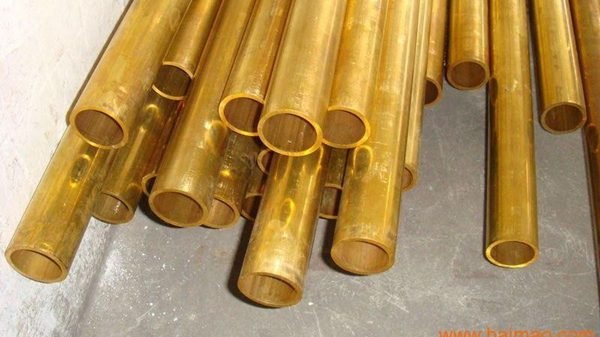
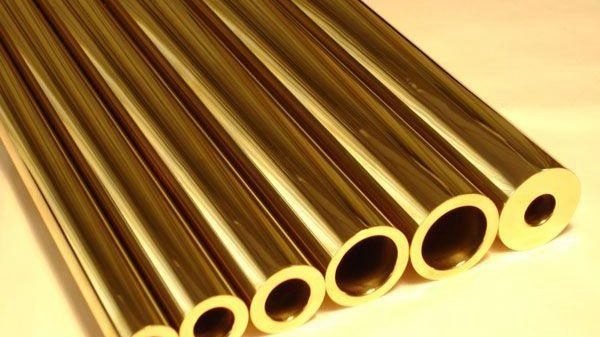
H62 brass tube is a 60 para 63 percent copper, balance zinc alloy tube used where copper is too soft and stainless steel is the wrong colour or the wrong weld. It is the standard condenser, radiador, instrument and decorative tube in the Chinese and Asian market, and it is also one of the grades most often misapplied: H62 is not a seawater alloy, and a tube that is cold bent without stress relief will crack in an ammonia-bearing atmosphere months after installation.
What H62 Brass Tube Is
H62 is a single-phase alpha-beta brass. At about 62 percent copper the structure contains both alpha and beta phases, which gives a good balance of strength and cold formability. The Chinese designation H62 follows GB/T 5231 for the wrought alloy and GB/T 1527 for the tube; the closest American designation is UNS C28000, and EN calls the family CuZn38 to CuZn40 depending on the exact copper range.
Tube is supplied in the soft annealed temper for bending and in the half-hard or hard temper for straight lengths that will be expanded into tube sheets. Wall thickness is normally 0.5 para 5 milímetros, diâmetro externo 4 para 60 milímetros, and length 3 para 6 metres or cut to order. It is used unwelded in most condenser and radiator work, joined by brazing, soldering or mechanical expansion.
Where H62 Tube Is Used
The biggest volume goes into heat transfer: condenser and radiator tubes, oil coolers, intercoolers and marine heat exchangers where the cooling medium is fresh water or a non-aggressive process fluid. A second group is plumbing and gas: brass tube for decorative water lines, gas appliance connections and compressed-air drops where the tube is visible and needs to stay bright. A third group is instrumentation and musical or decorative work, where the tube is bent, polished and lacquered.
H62 is chosen for thermal conductivity, good brazing and soldering behaviour, and a warm colour that needs no plating. It is not chosen for chloride service, for high-pressure steam, or for a tube that will carry ammonia or ammoniacal cleaning chemicals. Those applications need a dezincification-resistant brass, a cupronickel or a stainless grade.
Grau e composição química
The copper range is the first thing to check. At the low end of the range the alloy becomes more beta-rich, stronger and less ductile; at the high end it becomes more alpha-rich and softer. The lead limit matters for potable water: a “free-machining” H62 with lead added for machinability is not the same product as a tube grade with lead restricted.
| Elemento | Cu | Zn | Pb | Fé | Sb | Bi | P | Total impurities |
|---|---|---|---|---|---|---|---|---|
| Wt. % | 60.5-63.5 | Equilíbrio | 0.07 máx. | 0.15 máx. | 0.005 máx. | 0.002 máx. | 0.01 máx. | 0.5 máx. |
GB/T 5231 / GB/T 1527 limits for H62 tube. UNS C28000 is broadly equivalent but its lead and impurity limits differ; do not treat the two designations as interchangeable without a certificate check.
Propriedades mecânicas
H62 in the soft temper is stronger than C12200 copper and considerably less ductile. That is the trade-off: it holds pressure better and resists vibration, but it work-hardens quickly and needs a larger bend radius. The table gives the common room-temperature values for the tempers used in tube.
| Propriedade | Soft annealed (M) | Meio difícil (Y2) | Duro (Y) |
|---|---|---|---|
| Resistência à tracção | 370-440 MPa | 440-540 MPa | ≥ 540 MPa |
| Força de rendimento, 0.2% | 150-220 MPa | 250-350 MPa | ≥ 400 MPa |
| Alongamento em 50 milímetros | ≥ 25% | ≥ 12% | ≥ 3% |
| Dureza | 90-120 Alta tensão | 120-160 Alta tensão | 160-190 Alta tensão |
| Condutividade térmica | Sobre 120 S/m·K | 120 S/m·K | 120 S/m·K |
| Densidade | 8.9 g/cm³ | 8.9 g/cm³ | 8.9 g/cm³ |
Typical values for H62 tube; the purchase order should quote GB/T 1527 temper designations and the acceptance values from the mill certificate.
Dimensões e Tolerâncias
Brass tube is ordered by outside diameter, wall and temper. The wall tolerance is tighter than for copper because the tube is often expanded into a tube sheet, where a thin wall will not hold the joint. Concentricity and straightness also matter for bundle assembly, since a bowed tube will not enter the tube sheet holes.
| Parâmetro | Faixa | Tolerância | Observação |
|---|---|---|---|
| Diâmetro externo | 4-60 milímetros | ±0.05 to ±0.15 mm | By diameter band |
| Espessura da parede | 0.5-5.0 milímetros | ±10% | Minimum wall governs |
| Comprimento | 3-6 eu | +5 / -0 milímetros | Cut to order |
| Retidão | - | ≤ 1.5 mm por metro | Over full length |
| Concentricidade | - | ≤ 10% of wall | Measured at ends |
| Ovalidade | - | ≤ 3% | As supplied |
| Superfície | - | No cracks, laps or die lines | Visual and eddy current |
As tolerâncias seguem GB/T 1527 commercial practice; tighter limits are available on drawn and straightened tube.
How the Tube Is Made
Extrusion and drawing
H62 is melted and cast into billets, then extruded at 700 para 850 °C into a hollow shell. The shell is pickled, drawn through dies and plugs with intermediate anneals, and finally annealed at about 550 para 650 °C for the soft temper. Temperature control matters: an over-annealed brass coarsens and loses strength, while an under-annealed tube retains work hardening and cracks at the first bend.
Straightening and stress relief
Drawn tube is straightened on a multi-roll straightener and cut to length. If the tube has been cold worked in straightening, a low-temperature stress-relief anneal at 260 para 300 °C for one to two hours is used to remove the residual stress that drives ammonia stress-corrosion cracking. This is not the same as a full anneal: it relieves stress without recrystallising the grain, so the temper and strength are retained.
Limpeza, testing and packing
Tube is pickled to remove oxide, rinsed, passivated and dried. Each lot is tested for dimensions, parede, surface and, for condenser service, an eddy-current or hydrostatic test. Tube for ammonia-adjacent service is often supplied stress-relief annealed and tested to ISO 6957 or GB/T 10567. Packing is in wooden cases or bundles with end protection, because a brass tube that has been nicked on the OD will crack from that nick when it is expanded.
Dezincification and Stress Corrosion
H62 is a duplex brass and it dezincifies in aggressive water. The zinc dissolves and leaves a porous copper sponge that looks intact until it fails under pressure. The risk rises with chloride content, alta temperatura, low flow and a pH outside the neutral band. In potable water with moderate hardness and low chloride, H62 is usually acceptable; in brackish water, seawater or a system that stagnates, it is not.
Where dezincification resistance is required, specify a DZR grade such as C35200 or C35300, or add arsenic as an inhibitor in the alloy. DZR brass costs more and is harder to draw, but it passes the ISO 6509 dezincification test that H62 will fail. Do not assume that a brass fitting and a brass tube of the same colour have the same resistance; the alloy designation is the only thing that counts.
Stress-corrosion cracking is the other failure mode. Dobragem a frio, expansion into a tube sheet and straightening all leave residual tensile stress, and ammonia or ammoniacal compounds attack that stress. The remedies are a stress-relief anneal after cold forming, keeping the tube dry during storage, and avoiding ammonia-bearing cleaning agents on installed bundles. A condenser cleaned with an ammonia-based descaler and not rinsed will crack within a season.
Dobrando, Expansion and Joining
Soft H62 bends on a mandrel with a minimum radius of about 3 para 4 times the OD. Because the alloy work-hardens faster than copper, do not bend the same place twice. For a tube sheet, the tube is expanded with a roller expander; the expansion should reach 5 para 8 percent wall reduction at the ligament, and the tube end is usually rolled and then flared or welded depending on the specification.
Brazing uses a silver-phosphorus filler for copper-to-brass joints and a silver-based filler with flux for brass-to-brass. H62 contains zinc, which volatilises at brazing temperature and can leave a porous joint if the heat is too high or the flux is inadequate. Use a flux matched to brass, heat the joint quickly, and do not overheat the tube beyond a dull red.
Soldering is common for plumbing and decorative work. Use a lead-free solder and a water-soluble flux, clean the joint mechanically first, and keep the heat below the annealing range so the tube does not soften. After soldering, flush the line thoroughly; flux residue is corrosive and will pit the bore.
H62 Against Copper, Cupronickel and Stainless
The choice between H62 and C12200 copper is usually about strength and appearance rather than corrosion. H62 is roughly 1.8 times stronger, holds pressure with a thinner wall, and keeps a gold colour without plating. Copper is more ductile, easier to bend, more conductive and more forgiving in fresh water. For a condenser that runs at moderate pressure and a clean cooling water, H62 wins on wall thickness and cost; for a refrigerant line that will be bent many times on site, copper wins on ductility.
Against cupronickel 90-10, H62 loses on every seawater metric. Cupronickel resists chloride, velocity and ammonia far better, at roughly two to three times the price. If the cooling medium is brackish or the tube will see ammonia in cleaning, the correct answer is cupronickel or a DZR brass, not H62 with a thicker wall.
Against stainless, H62 loses on strength and corrosion but wins on thermal conductivity and on joining. A 316L condenser tube has about one twenty-fifth the thermal conductivity of brass, which is why stainless is used in hygienic or chemical service where heat transfer is not the bottleneck. Brass remains the default for plain water condensers and radiators.
| Propriedade | H62 brass | C12200 copper | CuNi 90-10 |
|---|---|---|---|
| Resistência à tracção | 370-440 MPa | 205-250 MPa | ≥ 300 MPa |
| Condutividade térmica | Sobre 120 S/m·K | Sobre 400 S/m·K | Sobre 30 S/m·K |
| Seawater resistance | Pobre | Pobre | Bom |
| Cold formability | Moderado | Excelente | Moderado |
| Custo relativo | Médio | Médio | Alto |
Indicative comparison for tube selection; the actual allowable pressure depends on wall, temper and temperature.
Surface Finish and Decorative Use
Brass tube for visible work is usually polished and lacquered. The lacquer is a thin clear coat that slows tarnish but does not stop it; in a humid interior the tube will still darken at the cut ends and at joints where the coat is broken. For a long-lived bright finish, specify a clear powder coat or a periodical re-lacquer, and design the joints so the tube can be removed for refinishing.
For architectural work, keep fingerprints off the surface before lacquering. A wiped tube with residual oil will show a patchy finish within a year. Clean with a non-chloride degreaser, rinse in deionised water, seco, and lacquer within the same shift. Do not use abrasive pads on a polished tube; they leave directional scratches that the lacquer cannot hide.
Regras de Seleção
- State the grade as H62 to GB/T 1527, or the exact UNS/EN equivalent, não apenas “tubo de latão”.
- State the temper: soft for bending, half hard or hard for straight bundle tube.
- For condenser service, require stress-relief annealing and the ammonia test.
- For potable water, confirm the lead limit and consider a DZR grade if the chloride level is above the limit.
- State minimum wall, not average wall, for tube-sheet expansion.
- Para trabalho visível, state the surface finish and whether lacquer or polish is required.
- Do not mix H62 tubes with DZR fittings in one wetted assembly without checking the galvanic and dezincification assumptions.
Erros Comuns
- Using H62 in seawater because it is “the brass tube we always buy”. It dezincifies and fails from the inside.
- Cold bending and installing without a stress-relief anneal, then cleaning with an ammonia descaler.
- Expanding a tube with an average wall at the minimum of the tolerance and finding leaks at the tube sheet.
- Overheating a brazed joint so the zinc burns out and the joint becomes porous.
- Using a leaded free-machining brass for a potable water line.
- Bending the same spot twice and cracking the work-hardened crown.
- Storing bundles in a wet corner where the ends corrode and the first tube to be expanded splits.
- Assuming H62 and C28000 are identical. Their impurity and lead limits are not the same.
Perguntas frequentes
What is H62 brass?
A copper-zinc alloy with 60.5 para 63.5 percent copper and the balance zinc, covered by GB/T 5231 e GB/T 1527. It is a duplex alpha-beta brass with good strength and moderate cold formability.
Can H62 be used for potable water?
Only if the lead content and the water chemistry meet the applicable standard. In many markets a lead-restricted or DZR brass is required. Check the local drinking-water rules before releasing the order.
Why does a brass tube crack after a few months?
Usually ammonia stress-corrosion cracking from residual cold-work stress plus an ammoniacal environment. A stress-relief anneal at 260 para 300 °C after forming, and keeping ammonia cleaners away, prevents it.
What filler should I use for brass tube?
Silver-phosphorus for copper-to-brass, and a silver filler with brass-compatible flux for brass-to-brass. Use the lowest heat that wets the joint; overheating volatilises zinc.
What bend radius is safe?
Three to four times the outside diameter in the soft temper, with a mandrel. Do not rebend the same location; the alloy work-hardens quickly.
Is H62 the same as C28000?
Close but not identical. The copper range overlaps, but lead and impurity limits differ between GB/T and ASTM/UNS designations. Ask for the certificate against the standard you actually specified.
For the copper side of the same product family, see the C12200 DHP copper tube page e o C11000 copper plate sheet page. Enviar DO, parede, temperamento, length and the intended medium with your enquiry.
Send Your H62 Brass Tube Requirement
DE, parede, temperamento, length and the fluid to be carried decide the grade and the test schedule.

