 진전
스테인레스 스틸 플랫 바: 표면 마감, Tolerance and Machining
스테인레스 스틸 플랫 바: 표면 마감, Tolerance and Machining
A stainless steel flat bar is a solid rectangular section, wider than it is thick, supplied in straight lengths rather than in coil. It is the section a machinist reaches for when a part needs a flat face, a straight edge and a solid body: a machined bracket, a wear strip, a door frame profile, a knife blade, a food processing guide, a flange, a key or a spacer.
Two flat bars with the same 10 × 50 mm section can be completely different products. One may be hot rolled and pickled with a dull grey surface and a loose tolerance; another may be cold drawn, ground and polished to a mirror with a tolerance measured in hundredths of a millimetre and a straightness that holds over six metres. The difference is not cosmetic. It decides whether the bar can be machined without distortion, whether it can be welded without cracking, whether it fits a slot without hand work, and what it costs.
This article deals with flat bar only, and with the three properties that are most often underspecified: the surface finish, the dimensional and straightness tolerance, and the machining behaviour. The photographs show the polished face of a flat bar held against a green protective wrap, and a second bar of the same consignment with the polished surface and the square edge visible.
1. What Flat Bar Is and Where It Is Used
Flat bar is produced in three ways. Hot rolled bar is rolled from a billet to a rectangular section, then annealed and pickled or descaled; it is the cheapest form and it carries a mill finish, a normal mill tolerance and a certain amount of scale or a pickled grey surface. Cold drawn bar is produced by drawing a hot rolled or hot rolled and annealed bar through a die at room temperature, which gives a tight tolerance, a smooth surface and a straight bar. Cold rolled and polished bar is cold rolled to size and then ground or polished, which gives the best surface and the tightest tolerance at the highest cost.
The applications follow the form. Hot rolled and pickled flat bar is used for structural brackets, 프레임, supports and general fabrication where the surface will be painted or hidden. Cold drawn bar is used for machined parts, 지그, 비품, shafts and keys, where the tolerance and the straightness reduce the amount of stock that has to be removed. Polished bar is used for visible parts, for food contact surfaces, for architectural trims, for medical and pharmaceutical equipment and for any part where a smooth, cleanable surface is a functional requirement rather than a decorative one.
등급 304 is the default. It is used for food equipment, architectural metalwork, kitchen and catering fabrications, marine fittings above the waterline, and general industrial parts. Grade 316L is used where chlorides are present, in pharmaceutical and medical work, in marine and coastal installations, and in parts that will be welded and then exposed to a corrosive environment. 등급 303, the free-machining variant with added sulphur, is used for parts that are turned or drilled in high volume, and it should not be welded.
The choice between flat bar and plate is a choice about thickness and supply form. Plate is thicker and wider, and it is normally cut to shape rather than bought as a straight length. Flat bar is bought as a straight length in a standard width and thickness, and the part is cut from it. When the part is narrow and long, flat bar is the efficient buy; when the part is wide and short, plate and a cutting plan are more efficient.
2. Grade and Chemical Composition
The grades that matter for flat bar are 304, 304엘, 316땅 303. Their chemistry is the same as for sheet and tube, but the residual elements and the carbon level have a direct effect on machining and on weld corrosion resistance, so the certificate should be read rather than assumed.
| 요소, % | 304 / 304엘 | 316엘 | 303 |
|---|---|---|---|
| 크롬 | 18.0 에게 20.0 | 16.0 에게 18.0 | 17.0 에게 19.0 |
| 니켈 | 8.0 에게 10.5 | 10.0 에게 14.0 | 8.0 에게 10.0 |
| 몰리브덴 | not specified | 2.0 에게 3.0 | 0.60 최대 |
| 탄소, 최대 | 0.08 (0.030 for 304L) | 0.030 | 0.15 |
| Sulphur | 0.030 최대 | 0.030 최대 | 0.15 에게 0.35 |
| 망간, 최대 | 2.00 | 2.00 | 2.00 |
| 용접 성 | good | good | poor, not recommended |
The sulphur content of 303 is the reason it machines well and the reason it should not be welded. Sulphur forms manganese sulphide inclusions that act as chip breakers and lower the cutting force, but the same inclusions melt and form low-melting films at a weld, which produces hot cracking. ㅏ 303 part that has to be welded should be re-designed in 304 또는 316L.
을 위한 304 and 316L, the carbon level decides the weld corrosion behaviour. ㅏ 304 bar with 0.08 percent carbon that is welded and then exposed to a corrosive environment can suffer intergranular corrosion in the heat-affected zone, because chromium carbide precipitates at the grain boundaries and depletes the adjacent metal of chromium. 304엘, ~와 함께 0.030 percent maximum carbon, avoids this for the wall thicknesses and heat inputs used in normal fabrication. For thick sections and for high heat input, 316L is the safer choice.
3. Mechanical Properties and Temper
Flat bar is supplied in the annealed condition, in the cold drawn condition, or in a cold drawn and stress-relieved condition. Cold drawing raises the strength and lowers the elongation, because the surface and the outer layers are cold worked. A cold drawn bar can be 40 에게 60 percent stronger than the same bar in the annealed condition, and it is also harder at the surface, which affects machining and bending.
| 상태 | 인장강도 | 항복 강도 | 연장 |
|---|---|---|---|
| 304, 단련된 | 515 MPa min | 205 MPa min | 35 에게 40 % |
| 304, 냉간 압연 | ~에 대한 620 에게 800 MPa | ~에 대한 450 에게 600 MPa | 10 에게 20 % |
| 316엘, 단련된 | 485 MPa min | 170 MPa min | 35 에게 40 % |
| 316엘, 냉간 압연 | ~에 대한 580 에게 750 MPa | ~에 대한 400 에게 550 MPa | 10 에게 20 % |
| 303, 냉간 압연 | ~에 대한 600 에게 750 MPa | ~에 대한 400 에게 550 MPa | 10 에게 20 % |
The practical consequence is that a cold drawn bar machines with a different feel from an annealed bar. The cold worked surface is harder, and a cutting tool that starts on the surface can work harden the edge further if it rubs instead of cutting. The answer is not a slower speed alone; it is a sharp tool, a positive rake and a feed that gets under the worked layer rather than rubbing on it.
Residual stress is the other consequence. Cold drawing leaves a stress gradient through the section, and when a part is machined by removing one face, the stress balance changes and the part can bow. For a precision part, the bar should be ordered stress relieved, or the machining sequence should remove stock from both faces alternately, or the part should be rough machined, stress relieved and finished.
4. 표면 마감: What the Descriptions Actually Mean
Finish is the property that is most often bought by adjective and least often measured. “절인”, “밝은”, “우아한”, “거울” 그리고 “아니요. 4” are not interchangeable, and a purchase order that says only “polished stainless flat bar” can be filled with almost anything.
| 마치다 | Typical appearance | Approximate roughness | 일반적인 사용 |
|---|---|---|---|
| 열간압연, 절인 | dull grey, matte | Ra 2 에게 6 μm | 구조적, 그린, hidden |
| 냉간 압연, 밝은 | smooth, semi-reflective, faint die lines | Ra 0.8 에게 1.6 μm | machined parts, 비품 |
| 지면 | uniform matte with fine linear pattern | Ra 0.4 에게 0.8 μm | precision parts, seals |
| 우아한 320 에게 400 grit | soft sheen, visible directional lines | Ra 0.2 에게 0.4 μm | 건축, food contact |
| 우아한 600 grit | near mirror, faint lines | Ra 0.1 에게 0.2 μm | visible trim, 의료 |
| Mirror or 8K | full mirror, no visible lines | Ra below 0.1 μm | 장식적인, 반사적 |
The roughness values are indicative and depend on the mill and the measurement direction. The point is that the finish should be specified by grit or by Ra, not by adjective, and that the direction of the polishing lines should be stated for visible work. A bar polished along its length and a bar polished across its width look different under a light, and a fabrication that mixes the two directions looks like a patchwork.
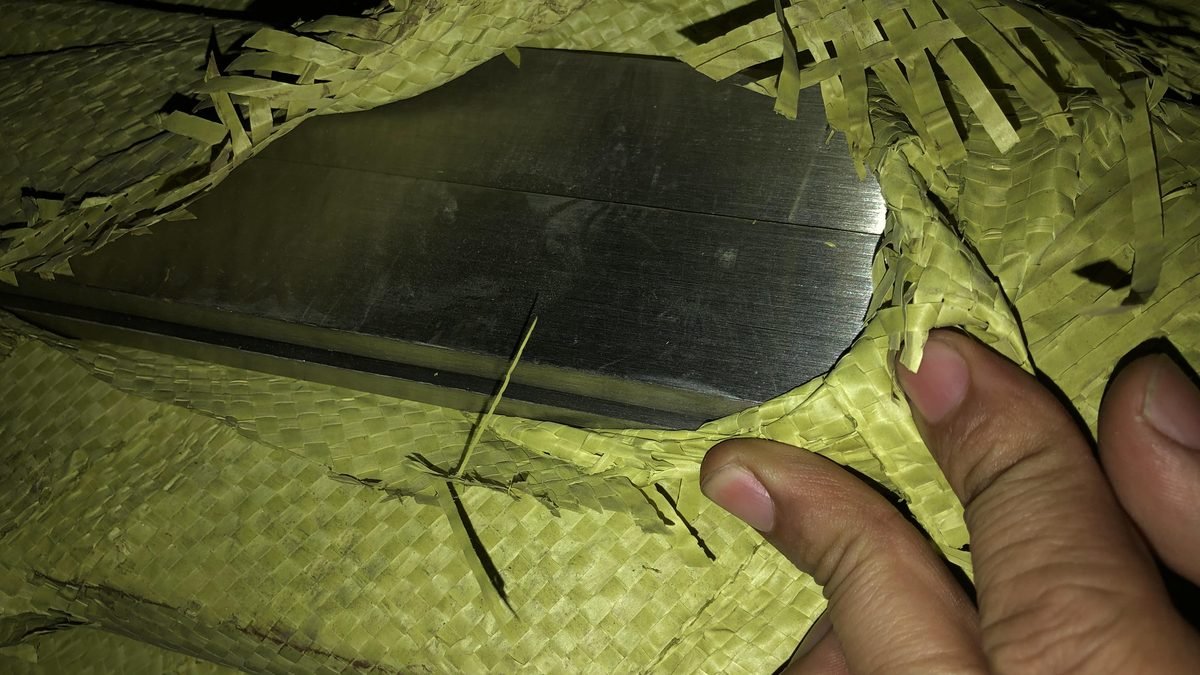
Two finish defects are worth rejecting on receipt. The first is a residual heat tint or a dark oxide band along one edge, which indicates that the bar was not fully pickled after annealing and will corrode first at that edge. The second is a polishing direction change part way along the bar, which indicates that the polisher was re-set mid-length and will be visible on a long architectural run.
Edge condition belongs with the finish. A flat bar has two long edges and two ends, and the long edges may be as-rolled, 기계로 가공된, rounded or polished. A rounded edge is easier to handle and safer to touch; a sharp edge is better for a tight fit into a slot. For food contact work, the edges should be deburred and polished, because a burr is a cleaning trap.
5. Dimensional Tolerance and Straightness
Flat bar tolerance is specified on thickness, 너비, 길이, squareness of the section, straightness and twist. Hot rolled bar carries a mill tolerance that is generous in absolute terms; cold drawn bar is held to a tolerance class such as h9 or h11 for the thickness and width; ground and polished bar can be held tighter still by agreement.
| 매개변수 | 열간압연, 절인 | 냉간 압연 | Ground and polished |
|---|---|---|---|
| Thickness tolerance, 10 mm | ± 0.5 mm | ± 0.10 mm or h11 | ± 0.05 mm or h9 |
| 폭 공차, 50 mm | ± 1.0 mm | ± 0.20 mm | ± 0.10 mm |
| 직진도 | ~에 대한 5 mm/m | ~에 대한 1 mm/m | 0.5 mm/m or better |
| 트위스트 | not controlled | 1 mm/m typical | 0.5 mm/m typical |
| 길이 | + 50 / – 0 mm | + 20 / – 0 mm | 주문에 따라 잘라, ± 1 mm |
| 가장자리 | 굴린대로, may have scale | 그어진, square, 디버링된 | rounded or square, 우아한 |
Straightness and twist are the tolerances that decide whether a bar works in a machine or on a façade. A bar that is straight within 1 mm per metre can be fed through a guide; a bar that is 5 mm per metre out of straight has to be straightened or machined all over, and the extra stock removal can exceed the tolerance. Twist matters for a bar that has to sit flat against a surface: a bar twisted by 1 degree over its width will rock, and the gap will show under a straight edge.
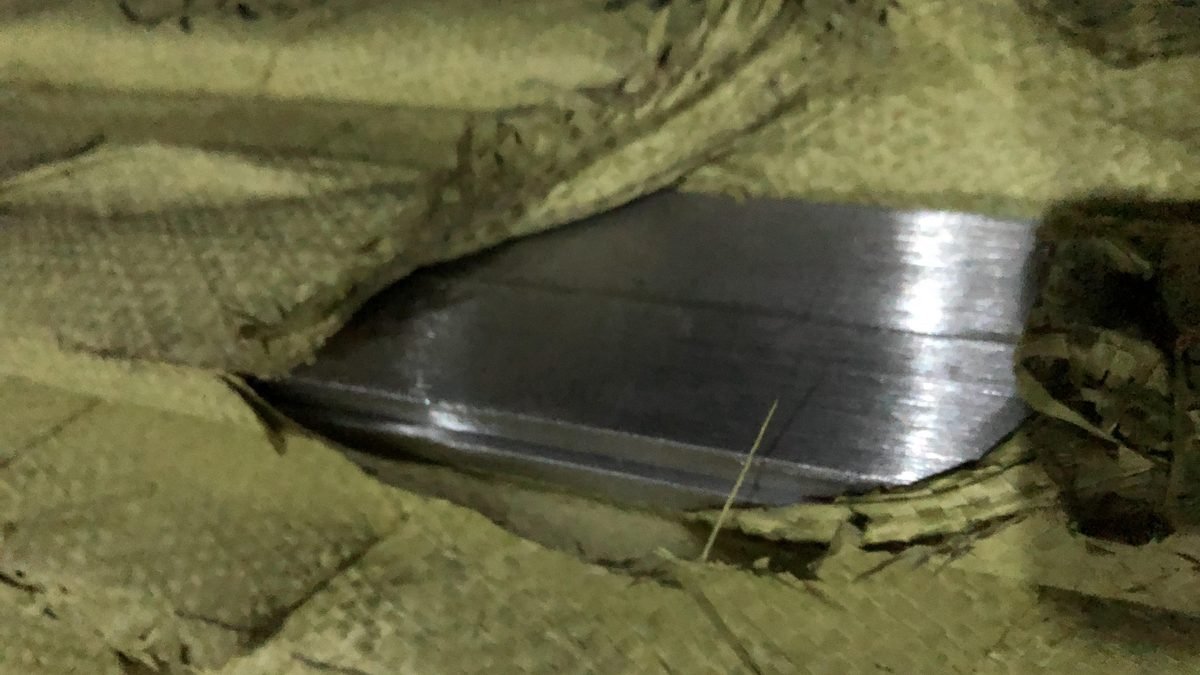
Section squareness is easy to check and easy to overlook. The two faces of a flat bar should be parallel and the two edges should be at right angles to the faces. A bar that has been rolled with a slight rhombus shape will not sit flat, and a bar that has been sheared with a slanted edge will not fit a slot. For critical work, check the diagonal thickness at both edges and the edge angle with a square.
6. 가공 304 Flat Bar
Stainless steel is not difficult to machine because it is hard; 단련된 304 is softer than many carbon steels. It is difficult because it work hardens rapidly, it conducts heat poorly, and it tends to build a built-up edge on the tool. The three problems interact: a tool that rubs instead of cutting work hardens the surface, the hardened surface raises the cutting force, the poor conductivity keeps the heat at the edge, and the built-up edge breaks down and scores the finish.
The rules that follow from this are simple and are often ignored.
Sharp, positive geometry. Use a sharp edge with a positive rake and a small honed radius. A worn or chamfered edge rubs and work hardens the surface. For turning, an insert grade intended for stainless, with a coating that resists built-up edge, is the right starting point.
Feed hard enough to get under the worked layer. A feed that is too light produces rubbing and work hardening; a feed of 0.2 에게 0.4 mm per revolution for roughing keeps the tool cutting. For drilling, a pecking cycle that clears the chip and does not dwell is better than a continuous feed that packs the flutes.
Keep the speed moderate. Carbide turning of 304 typically runs at 120 에게 180 m/min with coated inserts, and high-speed steel drilling at 15 에게 25 m/min. Higher speeds are possible with better tooling, but the heat has nowhere to go and the edge life falls quickly.
Flood the cut with coolant. The coolant does two jobs: it removes heat and it flushes the chip. A stainless chip is tough and stringy, and it will wrap around the tool if the coolant does not break it away. High-pressure coolant is better than a flood nozzle that misses the edge.
Do not dwell. A tool that stops in the cut rubs, and a rub on stainless work hardens the surface. Retract or keep the feed moving; avoid stopping a drill in the hole.
Tap with the right tool and lubricant. Tapping 304 is the operation that generates the most scrap. Use a spiral-flute tap for blind holes and a spiral-point tap for through holes, keep the tap straight, use a tapping fluid with extreme pressure additives, and back the tap out frequently. A tap that squeals is work hardening the thread and is about to break.
For a part that has to hold a tolerance, the machining sequence matters as much as the cutting data. Cold drawn bar carries residual stress, and removing one face releases it. Rough machine both faces, stress relieve if the part is critical, then finish machine. A part that is finished in one pass from one side will bow, and the bow will be blamed on the bar.
7. 절단, Forming and Welding
Flat bar is cut by bandsaw, cold saw, abrasive wheel, 원자 램프, waterjet or plasma. Bandsaw and cold saw are the shop default and give a clean, cool cut. Laser and waterjet give a profile cut with a good edge and are used when the part has holes or a shape. Abrasive cutting is acceptable but leaves a heat-affected edge that must be removed before welding, and a wheel used on carbon steel must not be used on stainless.
Bending is straightforward in the easy direction, which is bending about the weak axis, across the thickness. A flat bar bent this way behaves like a thin plate and can be formed to a radius of about two to three times the thickness in the annealed condition. Bending about the strong axis, across the width, is much harder and is limited to a large radius; a bar bent the hard way will distort and the section will not stay rectangular.
Welding flat bar is usually done with 308L or 316L filler by TIG. The joint is a butt, a lap or a fillet against another member. The same rules as for tube apply: a small gap for penetration, low heat input, a fixture to control distortion, and pickling and passivation after welding. A fillet weld on a 10 mm bar needs a leg length of about 6 mm to develop the bar’s strength; 에이 3 mm fillet on a 10 mm bar is a cosmetic weld, not a structural one.
One welding detail is specific to flat bar: the edge. A bar welded along its narrow edge has a small heat sink and overheats quickly, and the edge can burn away. A chill bar or a copper backing strip on the edge keeps the profile and prevents undercut. Where the weld is on the visible face, the weld should be dressed and polished to match the finish of the bar.
8. 선택 규칙
Start from the machining allowance. If the part has to finish at 9.5 mm 두께, do not buy 10 mm hot rolled bar with a plus or minus 0.5 mm tolerance and expect to clean up. Buy cold drawn 10 mm bar with 0.1 mm tolerance, or buy 11 mm and machine it.
Match the finish to the function. A hidden bracket does not need a mirror finish, and a food contact guide does not accept a pickled surface with a rough profile. Specify the grit or the Ra, not the adjective.
Check the straightness against the process. A bar that goes into a CNC guide needs 1 mm per metre or better; a bar that is cut into short pieces can accept more. Straightness is cheaper to specify than to correct.
Decide 304 or 316L before the drawing is released. 연안, chloride and pharmaceutical service needs 316L. A change after fabrication is a re-make, not a substitution.
선택하다 303 only for machining, never for welding. The sulphur that makes 303 free cutting makes it crack at a weld. If the part is welded, 사용 304 or 316L and accept the slower machining.
Consider stress relief for precision parts. Cold drawn bar moves when stock is removed from one face. A stress-relieved bar, or a balanced machining sequence, keeps the part flat.
9. 일반적인 실수
Buying by section only. “10 × 50 플랫 바” is not a specification. The grade, the condition, the tolerance class and the finish are all missing, and each of them changes the price and the result.
Using hot rolled tolerance for a machined part. A plus or minus 0.5 mm tolerance on a 10 mm bar leaves nothing to clean up on a part that has to finish at 9.8 mm.
가정 “우아한” means a specific grit. Two suppliers will deliver two different surfaces. State the grit and ask for a sample.
Machining with a dull tool. The surface work hardens, the cut gets harder, and the part is scrapped. Change the insert before it rubs.
Light feeds to be gentle. A light feed on stainless rubs and work hardens. Cut under the worked layer with a proper feed.
Tapping without lubricant. A dry tap in 304 is a broken tap waiting to happen. Use an EP tapping fluid and clear the chips.
용접 303. The sulphur causes hot cracking. Use 304L or 316L for welded parts.
Leaving heat tint on a food contact surface. The tint is a chromium-depleted oxide and it will corrode and contaminate. Pickle and passivate.
Bending the hard way. Bending across the width distorts the section. Design the part so that the bend is across the thickness.
Storing bars on the floor. Dirt, moisture and point loads produce stains and kinks. Store on racking, under cover, with the ends protected.
10. 자주 묻는 질문
What is the difference between flat bar and sheet? Thickness and width ratio, and supply form. Flat bar is a solid rectangular section supplied in straight lengths; sheet is thin and supplied in sheets or coils.
Is cold drawn bar stronger than hot rolled? 예, the cold drawing work hardens the surface and raises the tensile and yield strength, at the cost of elongation. A cold drawn bar is stronger but less ductile.
Can flat bar be supplied cut to length? 예, and it is the normal way to buy for production. State the length, the tolerance and whether the ends need deburring or machining.
What does h9 or h11 mean? They are ISO tolerance classes for the thickness and width. h9 is tighter than h11, and both are tighter than a normal hot rolled mill tolerance. The class should be quoted with the nominal size.
Why does my machined bar bow? Residual stress from cold drawing is released when stock is removed from one face. Rough machine both faces, stress relieve, or buy stress-relieved bar.
할 수 있다 304 flat bar be hardened by heat treatment? 아니요. Austenitic stainless steels cannot be hardened by quenching; they are hardened only by cold working. Annealing softens them.
What is the best finish for food contact? A ground or 320 에게 400 grit polished surface with a roughness low enough to be cleanable, typically Ra 0.8 µm or better, with welds pickled and passivated.
Can flat bar be welded to tube? 예, with a matching filler and a fillet or butt detail. The tube wall is usually thinner, so the heat input has to suit the thinner member.
How long can flat bar be supplied? 표준 길이는 6 중, ~와 함께 3 m 그리고 12 m available. Longer lengths are uncommon because of handling and straightness.
Is 316L flat bar worth the extra cost? In chloride, 연안, pharmaceutical or medical service, 예. Indoors and dry, 304 is adequate and 316L is an unnecessary cost.
Need stainless flat bar to a finish and tolerance class?
섹션 보내기, 등급, condition, tolerance class, 마치다, straightness and cut length. We will confirm the mill programme, the surface roughness, the packing and the delivery, and quote against the measured specification rather than a nominal bar size.
Related reading: 304 2B stainless sheet · 316L stainless plate · Q235B 탄소강 플랫 바

