 FREMSKRIDT
Zinc Coating Weights Explained: Z40, Z60, Z180, Z275 and How to Choose
Zinc Coating Weights Explained: Z40, Z60, Z180, Z275 and How to Choose
On every galvanized sheet, coil and strip specification you will see a code like Z60, Z120 or Z275. These letters and numbers are the single most important quality parameter of the product — yet many buyers ignore them and simply order “galvanized.” This article explains what the Z value means, how coating weight affects service life, and how to pick the right class for your application without overpaying.
What the Z Code Means
The Z code states the total zinc coating weight on both sides of the sheet, in grams per square metre. Z275 means the total coating weighs at least 275 g/m² — roughly 137 g/m² per side. To convert to coating thickness, divide by the density of zinc (7.14 g/cm³): 275 g/m² equals about 38 µm total, or 19 µm per side. In hot-dip processing of tubes and sections the same coating is usually quoted as a thickness in microns, typically 45 – 85 µm, which is heavier than most sheet classes.
The international standards agree on the common classes: I 10346, GB/T 2518, ASTM A653 and JIS G3302 all define Z40 to Z600, with Z275 as the most popular export class for building products. Our DX51D+Z galvanized sheet og galvanized coil are produced from Z60 to Z275 on the same continuous line.
Coating Weight vs Corrosion Life
Zinc protects steel in two ways: it forms a stable oxide barrier, and it corrodes sacrificially — meaning zinc is consumed to protect the steel, including at scratches and cut edges. More zinc equals more sacrificial reserve, and therefore a longer life. As a rule of thumb in a normal urban or rural atmosphere: Z60 lasts roughly 8 – 12 years, Z120 about 12 – 18 years, and Z275 about 20 – 40 years before the first maintenance is needed. In humid, industrial or coastal air these numbers drop, so coastal builders typically jump two classes higher than the inland recommendation.
| Coating class | g/m² (both sides) | ~ µm per side | Typical use |
|---|---|---|---|
| Z40 | 40 | 3 | Indoor, light duty |
| Z60 | 60 | 4 | General indoor, framing |
| Z120 | 120 | 8 | Semi-exposed, roofing |
| Z180 | 180 | 13 | Outdoor rural, agricultural |
| Z275 | 275 | 19 | Outdoor urban/industrial, coastal |
Coating Weight for Strip and Flat Products
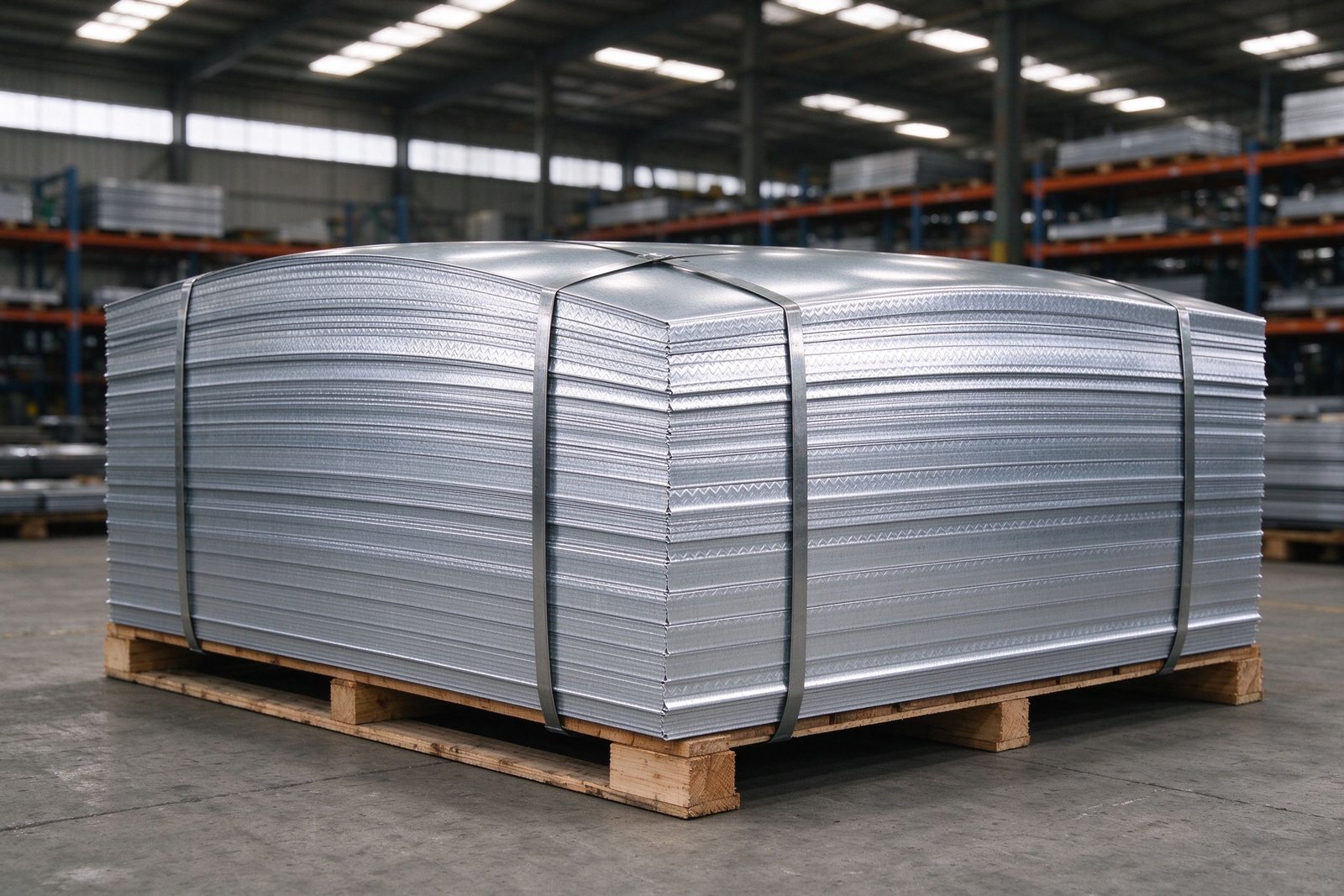
Narrow galvanized steel strip follows the same Z-class system. Because strip is often slit from wide coil, the cut edges are bare steel — a heavier coating gives better edge protection, which is why cable-tray and strapping producers prefer Z120 to Z275. When strip will be roll-formed into profiles, remember that heavier coatings resist forming damage better; a Z60 strip can show micro-cracks at tight bends where Z180 survives cleanly.
How to Specify Coating on Your Order
Always write the Z class into the inquiry — never rely on “galvanized” alone. State the environment (indoor, outdoor, coastal, industrial), the expected service life, and whether the part will be formed or painted after delivery. For tubes and sections, specify microns instead: 45 – 85 µm for hot-dip structural work. If in doubt, choose one class above your first guess; the coating cost difference between Z120 and Z275 is a small percentage of the order, while a premature rust failure costs a full replacement.
Our team confirms the coating class, test certificates and triplicate coating measurements with every shipment of galvanized flat products.