 FREMSKRIDT
Hot Rolled Stainless Steel Plate 304 No.1 Finish: Tykkelse, Tolerance and Cutting
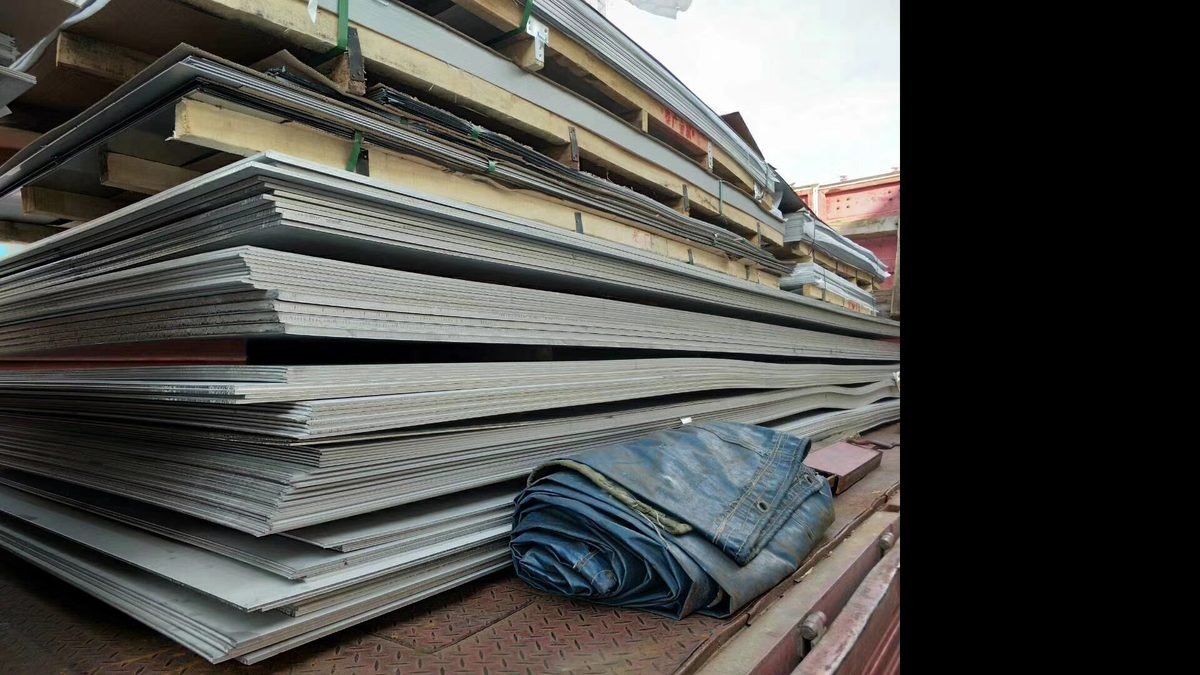
A hot rolled stainless steel plate in 304 with a No.1 finish is the heavy end of the stainless flat product range. It is produced by rolling a slab at high temperature, annealing and pickling the surface, and delivering it as a discrete plate rather than a coil. Thicknesses start where cold rolled sheet stops, typisk kl 3 mm, and run up to 60 mm or more on special order. The No.1 finish, a dull grey pickled surface, is what the mill produces before any polishing, brushing or grinding is applied.
Buyers specify this product for tanks, hoppers, strukturelle rammer, marine and food plant fabrication, and anywhere a thick stainless wall is needed. The decisions that cause trouble are rarely about the grade itself. They are about thickness tolerance on a plate that is rolled on a reversing mill, about the difference between a sheared edge and a plasma cut edge, about flatness after cutting, and about what No.1 finish actually means when the plate will later be polished or painted.
1. What a 304 No.1 Hot Rolled Plate Is and Where It Is Used
The production route matters because it explains the surface. A slab is heated to around 1250 °C, rolled on a hot strip mill or a plate mill to the ordered thickness, afkølet, then annealed at about 1050 °C and quenched. The oxide that forms during rolling and annealing is removed by pickling in a nitric hydrofluoric acid bath, which leaves the characteristic No.1 surface: uniform, matte, grey, with a slight directional texture from the rolling direction.
A plate differs from a sheet cut from coil in three ways that affect the buyer. It is thicker, so through thickness properties and edge condition matter more. It is delivered as a discrete piece, so flatness and squareness are measurable before fabrication. And it is usually cut to size at the mill or service centre, so the cut edge is part of the delivered product.
Typical applications include:
- Lagertanke, silos and hoppers for water, mad, dairy and chemical service.
- Process vessel shells, dished ends and baffles.
- Strukturelle rammer, bundplader, gussets and support brackets in stainless fabrication.
- Marine and offshore outfitting where a thick section is required and 316L is not specified.
- Heavy duty kitchen and catering equipment such as sinks, worktops and hoods built from plate.
- Flanges, rings and machined components cut from plate rather than forged stock.
- Repair plates and patch plates for existing stainless structures.
No.1 finish is not a decorative finish. It is a process finish. If the plate will be visible, it will normally be ground, børstet, polished to a No.4 or mirror finish, eller malet. If it will be hidden inside a tank or under insulation, No.1 is adequate and cheaper than any polished alternative.
2. Grade and Chemical Composition
Varmvalset 304 plate is specified under ASTM A240, I 10028-7, JIS G4304 and GB/T 4237. The chemistry is the same family as 304 ark, but plate mills sometimes work to slightly different residual limits because the thicker section cools more slowly and is more sensitive to segregation.
| Element | 304 plate limit (%) | Comment for thick plate |
|---|---|---|
| C | 0.08 max | Higher carbon raises strength but increases sensitisation risk on thick welded sections |
| Og | 0.75 max | Affects pickling response and weld slag |
| Mn | 2.00 max | Austenite balance in the thicker section |
| P | 0.045 max | Segregation at mid thickness is a plate specific concern |
| S | 0.030 max | Sulphide inclusions reduce through thickness ductility |
| Cr | 18.0 til 20.0 | Passive layer; must survive pickling of a thick section |
| I | 8.0 til 10.5 | Toughness and austenite stability |
| N | 0.10 max | Styrke; high nitrogen can cause porosity in thick welds |
A plate buyer should also ask for the heat treatment condition. Hot rolled plate is normally solution annealed and pickled, but plate that has been cut from a thicker slab and rolled without a full anneal may carry residual work and a slightly higher yield. The mill certificate should state annealed and pickled, not simply hot rolled.
3. Mekaniske egenskaber
| Ejendom | Typisk værdi | Standard minimum | Design note |
|---|---|---|---|
| Tensile strength Rm | 600 til 680 MPa | 515 MPa | Thicker plate often tests lower than sheet |
| Yield strength Rp0.2 | 235 til 300 MPa | 205 MPa | Use minimum for tank shell design |
| Elongation A50 | 45 til 55 % | 40 % | Rolling direction matters for bends |
| Hardness HRB | 72 til 88 | 92 max | Machining and shearing load |
| Indvirkning, Charpy V | 100 til 180 J kl 20 °C | Not always specified | Low temperature service needs a specific test |
| Tæthed | 7.93 g/cm3 | Reference value | Plate weight calculation |
| Elastic modulus | 193 GPa | Reference value | Flatness and deflection |
| Termisk ekspansion | 17.3 x 10⁻⁶ /K | Reference value | Distortion after welding a large shell |
Thick plate behaves differently from thin sheet in one important respect: the mechanical properties vary through the thickness. The surface cools faster than the core during quenching, so the outer layers carry a slightly different structure from the centre. That is why a through thickness tensile test is sometimes requested for pressure or offshore applications, and why a plate that passes a surface test can still fail a core test.
4. Dimensions and Tolerances
Plate tolerances are written against thickness bands, and the permitted deviation grows with thickness. The table below reflects the common commercial tables used for hot rolled 304 plade.
| Parameter | Rækkevidde | Typical tolerance | Inspection |
|---|---|---|---|
| Tykkelse | 3 til 60 mm | plus or minus 0.3 mm at 3 til 6 mm, plus or minus 0.6 mm at 6 til 12 mm, plus or minus 1.0 mm above 20 mm | Micrometer at five points per plate |
| Bredde | 1000 til 2500 mm | 0 to plus 10 mm, sheared edge | Tape at both ends |
| Længde | 2000 til 12000 mm | 0 to plus 15 mm | Tape along both edges |
| Squareness | All sheared plates | Diagonal difference 0.5 procent af længden | Two diagonal measurements |
| Fladhed | All plates | 8 mm per metre for thickness below 10 mm, 5 mm per metre above | Straight edge and feeler gauge |
| Edge condition | Sheared, plasma, waterjet, sawn | Sheared edge has a slight rake angle; cut edge square within 1 mm | Visual and square |
| Overflade | No.1 pickled | No grinding marks, no embedded iron, no residual scale | Visual under oblique light |
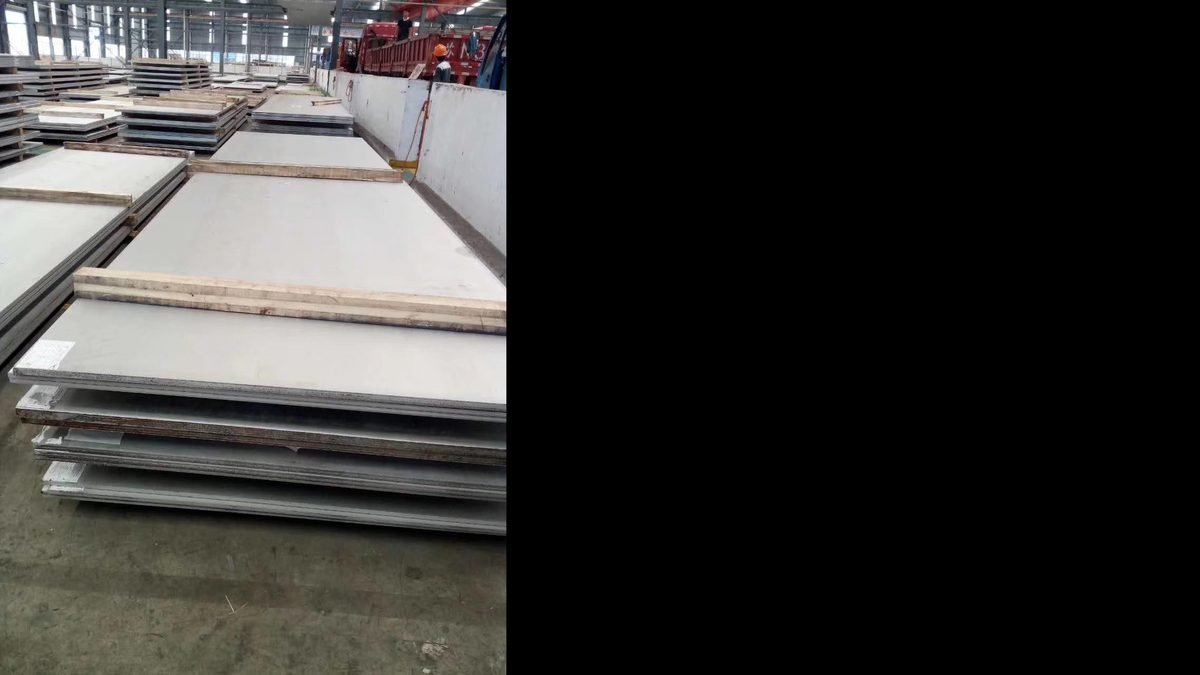
Flatness is the tolerance most often waived and most often regretted. A plate that is 8 mm out of flat over a metre will produce a tank shell with a visible bulge, and the welder will fight the fit up for the whole day. If the plate will be used for a visible surface, specify flatness and inspect it on a surface table before cutting.
5. Processing and Manufacturing Points
Skæring. Plasma cutting is fast and leaves a heat tinted edge that must be ground or pickled if the edge will be in contact with a corrosive medium. Waterjet cutting leaves a clean edge with no heat affected zone, at a higher cost and a slower speed. Shearing is the cheapest option for straight cuts up to about 12 mm, but it introduces a rake and a slight edge bow. Laser cutting above 6 mm is slow and expensive, and is usually reserved for profiles rather than straight cuts.
Edge preparation for welding. A plasma cut edge carries a chromium depleted layer and an oxide that will cause porosity if welded directly. The edge should be ground back to bright metal for at least 10 mm either side of the joint before welding. This step is skipped more often than any other, and it is the reason stainless welds sometimes rust along the fusion line.
Dannelse. Hot rolled plate in 304 can be rolled, pressed and bent, but the bend radius must be generous. EN 90 degree bend in 6 mm plate with an internal radius below 2 times thickness will show orange peel on the outside of the bend. Plate is usually formed in the rolling direction, because transverse bending has lower ductility.
Bearbejdning. 304 plate work hardens quickly. A sharp tool, a positive rake and a constant feed are the practical rules; a tool that rubs instead of cuts will harden the surface and the next pass will be worse. For drilled holes above 20 mm, a pilot hole and a steady feed are cheaper than a single large drill.
Svejsning. Use a matching 308L filler for 304 til 304 joints, low heat input, and a back purge on the root side of any joint that will be in contact with product. For thick plate, a multi pass V groove with interpass cleaning is normal. Do not weld 304 plate to carbon steel without a transition piece, because the dissimilar joint will corrode at the interface in a wet environment.
Plate is often combined with cold rolled sheet in the same fabrication. Where the visible panels are thin sheet and the structural parts are plate, the sheet is specified separately; de 304 stainless steel sheet 2B finish page covers the cold rolled counterpart, and mixing the two in one structure requires a weld procedure that covers both thicknesses.
6. Selection and Installation Rules
- State the standard, the annealed and pickled condition, and the thickness as a minimum where the plate is a pressure or structural member.
- Choose the cut process by what happens to the edge, not by speed. A plasma cut edge that will be welded needs grinding either way.
- Specify flatness for visible plates, and reject plates that arrived bowed rather than trying to press them straight on site.
- For tank shells, order plates in the rolling direction and mark the direction on the plate so the fabricator can orient the bends.
- Keep No.1 plate away from carbon steel work areas. Grinding dust from carbon steel is the most common source of rust spots on a new stainless tank.
- Store plates flat on timber, not on edge, and never stack a plate on a rough concrete floor.
- If the plate will be polished later, order it with a surface free of deep scale pits, because polishing cannot remove a pit without leaving a hollow.
For installations that combine plate with 316L components, such as a 304 shell with 316L nozzles, the galvanic couple is small because both are stainless, but the weld transition still needs the right filler. De 316L rustfri stålplade page covers the matching molybdenum bearing grade for chloride service.
Thickness selection for a tank shell is a calculation, not a habit. The governing case is usually the hydrostatic head at the base of the shell plus the design pressure, checked against the allowable stress of the annealed grade at the design temperature. EN 3 mm shell that is adequate for a 2 m water tank is not adequate for a 6 m tank, og en 6 mm shell chosen to be safe is a large unnecessary cost on a small vessel. The same calculation should check the nozzle and manway areas, because a thick shell with a thin nozzle connection simply moves the weak point.
7. Common Misconceptions
Misconception one: No.1 finish is a defect. It is the normal pickled surface of hot rolled plate. It looks dull because it has not been polished, not because it is inferior.
Misconception two: hot rolled plate is cheaper than sheet at any thickness. Below about 3 mm, hot rolled plate is not produced, and a thick cold rolled sheet can be cheaper than a thin plate because the plate mill has a minimum thickness and a setup cost.
Misconception three: plate thickness tolerance is the same as sheet tolerance. It is not. EN 12 mm plate can legitimately vary by more than half a millimetre, which is enormous compared with a 1.2 mm sheet tolerance of 0.03 mm.
Misconception four: sheared edges are ready to weld. A sheared edge has a rake, a slight burr and a work hardened zone. It should be ground before welding, especially on the root side.
Misconception five: a thicker plate is always more corrosion resistant. Corrosion resistance is a surface property. A thicker plate takes longer to perforate but pits at exactly the same chloride level.
8. Ofte stillede spørgsmål
What does No.1 finish mean on stainless plate?
It is the hot rolled, udglødet og syltet overflade. It is matte grey, uniform, and has no polishing or brushing applied. It is the standard mill finish for plate above about 3 mm.
Can No.1 plate be polished to a mirror finish?
Ja, but the starting surface must be free of deep pits. Polishing removes metal, and a pit that is 0.2 mm deep will still be visible after a mirror polish unless the plate is ground down first.
What is the maximum thickness available in 304 plade?
Standard plate mills supply up to about 60 mm, and heavier thicknesses are available as forged or rolled specials with a longer lead time. Above 80 mm, most buyers move to a forging.
How is plate weight calculated?
Length times width times thickness times 7.93 g/cm3. EN 6 mm plate of 1500 x 6000 mm weighs about 428 kg, which is why plate handling needs a crane rather than a pallet truck.
Does 304 plate need pickling after welding?
Any weld on 304 leaves heat tint and a chromium depleted zone. If the joint will be exposed to moisture or food, it should be pickled and passivated. Inside a dry, non corrosive enclosure, grinding may be sufficient.
Kan 304 plate be used for a seawater tank?
Not for continuous seawater service. 304 will pit in seawater, especially in stagnant zones and at welds. 316L is marginal and a higher molybdenum grade is the practical choice.
How many plates fit in a container?
Payload decides, not volume. EN 20 foot container takes about 21 til 25 tons, which is roughly 50 plates of 6 mm at 1500 x 6000 mm eller 12 plates of 25 mm at the same size. Thick plate shipments are usually loaded on flat racks or in break bulk because the crane at destination cannot lift a dense stack out of a standard box.
9. Next Step
If you are buying 304 hot rolled plate, the enquiry should carry thickness with a minimum, bredde og længde, cut process, flatness requirement, surface condition, and whether the plate will be welded or polished later. Those five lines decide most of the cost and nearly all of the quality outcome.
Related product pages: 304 stainless steel sheet 2B finish, 316L rustfri stålplade.

