 تقدم
C11000 Copper Sheet for Roofing: حِدّة, Thickness and Patina
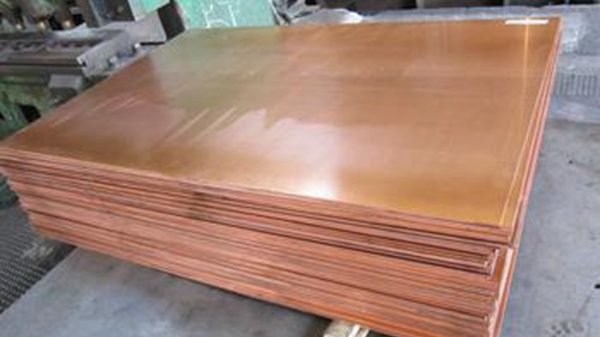
C11000 copper sheet is electrolytic tough pitch copper with at least 99.90% نحاس, supplied annealed or half-hard for roofing, الكسوة, flashings and architectural work. It is the same family as C11000 busbar and strip, but roofing demands different priorities: القابلية للتشكيل, consistent temper, surface cleanliness and a patina that develops evenly. يغطي هذا الدليل الكيمياء, temper and mechanical limits, sheet sizes and tolerances, standing-seam detailing, soldering, expansion and the mistakes that cause early staining or cracked seams.
C11000 is not the only copper for roofing — C12200 phosphorus-deoxidised copper is used where welding is extensive — but C11000 is the common architectural grade and the one most often stocked.
What C11000 Copper Sheet Is
ETP stands for electrolytic tough pitch. The copper is refined electrolytically and cast with a controlled oxygen content, عادة 0.02 - 0.04%. That oxygen combines with residual impurities and improves conductivity, but it also means the metal is not suited to hydrogen-bearing welding atmospheres, where steam can form at grain boundaries.
- Standing seam roofing and vertical cladding
- Flashings, المزاريب, downpipes and rainwater goods
- Roof drainage, fascia and ornamental architectural elements
- Interior wall panels and feature surfaces
- Electrical earthing and RF shielding where sheet form is needed
Chemical Composition and Conductivity
| عنصر | حد | تأثير |
|---|---|---|
| نحاس (النحاس) | ≥ 99.90% | المعدن الأساسي |
| الأكسجين (ا) | 0.02 - 0.04% | Tough pitch; improves conductivity |
| Silver (حج) | ≤ 0.025% | Counted with copper |
| Bismuth (ثنائية) | ≤ 0.0005% | Embrittles at grain boundaries |
| Lead (الرصاص) | ≤ 0.005% | النجاسة |
| حديد (Fe) | ≤ 0.005% | Lowers conductivity |
| الفوسفور (ص) | ≤ 0.001% | Not deoxidised in ETP |
Typical limits for C11000; confirm against ASTM B152 or EN 1412 for the ordered temper.
Conductivity is about 101% IACS in the annealed condition, which is why the same grade serves busbar and roofing. For roofing the conductivity is irrelevant; what matters is that the oxygen content and impurity limits give a consistent, formable sheet that solders cleanly.
Temper and Mechanical Properties
| حِدّة | تعيين | Yield Rp0.2 | Tensile Rm | استطالة | Roofing use |
|---|---|---|---|---|---|
| صلب | O60 | 70 - 100 الآلام والكروب الذهنية | 220 - 260 الآلام والكروب الذهنية | ≥ 35% | Standing seam, flashings |
| نصف صعب | H01/H02 | 150 - 250 الآلام والكروب الذهنية | 260 - 330 الآلام والكروب الذهنية | ≥ 10% | Panels needing stiffness |
| ربع صعب | H00 | 120 - 180 الآلام والكروب الذهنية | 240 - 300 الآلام والكروب الذهنية | ≥ 20% | General forming |
القيم النموذجية; the mill certificate governs. Harder tempers form less and spring back more.
Roofing copper is usually supplied annealed or quarter hard. Half-hard sheet is used where the panel must stay flat between seams, but it must be formed with more generous radii. If the temper is not specified, two suppliers can deliver sheet that behaves differently on the same folding machine.
Sheet Sizes and Tolerances
| غرض | يتراوح | ملحوظات |
|---|---|---|
| سماكة | 0.5 - 3.0 مم | 0.6 - 1.0 mm typical for roofing |
| عرض | 600 - 1,250 مم | Coil or cut sheet |
| طول | 1,500 - 3,000 مم | قطع لطول عند الطلب |
| Thickness tolerance | ±0.05 mm typical | Tighter for standing seam |
| التسطيح | ≤ 3 مم لكل متر | Critical for visible panels |
| سطح | الانتهاء من مطحنة, ينظف, جاف | No oil or residual emulsion |
Thickness tolerance is more important than it appears: a standing seam pan is folded from a single sheet, and a thickness variation along the strip changes the seam tightness. For long pans, specify thickness at both ends and in the middle.
Roofing Systems and Detailing
Standing seam
Standing seam is the default system for copper roofs. The pans are roll-formed with upstanding seams, fixed with concealed clips, and allowed to move thermally. The seam height, pan width and clip spacing are set by the system supplier and by the wind load, not by the sheet alone.
Expansion and movement
Copper expands about 1.7 مم لكل 10 m for a 50 °C temperature change. أ 12 m pan fixed at both ends will buckle or tear the seam; the fixing detail must allow movement, and pans longer than about 10 - 12 m should be split with a movement joint.
Substrate and ventilation
Copper must be laid over a ventilated, compatible substrate. Contact with untreated timber, cement mortar or bitumen can stain the underside and accelerate corrosion. Use a separation layer and keep the cavity ventilated so condensation dries.
تشكيل, Soldering and Fixing
- Fold across the rolling direction where possible; bending along the rolling direction can open the grain and crack at tight radii.
- Use nylon or hardwood tooling on visible faces to avoid iron marks that later rust.
- Solder with lead-free or tin-lead solder and a compatible flux; clean flux residues or they will stain the patina.
- For standing seams, use copper or copper-alloy clips; galvanised steel clips corrode in contact with copper.
- Do not fix copper directly over aluminium or zinc: galvanic couple and run-off will attack the less noble metal.
- Keep copper run-off away from galvanised gutters and stainless steel unless the detail is designed for it.
Patina and Run-off
Copper weathers from bright salmon to brown, then to the green patina that most architects want. In clean air the colour change takes several years; in polluted or coastal air it can be faster and more uneven. The patina is a protective layer of basic copper salts, but it is also a source of dissolved copper in run-off, which stains porous surfaces and can harm aquatic life in closed drainage systems.
- Expect initial run-off to stain light-coloured render, stone and concrete below the roof.
- Design gutters and drainage to carry copper run-off away from zinc and aluminium surfaces.
- Do not expect a uniform patina on a roof with varied exposure; shading and rain-washing create patterns.
- Factory-applied patina finishes exist where a uniform colour is needed from day one.
قواعد الاختيار
C11000 or C12200?
C11000 ETP is the standard architectural sheet and has the best conductivity. C12200 DHP is deoxidised with phosphorus, which makes it more weldable and less prone to embrittlement in hydrogen atmospheres, at the cost of about 10 - 15% الموصلية. For a soldered or folded roof, either works; for extensive welding, choose C12200.
Which temper?
Annealed for hand-formed flashings and complex details; quarter hard where the panel must stay flatter; half hard only for stiff, shallow panels. Harder tempers crack at tight folds and spring back more.
Which thickness?
0.6 - 0.7 mm for standing seam roofs, 0.8 - 1.0 mm for large pans and exposed edges, 1.2 mm+ for flashings that take mechanical damage. Thinner sheet is not cheaper in the long run: it dents, tears at fixings and cannot be re-formed.
Roof Build-Up and Fixing Sequence
A copper roof is a system, not a sheet. The sequence below is the one that avoids the common failures: ponding, condensation, galvanic contact and thermal tearing.
- Deck: a continuous, dry substrate with a fall to the outlets. Copper needs a ventilated cavity, not a sealed sandwich.
- Separation layer: a suitable underlay that is compatible with copper and does not contain bitumen or untreated timber.
- Batten and cavity: create a ventilated air space so condensate dries and the metal can move.
- Pans and seams: roll-form the pans to the designed width and seam height; do not stretch the sheet to fit.
- Clips: concealed clips fixed to the batten, spaced to the wind load, allowing thermal movement.
- Flashings: step and apron flashings folded from the same temper and thickness as the pans.
- ينهي: clean the surface, remove solder flux, and inspect for iron contamination before handover.
The most common site error is fixing a pan at both ends ‘to keep it tight’. Copper expands and contracts with every weather cycle; a restrained pan will buckle, oil-can or tear at the seam within a season.
Soldering, Brazing and Mechanical Joints
Copper roofing is joined by soldering, riveting or a proprietary seam clip. Soldering is the traditional method for flashings and gutters, and it needs a clean surface, the right flux and a heat source that does not overheat the sheet.
| Joint | طريقة | ملحوظة |
|---|---|---|
| Flashing and gutter | Tin-lead or lead-free solder | Clean flux residue; neutralise before patina |
| Seam | Mechanical clip or soldered flat seam | Follow the system supplier’s detail |
| Dissimilar metal | Isolate with a separation layer | Never solder copper directly to zinc |
| Repair | Solder or copper rivet | Match temper; avoid hard temper patch |
Residual flux is the most common cause of green staining around a new flashing. It absorbs moisture and creates a local cell. Wash the joint with clean water and a mild neutraliser, then dry before the patina develops.
Corrosion by Atmosphere
Copper is one of the most durable architectural metals, but its performance is not uniform. The corrosion rate depends on sulphur dioxide, chlorides, rain-washing and shelter.
| Environment | Behaviour | Design response |
|---|---|---|
| Clean rural | Slow, even patina | Standard detailing |
| Urban / صناعي | Faster patina, sulphate staining | Wash down, avoid sheltered soffits |
| ساحلية | هجوم بالكلوريد, uneven patina | More fall, avoid salt traps |
| Sheltered / unwashed | Stays brown, can accumulate salts | Design for rain-washing |
| Contact with zinc/aluminium | Galvanic attack on the other metal | Isolate or separate run-off |
Where copper run-off lands on zinc or aluminium, the less noble metal corrodes. That is why copper roofs need gutters and downpipes detailed so water does not discharge onto galvanized steel, aluminium cladding or concrete that will be stained.
Specifying Flatness, Finish and Packing
Copper sheet is soft and marks easily. A coil that was handled without gloves will show handprints that only become visible after weathering. Flatness and surface condition should be written into the order, not left to the mill’s default.
- التسطيح: state mm per metre, especially for visible standing seam pans.
- سطح: ينظف, جاف, free of oil, emulsion and iron contamination.
- حافة: slit edge deburred; burrs damage the folding tooling and the sheet.
- التعبئة: interleaved, timber-crated, protected from rain and from steel band contact.
- Handling: gloves at every stage; copper is a soft metal and fingerprints are permanent.
Case: Replacing a Church Roof
A typical replacement roof on a 19th-century church uses 0.7 mm C11000 in 600 mm pans, standing seams at 25 mm height and concealed clips at 300 مراكز مم. The existing substrate is usually retained after inspection; rotten battens are replaced, the cavity is re-vented and the copper is laid with a separation layer.
The details that decide whether the roof lasts 80 years are not in the sheet: the fall, the cavity, the clip spacing, the expansion joints and the discharge path. A copper roof installed with no ventilation and no movement will fail at the seams long before the metal itself corrodes.
Storage and Handling on Site
- Store sheets flat, تحت الغطاء, بعيدا عن الارض, with interleaving between sheets.
- Do not store copper in contact with steel, zinc or aluminium; galvanic staining starts in storage.
- Handle with clean gloves; fingerprints etch into the surface and show after weathering.
- Lift large pans with a spreader, not by the seam; a creased pan cannot be straightened.
- Cut and form on a clean, dedicated bench; a single steel swarf scratches the sheet.
قائمة مراجعة الطلب
- Alloy C11000 ETP, with ASTM B152 or EN 1412 stated
- حِدّة: O60, H00 or H01 as the forming method requires
- سماكة, عرض, length and number of sheets or pans
- Flatness and surface requirements
- Patina: natural or factory-applied, and the expected colour
- Packing for sea freight and site storage
الأخطاء الشائعة
- Fixing pans rigidly at both ends and tearing the seam in the first hot week.
- Using galvanised clips or carbon steel screws in contact with copper.
- Laying copper directly on wet timber or mortar without a separation layer.
- Leaving soldering flux on the surface and blaming the mill for green staining.
- تحديد 0.5 mm sheet for a roof with a 12 m pan and high wind load.
- Ignoring run-off staining on the façade below.
Design Life and Cost
Copper roofing is judged over decades, not over the first invoice. أ 0.7 mm C11000 roof with correct detailing can last 60 - 100 years with minimal maintenance; the same roof installed without ventilation or movement joints can fail at the seams in under ten. The sheet is a small part of the installed cost — labour, access, substrate and detailing usually dominate.
When comparing quotations, compare the installed system: thickness and temper, pan width and seam detail, clip spacing, flashing scope, and whether the price includes the separation layer and cavity. A cheaper sheet with a thinner gauge or a lower temper is not the same product, and substituting it changes the life of the roof.
Also confirm the surface condition at delivery. Copper sheet that has been stored wet, handled with bare hands or banded with steel straps carries marks that only appear after a season of weathering, when the roof is already installed and the remedy is expensive. A pre-delivery inspection with photographs is a reasonable request on a large architectural order.
الأسئلة المتداولة
Is C11000 suitable for roofing?
نعم. It is the common architectural copper sheet, normally supplied annealed or quarter hard, and is used for standing seam, cladding and flashings.
How long does copper take to turn green?
Typically 5 - 15 years depending on climate, pollution and exposure. Coastal and polluted atmospheres can accelerate it; sheltered areas can stay brown much longer.
Can copper sheet be welded?
C11000 can be welded but the oxygen content makes it sensitive to hydrogen embrittlement. For extensive welding, C12200 DHP is the safer choice.
What thickness for a standing seam roof?
0.6 - 0.7 مم شائع; يستخدم 0.8 mm or more for large pans, exposed edges or high wind load.
Does copper stain the wall below?
نعم, early run-off can stain porous surfaces. Design drainage and detailing to keep run-off away from light façades and from zinc or aluminium.
Do you supply C11000 sheet cut to size?
نعم. إرسال سمك, حِدّة, عرض, length and quantity; we cut, protect and pack for export.
Related Products on QIDAMT
Need C11000 copper sheet for a roofing or cladding package?
إرسال سمك, حِدّة, pan size and quantity. We confirm alloy, tolerance and delivery within 24 ساعات.