 تقدم
6061-T6 Aluminium Plate: سماكة, Flatness and Machining Guide
6061-T6 Aluminium Plate: سماكة, Flatness and Machining Guide
6061-T6 aluminium plate is the most widely used heat treated aluminium plate in general engineering. The alloy is a magnesium-silicon grade with small additions of copper and chromium, and the T6 temper means it has been solution heat treated and then artificially aged to a controlled strength level. The result is a plate that machines cleanly, holds a stable shape after cutting, and can be anodised to a durable finish.
The grade is not the strongest aluminium available and it is not the most corrosion resistant. It is the grade that offers the best balance of strength, القدرة على الماكينات, قابلية اللحام, corrosion resistance and price for general purpose parts. That balance is why it appears in CNC machined components, الرقص والتركيبات, moulds, الإطارات الهيكلية, marine hardware, food equipment and architectural fittings.
This guide covers the chemistry and temper, the mechanical values, the thickness and flatness tolerances that actually matter on a machine table, the cutting and machining practice, the anodising rules, the welding limitations, and the errors that cause a plate to distort after it has been machined.
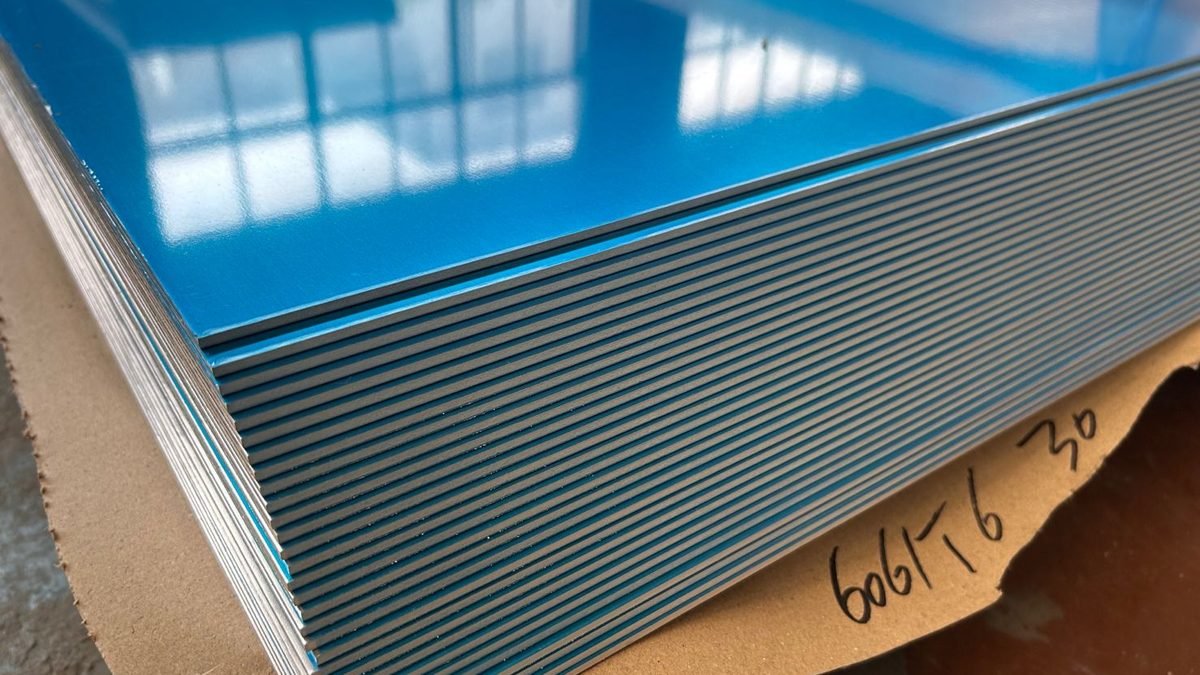
What 6061-T6 Plate Is and Where It Is Used
6061 is an aluminium-magnesium-silicon alloy that responds to precipitation hardening. In the T6 temper, the plate is heated to a temperature high enough to dissolve the alloying elements, quenched, and then aged at an intermediate temperature so that fine precipitates form and raise the strength. The treatment is done at the mill and the temper is guaranteed by the certificate.
The T6 temper is the strongest commonly available temper for this alloy. The T4 temper is naturally aged and is softer and more formable, while the O temper is annealed and is used for severe forming. T651 is a stress relieved variant of T6, produced by stretching the plate after quenching to remove residual stress; it is the correct choice for large machined parts that must remain flat.
Typical applications include CNC machined brackets and housings, inspection fixtures and jigs, vacuum chucks, moulds for plastic injection and blow moulding, حراس الآلة, structural frames for automation equipment, boat fittings, أجسام الشاحنات, food processing tables, and anodised architectural panels.
The grade is not intended for high temperature service. Its strength falls away above about 150 degrees Celsius, and prolonged exposure to elevated temperature overages the alloy and reduces strength permanently. For high temperature work, a different alloy series is required.
Chemical Composition and Temper Designations
The composition is controlled by ASTM B209 for plate and sheet and by EN 485 for European supply. The table below gives the ASTM limits for the alloy.
| عنصر | Range or maximum | Role |
|---|---|---|
| المغنيسيوم | 0.8 ل 1.2 | Forms the strengthening precipitate with silicon |
| السيليكون | 0.40 ل 0.80 | Forms magnesium silicide |
| نحاس | 0.15 ل 0.40 | Raises strength, reduces corrosion resistance slightly |
| الكروم | 0.04 ل 0.35 | Controls grain structure and resistance to stress corrosion |
| حديد | 0.70 الأعلى | النجاسة, kept low for toughness |
| المنغنيز | 0.15 الأعلى | Impurity control |
| الزنك | 0.25 الأعلى | النجاسة, affects corrosion |
| التيتانيوم | 0.15 الأعلى | Grain refinement |
| الألومنيوم | توازن | Base metal |
The temper designations matter as much as the chemistry. T6 means solution heat treated and artificially aged. T651 يعني نفس العلاج بالإضافة إلى التمدد المتحكم فيه بعد التبريد لتخفيف الضغط المتبقي. T6511 means stress relieved by stretching and then straightened. For a large plate that will be machined into a flat fixture, T651 is the correct order; T6 plate can move when a large amount of material is removed from one face.
The European equivalent designation is EN AW-6061, with the temper written as T6 or T651. The Japanese designation is A6061. The Chinese designation is 6061 in GB/T 3880. The chemistry windows are close enough for most work, but the mechanical property minimums and the tolerances can differ, so the certificate should be checked against the purchase order rather than against a generic data sheet.
الخصائص الميكانيكية
The values below are typical for 6061-T6 plate in the thickness range from about 6 مم ل 50 مم. Thin sheet and very thick plate can differ because the quench rate varies through the thickness.
| ملكية | قيمة نموذجية | Comment |
|---|---|---|
| قوة الشد | 310 الآلام والكروب الذهنية | Minimum specified value is lower, عادة 290 الآلام والكروب الذهنية |
| قوة العائد, 0.2 percent offset | 276 الآلام والكروب الذهنية | Minimum specified value is typically 240 الآلام والكروب الذهنية |
| استطالة في 50 مم | 12 بالمائة | Minimum specified value is typically 10 بالمائة |
| صلابة | 95 غ.ب | Approximate, for reference only |
| معامل المرونة | 68 المعدل التراكمي | About one third of steel |
| كثافة | 2.70 grams per cubic centimetre | Useful for weight comparison |
| الموصلية الحرارية | عن 170 watts per metre kelvin | عالي, conducts heat away during machining |
| التمدد الحراري | عن 0.000023 per degree Celsius | Higher than steel, allow for growth |
The low modulus is the property that surprises designers most. أ 6061 plate deflects about three times as much as a steel plate of the same thickness under the same load. A fixture plate that is stiff enough in steel will be too flexible in aluminium unless the thickness or the support spacing is changed. Deflection, not yield, usually governs the design of a machined plate.
The high thermal conductivity is an advantage in machining because heat is carried away from the cut, but it also means the plate expands noticeably when it warms up. أ 500 mm plate heated by 10 degrees Celsius grows by about 0.115 مم, which is enough to put a close tolerance outside its limit. Parts that must hold a tolerance of 0.02 mm should be machined in a temperature controlled environment, or measured after the part has returned to room temperature.
Thickness and Flatness Tolerances
Thickness tolerance for aluminium plate is usually expressed as a range around nominal, and the permitted range widens as the plate gets thicker. The values below are typical commercial values under ASTM B209 for 6061-T6 plate; the purchase order standard always governs.
| Nominal thickness | Typical tolerance | ملحوظة |
|---|---|---|
| 1.0 ل 3.0 مم | زائد أو ناقص 0.13 مم | Sheet range, tighter control available |
| 3.0 ل 6.0 مم | زائد أو ناقص 0.20 مم | Common plate range |
| 6.0 ل 12.0 مم | زائد أو ناقص 0.30 مم | Most CNC fixture work |
| 12.0 ل 25.0 مم | زائد أو ناقص 0.40 مم | Mould plate range |
| 25.0 ل 50.0 مم | زائد أو ناقص 0.60 مم | Thick plate, check both faces |
| 50.0 ل 100 مم | زائد أو ناقص 1.0 مم | Heavy plate, saw cut allowance needed |
| 100 ل 200 مم | زائد أو ناقص 1.5 مم | Cast or forged plate may be needed |
Flatness is the more important tolerance for machined parts. A plate that is within thickness tolerance but bowed will clean up on one face and leave the other face out of tolerance. Typical flatness for 6061-T6 plate is 1 ل 3 mm per metre, and the value depends on the temper and the thickness. T651 plate is stretched to reduce residual stress and is flatter and more stable than plain T6.
For a part that must be flat within 0.05 مم فوق 300 مم, the plate should be ordered in T651, machined on both faces with balanced stock removal, and stress relieved between roughing and finishing. Removing 3 mm from one face of a 20 mm plate and nothing from the other face will bow the part, no matter how flat the plate was when it arrived.
Width and length tolerances are usually plus only, in the range of 0 ل 6 mm for sawn plate. A plate ordered to an exact finished size should be ordered with a machining allowance, because the sawn edge is not a finished edge and the saw cut is rarely square to the face.
Surface Condition and Plate Forms
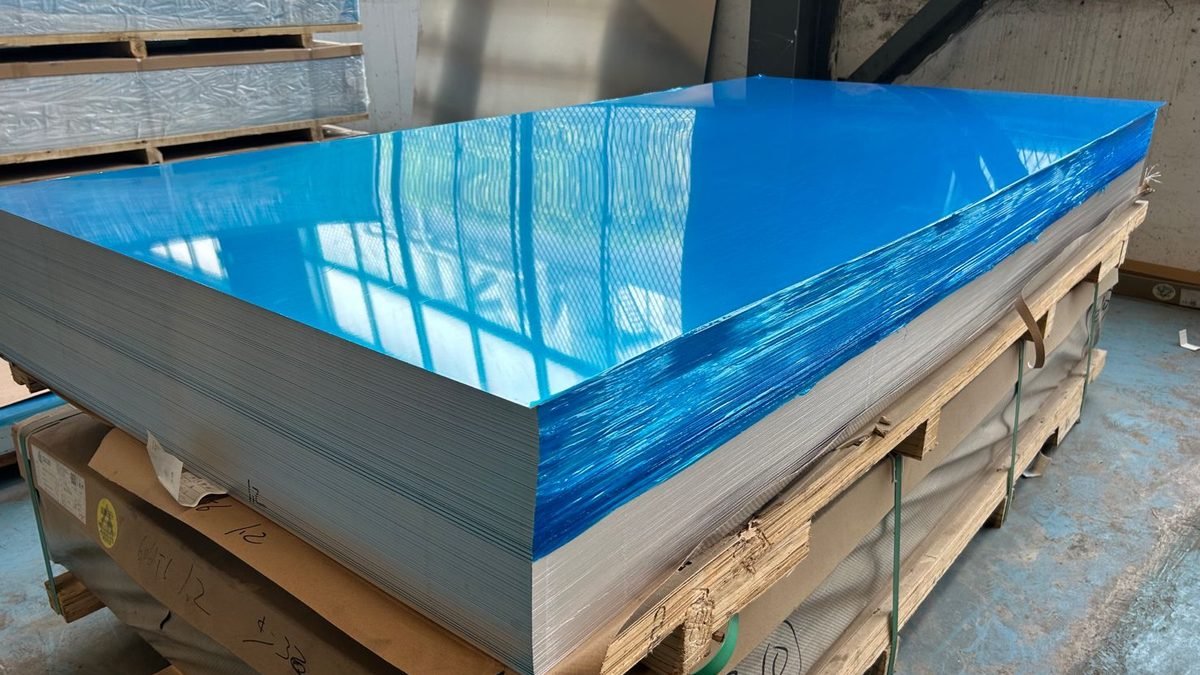
6061-T6 plate is supplied with a rolled surface, sometimes with a protective film. The surface may show roll marks, slight scratches from handling, and a variation in colour from the heat treatment. These are normal and are removed by machining or by a light etch before anodising.
Cast plate is a different product. It is produced by continuous casting or by sand casting and is used for moulds and for large fixtures where thickness and flatness matter more than surface finish. Cast 6061 is available in thick sections that rolled plate cannot match, but the cast structure has a different grain size and the mechanical properties are lower than rolled plate. The two should not be substituted without checking the design.
Tread plate, also called chequered plate, is rolled with a raised pattern on one face for grip. It is used for flooring, vehicle platforms and walkways. The pattern is produced by rolling, not by cutting, and the plate thickness is measured at the base of the pattern.
Sawing, Milling and Drilling
Sawing is done with a carbide tipped circular saw or a band saw. A coolant flood is essential on aluminium because the material galls and welds to the blade if the chip is not cleared. The saw blade should be a triple chip grind for plate and a variable pitch blade for thick sections. A blade designed for steel will load up and produce a rough, work hardened edge.
Milling 6061-T6 is straightforward with sharp, high helix carbide tools. Surface speed is high, عادة 300 ل 600 metres per minute for carbide, and the feed per tooth should be large enough to produce a real chip rather than rubbing. A rubbed surface work hardens and produces a poor finish on the next pass. Climb milling on a rigid machine gives the best finish and the longest tool life.
Coolant choice matters. A water soluble coolant with a high concentration controls built-up edge and prevents the chips from welding to the tool. Mist coolant is acceptable for light cuts but is not adequate for deep pockets or for high material removal rates. Through spindle coolant is the best choice for deep holes and for pockets where the chip otherwise stays in the cut.
Drilling deep holes in 6061 requires peck drilling and frequent retraction to clear the chip. A drill that is allowed to pack the flutes will break, and the broken tool is difficult to remove from a deep hole. A parabolic flute drill with internal coolant is the reliable choice for depth to diameter ratios above five.
Thin plate deflects under cutting force and chatters. The remedy is to support the plate from below with a sacrificial backing, to reduce the depth of cut, and to use a vacuum table or a magnetic chuck where the material allows. A plate that is simply clamped at the edges will lift in the middle and produce a tapered cut.
Stress Relief and Dimensional Stability
Residual stress is the main cause of a machined plate that moves after it leaves the machine. The stress comes from the rolling process and from the quench during heat treatment. When material is removed from one face, the balance is disturbed and the part bows to reach a new equilibrium.
The remedies are known and practical. Order T651 plate, which has been stretched to reduce the stress. Remove material from both faces in a balanced sequence. Rough machine, then stress relieve, then finish. Stress relief for 6061 is done by heating the part to a controlled temperature below the aging temperature and holding it long enough to relax the stress without overaging the alloy.
For a large fixture, a common sequence is to rough the part with 1 ل 2 mm of stock on every face, stress relieve, then finish. The extra handling cost is small compared with the cost of a scrapped fixture. For a small part, balanced removal and a sharp tool may be sufficient, especially if the plate was supplied in T651.
Cutting a large plate into smaller blanks also releases stress. A blank that is sawn from a large plate may move after sawing, and the finished part may not clean up. Allow extra stock on sawn blanks and machine the first face lightly to establish a reference before the final passes.
Anodising 6061-T6
6061 anodises well. The alloy produces a clear, slightly yellow to grey coating in the standard sulfuric acid process, and it can be dyed to a wide range of colours. أنودة صعبة, also called Type III, produces a thicker and harder coating that is used for wear surfaces and for parts that must resist abrasion.
The coating grows both inward and outward from the original surface. Roughly half the coating thickness is above the original surface and half is below, لذلك أ 20 micrometre coating adds about 10 micrometres to the part dimension. A part that must hold a tolerance of 0.02 mm should account for the coating growth, or the coating should be specified as thin and the tolerance adjusted.
Copper in the alloy affects the colour. 6061 with a copper content near the upper limit tends to produce a darker coating than a low copper heat. For a colour match across a batch, the anodiser should be told the alloy and the temper, and the parts should be processed together in one tank.
Surface preparation before anodising is critical. A scratched or contaminated surface will produce a coating with visible defects. A light etch removes the rolled surface and reveals the grain structure, and the parts should be handled with clean gloves after etching. Parts that have been machined with a coolant containing silicone or with a lubricant containing sulphur can produce smut and poor coating adhesion.
Masking is used where the coating is not wanted, for example on a threaded hole or on an electrical contact surface. Masking tape and lacquer are both used, and the mask must be removed before the part is sealed. A masked area that is not properly sealed will corrode under the mask in service.
Welding and Its Effect on Strength
6061-T6 can be welded, but the T6 temper is lost in the heat affected zone. The weld and the adjacent material revert to a lower strength condition, roughly the O or T4 level, and the joint becomes the weak point in the assembly. A welded 6061-T6 frame should be designed on the welded strength, not on the parent plate strength.
The filler metal is usually 4043, which is a 5 percent silicon alloy, أو 5356, which is a 5 percent magnesium alloy. 4043 gives better crack resistance and is preferred for general work; 5356 gives higher strength and is preferred for marine and for parts that will be anodised, because the silicon in 4043 produces a dark coating over the weld.
Welding should be done with AC gas tungsten arc for thin sections and with gas metal arc for thicker work. The joint should be clean, degreased and free from oxide. A stainless brush dedicated to aluminium is used to remove the oxide immediately before welding.
If the welded assembly must have full T6 strength, the only route is to weld in the O condition, re-solution treat and re-age the whole assembly. That is a heat treatment operation, not a workshop operation, and it is rarely practical for a large frame. The realistic design choice is to use a welded design at reduced strength, or to use bolted or riveted connections that do not destroy the temper.
Selecting the Right Plate
The first decision is the temper. For a part that will be machined heavily and must stay flat, order T651. For a part that will be formed and not machined, T4 or O may be better. For a part that will be welded and not heat treated after welding, design on the welded strength of T6 and accept the loss in the heat affected zone.
The second decision is the thickness. Allow enough stock for machining both faces, for stress relief movement, and for the anodising growth. A plate that is ordered to the finished thickness has no allowance for cleanup, and any bow in the plate becomes scrap.
The third decision is the flatness requirement. If the part is a fixture or a mould, specify flatness per metre and state the measurement method. If the part is a guard or a cover, flatness is cosmetic and the standard mill tolerance is adequate.
The fourth decision is the surface. A mill finish is adequate for painted parts. A machined finish is needed for sealing surfaces. An anodised finish is needed for wear resistance, corrosion resistance or appearance. The finish should be chosen before the thickness and tolerance are fixed, because the coating changes the dimension.
Common Mistakes in Specification and Machining
Ordering T6 when T651 is needed is the first mistake. The plate may be flat on arrival and bow after machining. The price difference is small compared with the cost of a scrapped part.
The second mistake is machining one face only. Removing material from one side of a stressed plate changes the balance and produces a bow that cannot be corrected by clamping. Rough both faces, stress relieve, then finish.
The third mistake is measuring a part that is still warm. Aluminium expands by about 0.023 percent per degree Celsius, and a part checked straight from the machine can be outside tolerance and still be correct when it cools.
The fourth mistake is using a steel cutting fluid or a blade designed for steel. Aluminium galls, the chip welds to the tool, and the surface tears. Use a sharp aluminium-specific tool and a coolant that is designed for the material.
The fifth mistake is specifying an anodised finish without allowing for coating growth. A precision bore that is anodised after finishing will be undersize, and a shaft will be oversize.
The sixth mistake is welding a T6 frame and assuming the design strength is available at the joint. The heat affected zone is weaker, and the joint should be designed and inspected accordingly.
الأسئلة المتداولة
What does 6061-T6 mean? 6061 is the alloy, and T6 is the temper: solution heat treated and artificially aged to a controlled strength level.
Is 6061-T6 good for machining? نعم, it is one of the easiest aluminium alloys to machine, provided the tool is sharp and the coolant is adequate.
What is the difference between T6 and T651? T651 is T6 plus a controlled stretch after quenching to relieve residual stress. It is the better choice for large machined parts that must stay flat.
Can 6061-T6 be welded? نعم, but the T6 temper is lost in the heat affected zone. The joint should be designed at the welded strength.
Does 6061 anodise well? نعم, it produces a clear to grey coating and accepts dye. Hard anodising is used for wear surfaces.
How much does anodising change the dimension? About half the coating thickness grows above the original surface. Account for it on precision parts.
What is the flatness tolerance? Typically 1 ل 3 mm per metre for plate, depending on thickness and temper. Specify the value and the measurement method if flatness matters.
Why did my plate bow after machining? Residual stress was released when material was removed from one face. Use T651, machine both faces, and stress relieve between roughing and finishing.
What is the maximum thickness available? Rolled plate is commonly available up to about 200 مم, and cast plate can be thicker. Very thick sections may be forged or cast rather than rolled.
Is 6061-T6 corrosion resistant? It has good general corrosion resistance, but it is not as resistant as the 5000 series in marine environments. For seawater immersion, a different alloy should be considered.
Need 6061-T6 plate in a specific thickness, temper or cut size? Send the drawing and the flatness requirement for a quotation.
منتجات ذات صله
Related pages on this site: 6061-لوحة الألومنيوم T6, 5052-صفائح الألمنيوم H32, و 1060 لوحة الألومنيوم النقي.

