 进步
Hot Rolled Carbon Steel Coil: Mill Edge vs Slit Edge, Coil Weight and Stacking
A hot rolled carbon steel coil is the starting point for a very large share of the flat steel that ends up in construction, 机械, pipe mills, cold rolling lines and general fabrication shops. Buyers who treat it as a simple commodity often discover, a few weeks after the container arrives, that the coil they ordered has a mill edge that will not run through their slitting line, or a coil weight their overhead crane cannot lift with a safe margin. This guide explains what a hot rolled coil actually is, which grades are normally stocked, how mill edge and slit edge differ, and how coil weight, edge condition and stacking practice affect the cost and quality of the finished part.
1. What a Hot Rolled Carbon Steel Coil Is
A coil is produced by rolling a steel slab at temperatures above the recrystallisation range, typically finishing between 800 °C and 950 ℃, and then coiling the flat strip while it is still hot. The result is a continuous length of strip, 通常介于 1.5 毫米和 25 毫米厚, wound into a coil with an inner diameter of 508 毫米或 610 毫米. Because the strip is coiled immediately after rolling, the material retains a fine, uniform grain structure and a scale layer on both surfaces.
Typical uses of hot rolled carbon steel coil include:
- Cold rolling feedstock for sheet, tinplate and galvanized lines.
- 结构剖面, 脚手架, guardrail and hollow sections made by roll forming or welding.
- Pipes and tubes produced by ERW, spiral or slitting-and-welding processes.
- Automotive chassis parts, wheel rims and brackets.
- 一般制造: 底板, 角撑板, 框架, 支架和机器防护罩.
- 储罐, silos and hoppers where the surface will later be coated.
The distinction between a coil and a plate is not only thickness. A coil is delivered in a continuous, uncoiled length and is normally processed on a decoiler, slitting line or roll forming line, while a plate is delivered as a discrete cut piece with trimmed edges. That difference drives most of the purchasing decisions discussed below.

2. 牌号和化学成分
Hot rolled coil is ordered by grade, and the grade determines the carbon, manganese and impurity levels that in turn set strength, weldability and forming behaviour. The table below lists the grades most commonly traded in Asia and Europe, with typical ladle analysis ranges rather than single nominal values.
| 年级 | 标准 | C (%) | 锰 (%) | 和 (%) | 磷 / S (%) | 典型用途 |
|---|---|---|---|---|---|---|
| Q235B | 国标/T 700 | 0.14–0.22 | 0.30–0.65 | ≤ 0.35 | ≤ 0.045 / ≤ 0.045 | 总体结构, roll forming |
| SS400 | 贺G3101 | ≤ 0.20 | ≤ 0.60 | ≤ 0.35 | ≤ 0.050 / ≤ 0.050 | Export structural work |
| SPHC | JIS G3131 | ≤ 0.10 | ≤ 0.50 | ≤ 0.05 | ≤ 0.025 / ≤ 0.020 | 冷轧, 拉深 |
| Q355B | 国标/T 1591 | ≤ 0.24 | 0.50–1.60 | ≤ 0.55 | ≤ 0.035 / ≤ 0.035 | Higher-strength structures |
| S235JR | 在 10025-2 | ≤ 0.17 | ≤ 1.40 | – | ≤ 0.035 / ≤ 0.035 | European structural work |
Two points about chemistry deserve attention at the purchasing stage. 第一的, carbon equivalence matters more than the headline carbon figure when the coil will be welded: a Q235B coil with carbon at the top of the range and manganese at the bottom welds differently from one at the opposite end, even though both are nominally Q235B. 第二, phosphorus and sulphur are the elements that most often cause cracking during roll forming, so a buyer who intends to slit and cold form the coil should specify P and S at the low end rather than accept the standard maximum.
3. 机械性能
Mechanical values for hot rolled coil depend on thickness: thinner strip cools faster after coiling and generally shows higher yield strength and lower elongation than thick strip of the same grade. The table gives values typically quoted in mill test certificates for strip between 2 毫米和 12 毫米.
| 年级 | 屈服强度 (兆帕) | 抗拉强度 (兆帕) | 伸长 (%) | Bend test |
|---|---|---|---|---|
| Q235B | ≥ 235 | 375–500 | ≥ 26 | 180°, d = 2a |
| SS400 | ≥ 245 | 400–510 | ≥ 21 | 180°, d = 2a |
| SPHC | ≥ 205 | ≥ 270 | ≥ 27 | 180°, d = a |
| Q355B | ≥ 355 | 470–630 | ≥ 22 | 180°, d = 3a |
| S235JR | ≥ 235 | 360–510 | ≥ 26 | 180°, d = 2a |
The bend test column is worth reading carefully. It tells you what the mill guarantees about ductility in the direction of rolling, not through the thickness. A coil that passes the transverse bend test can still crack when a fabricator bends it across the rolling direction at a tight radius, which is one reason buyers of slit coil should ask for the test direction to be stated on the certificate.
4. 线圈尺寸和公差
Coil geometry is specified by thickness, 宽度, 内径, outer diameter and weight. Tolerances follow the standard named on the order, but the practical ranges below reflect what most mills in China and Southeast Asia can hold on a routine basis for hot rolled commercial quality.
| 特征 | 典型范围 | Routine tolerance | 错过的话效果 |
|---|---|---|---|
| 厚度 | 1.5–25.0 mm | ±0.10 mm for 1.5–3.0; ±0.20 mm for 3.0–8.0 | Roll forming cracks, weight errors |
| 宽度 | 600–1500 mm | 0 / +20 mm mill edge | Slitting loss, line stoppage |
| 内径 | 508 毫米或 610 毫米 | +10 / −5 mm | Decoiler mandrel mismatch |
| 卷材重量 | 3–30 t | ±10% per coil | Crane and truck limits |
| 外倾角 | 最多 1500 mm measured length | ≤ 5 mm in 1500 毫米 | Edge trimming waste |
| 边缘 | Mill edge or slit edge | Slit width tolerance ±1.0 mm | Burrs, uneven width |
Coil weight is the parameter most often negotiated badly. A 25-tonne coil is the cheapest per tonne to ship, but it requires a 30-tonne crane, a suitable coil cradle and a truck with the correct axle configuration. Many small fabricators order 3 到 8 tonnes per coil and pay a premium for it; that premium is usually cheaper than the cost of a crane upgrade.
5. Mill Edge versus Slit Edge
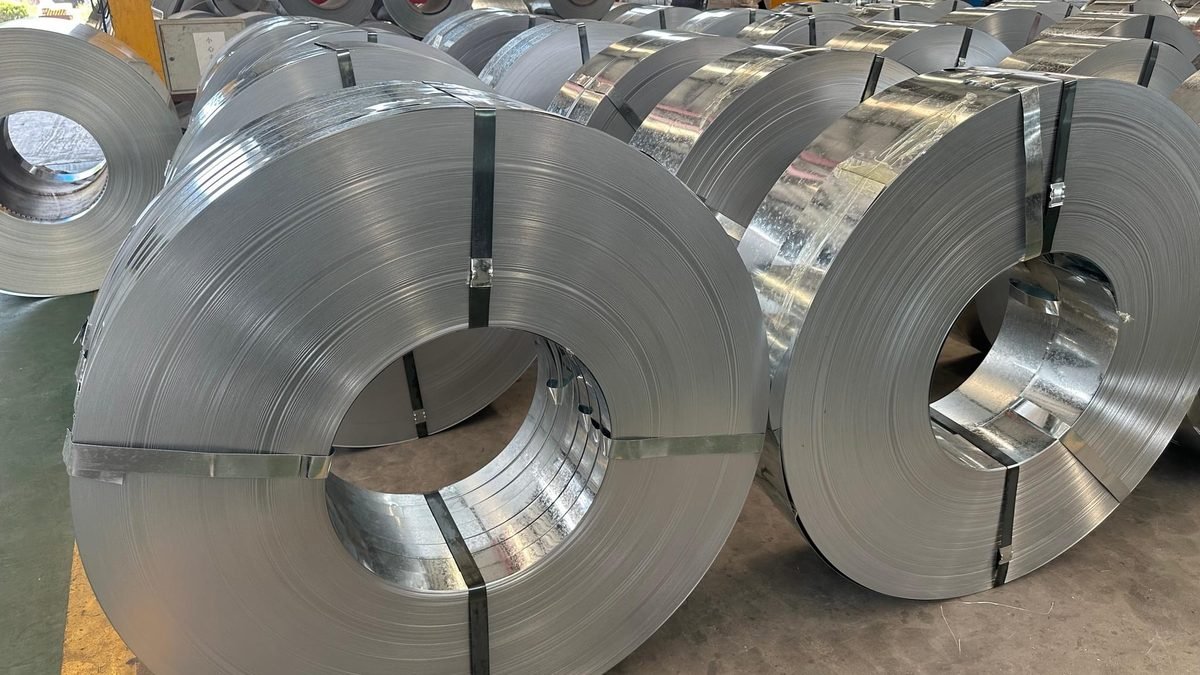
This is the single most misunderstood choice in coil purchasing. A mill edge is the edge the strip has when it leaves the hot mill: it has been formed by rolling, it is slightly irregular in width, and it may carry a small amount of edge cracking detectable only at the coil ends. A slit edge is produced by running the coil through a slitting line, which trims both edges with circular knives and produces a defined width and a clean, square edge.
Mill edge material is cheaper and is the right choice when the buyer will do the trimming as part of their own process, for example a pipe mill that slits to precise widths before forming, or a service centre that runs its own slitting line. Slit edge material costs more per tonne because of the trimming loss and the slitting operation, but it arrives ready to feed a roll forming line, a decoiler and press, or a cut-to-length line without any further edge preparation.
- Choose mill edge when: the next operation is slitting, or the finished part will be welded along both edges and the edge quality is irrelevant.
- Choose slit edge when: the coil feeds a roll forming line, a tube mill, a stamping press or a laser cutting bed that references the edge for alignment.
- Watch burr direction: slitting can leave a burr on one face; if the coil is fed the wrong way up, the burr marks the tooling or the coating.
- Watch width tolerance: mill edge width is normally specified 0/+20 毫米, while slit edge is normally ±1.0 mm; ordering mill edge and expecting slit tolerance is a common error.
6. Manufacturing and Processing Points
A hot rolled coil passes through several optional stages before it reaches a fabricator. Understanding those stages explains most of the differences in price and surface condition between offers.
6.1 Hot rolling and coiling
The slab is reheated, rough rolled, finish rolled and coiled. Finishing temperature and coiling temperature control the scale thickness and the final microstructure. A low coiling temperature produces finer grains and higher strength but a harder, more brittle scale; a high coiling temperature produces a softer coil with a thicker, easier-to-pickle scale.
6.2 Pickling and oiling
Pickling removes the oxide scale with acid and leaves a light oil film. Pickled and oiled coil (often abbreviated HRPO) is the correct input for cold rolling, galvanizing and any process where scale would contaminate the surface or the weld. Unpickled black coil is acceptable for structural work that will be painted or galvanized after fabrication, because the scale is removed by blasting or pickling at that stage anyway.
6.3 分切
Slitting converts one wide coil into several narrower coils. 刀间隙, knife condition and line tension determine burr height and width consistency. A slitting line that is properly set will hold width to ±1.0 mm and burr below 0.05 毫米开 2 mm strip; a poorly maintained line can produce 0.3 mm burrs that damage downstream rolls and leave marks on the finished product.
6.4 线圈处理
Coils should be lifted with a proper C-hook or coil tong, never with a wire rope through the bore, which ovalises the coil and can collapse the inner wraps. During storage, coils should rest on a cradle or on wooden dunnage, never directly on a concrete floor where condensation forms. Outdoor storage without a cover is acceptable for black coil only if the ends are protected and the coil is consumed within a few weeks.
7. Selection and Ordering Rules
The following sequence covers the decisions that actually change the delivered cost. Working through it before issuing an enquiry avoids most of the revisions that delay a shipment.
- Define the next process. 分切, 冷轧, roll forming, welding and laser cutting each impose different requirements on edge, surface and thickness tolerance.
- Choose the grade by strength and weldability, not by price alone. Q235B is adequate for most structural work but Q355B is needed when the design is strength-limited.
- Decide between black, 腌制和上油, and pickled and oiled plus slit. Each step adds cost but removes a downstream operation.
- Set coil weight against the crane, the truck and the storage cradle. A coil that cannot be handled safely is not a bargain.
- State the edge condition, width tolerance and burr limit explicitly on the purchase order. Mills will meet them if asked, and will not if not asked.
- Require a mill test certificate with heat number, chemical analysis, tensile results and bend test direction.
For buyers who need flat bar or cut plate rather than coil, the downstream conversion is usually better sourced separately; the carbon steel flat bar range on this site illustrates the typical cut and edged products made from hot rolled feedstock.
8. Common Misconceptions
- “All Q235B coil is the same.” Two coils meeting the same standard can differ by 60 MPa in yield strength and by a factor of two in Charpy impact energy. Chemistry position within the range and coiling temperature explain the difference.
- “Mill edge is simply a cheaper slit edge.” Mill edge has different width tolerance, different edge geometry and a different risk profile at the coil ends. It is a different product, not a discount version of the same one.
- “Thicker coil is always stronger.” Thickness changes cooling rate, and thin strip of the same grade is frequently stronger than thick strip. Strength should be read from the certificate, not inferred from gauge.
- “Rust on the edge is only cosmetic.” Edge rust on a coil that will be slit means the first 5 到 10 mm of width is contaminated, and that contamination travels into the finished part.
- “A heavier coil always lowers freight per tonne.” It lowers freight per tonne but raises crane, cradle and handling costs, and in many small plants the net effect is negative.
- “Pickled coil can be stored outdoors.” Pickled and oiled coil has no scale protection and will rust within days if exposed to condensation; it needs covered storage and a controlled oil film.
- “Coil inner diameter does not matter.” A 610 mm bore will not fit a 508 mm mandrel without an adapter, and forcing it damages both the coil and the decoiler.
9. 常见问题解答
What thickness range is normally available in hot rolled coil?
Commercial mills routinely roll 1.8 毫米至 19 毫米; 1.5 毫米和 25 mm are possible but usually carry a minimum order quantity and a price premium. 以下 1.8 mm the material is normally supplied as cold rolled.
How much width loss should I expect when slitting mill edge coil?
Plan on 10 到 20 mm per side for trimming, plus the width consumed by any edge crack removal. 对于一个 1500 mm coil split into four 350 mm coils, the yield loss is typically 3 到 5 百分比.
Can I weld a hot rolled coil without removing the scale?
You can weld it, but the scale interferes with arc stability and introduces oxide inclusions. For any weld that will be inspected or cyclically loaded, the scale should be removed by grinding or pickling within 20 mm of the joint.
What does “coil weight tolerance ±10%” mean in practice?
The mill may deliver a nominal 20-tonne coil anywhere between 18 和 22 吨. If your crane limit is 20 吨, specify a maximum coil weight rather than a nominal weight.
Is black coil suitable for galvanizing?
是的, provided the fabricator blasts or pickles the scale off before dipping. Residual scale causes bare patches and uneven zinc coverage, so surface preparation is part of the galvanizing cost, not a separate optional step.
How should coils be stored on site?
On a cradle or dunnage, with the axis horizontal, ends protected from rain, and never stacked more than two high unless the coils are banded and the stack is engineered. Coils stored on their edge can ovalise under their own weight.
What is camber and why does it matter?
Camber is the sideways bow of the strip measured over a fixed length. Excessive camber makes the coil difficult to thread and causes the strip to run off-centre on a slitting or roll forming line, producing unequal widths.
Do I need a mill test certificate for commercial quality coil?
For any structural, pressure or export application, 是的. The certificate is the only evidence of the heat number, chemistry and mechanical results, and it is what an inspector will ask for at the destination port.
How does coil thickness tolerance affect the finished part weight?
A 5 percent thickness excess on a 3 mm coil means 0.15 mm extra on every part. On a part weighing 20 千克, that is 1 kg of unplanned weight per piece, which matters for shipping cost, crane capacity and, in some designs, for the fit of the assembly.
Can coil be supplied cut to length instead of coiled?
是的. Cut-to-length sheets are produced from the same coil on a levelling and cut-to-length line, with the trade-off being higher cost per tonne and better flatness and squareness than a hand-cut plate.
10. Next Step
If you are specifying hot rolled carbon steel coil, the fastest way to avoid the problems above is to put edge condition, 宽度公差, coil weight limit and certificate requirements on the enquiry from the start. Send your thickness, 宽度, 年级, coil weight limit and destination, and we will confirm what the mill can hold and what the delivered cost will be.
Related product pages: Q235B碳钢扁钢, galvanized steel strip DX51D.

