 PROGRESSO
Bobina de aço laminado a frio: Tolerância de Espessura, Grau de superfície e armazenamento
Bobina de aço laminado a frio: Tolerância de Espessura, Grau de superfície e armazenamento
Cold rolled steel coil is produced by rolling hot rolled pickled coil at room temperature, which work-hardens the steel, improves thickness accuracy and gives a clean, smooth surface. It is the substrate for automotive panels, caixas de eletrodomésticos, filing cabinets, drum shells, electro-galvanized and colour coated products, and a very large share of general sheet metal work.
Buyers often treat cold rolled coil as a commodity defined only by thickness and width. In reality the properties that decide whether the coil runs in a press or a roll former are thickness tolerance across the width, surface grade, hardness or temper, oiling, and edge condition. This guide explains what to specify and how to check it on arrival.
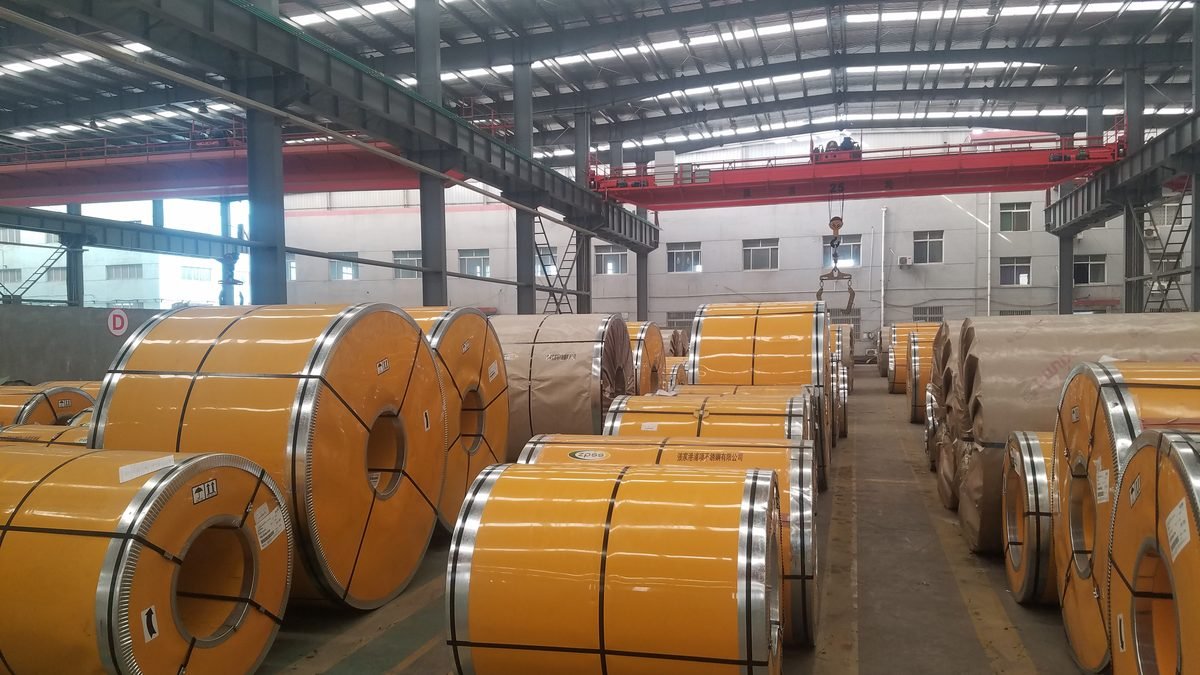
The Cold Rolling Process in Brief
Hot rolled coil is first pickled to remove oxide scale, then cold rolled on a tandem mill to the target thickness. The reduction is typically 60 para 90 percent, which introduces heavy work hardening. The coil is then annealed — either batch annealed in a bell furnace or continuously annealed in a line — to restore ductility, and finally temper rolled (skin passed) by a small reduction of 0.5 para 1.5 percent to control surface roughness, flatness and yield point elongation.
The annealing route changes the product. Batch annealing produces a coarser grain structure and is cheaper; continuous annealing produces a finer, more uniform grain structure with better formability and is used for demanding draw applications. If your part involves deep drawing, ask which annealing route was used.
Temper rolling is what gives the surface its characteristic matt or slightly reflective appearance. It also determines the surface roughness, which matters for painting and for friction behaviour in a press feed.
Tolerância de Espessura: Crown, Wedge and Profile
Nominal thickness is only half the story. Three other parameters determine whether the coil will run:
Crown is the thickness variation across the width, with the centre thicker than the edges. A coil with 0.02 mm crown on 1.0 mm material will produce parts that are 2 percent heavier in the middle of the strip than at the edges, and in a press this shows up as uneven drawing and blank weight variation.
Wedge is the thickness variation along the length, with one end of the coil thicker than the other. Wedge above 0.03 mm causes gauge changes at the press and inconsistent part height.
Perfil is the full cross-section shape. A coil can be within nominal tolerance at the centre and at the edge but have a low spot 100 mm in from the edge, which is invisible on a micrometer check at two points but obvious in a forming line.
| Grossura | Normal tolerance | Tight tolerance | Crown limit |
|---|---|---|---|
| 0.30 – 0.50 milímetros | ±0.04 mm | ±0.02 mm | 0.02 milímetros |
| 0.50 – 1.00 milímetros | ±0.05 mm | ±0.03 mm | 0.03 milímetros |
| 1.00 – 1.50 milímetros | ±0.07 mm | ±0.04 mm | 0.04 milímetros |
| 1.50 – 2.50 milímetros | ±0.10 mm | ±0.06 mm | 0.05 milímetros |
Measuring thickness with a hand micrometer at the coil edge is not sufficient. Use a dead-weight or ultrasonic gauge and take readings at the centre, at quarter width, at the edge, and at both ends of the coil. Ask the supplier for the rolling mill’s profile record, which shows the full cross-section rather than three spot readings.
Surface Grades: What the Codes Mean
Surface quality for cold rolled sheet is classified by defect allowance. The common designations are:
FB (Full Best) — no defects permitted on the surface that will be exposed. Used for visible automotive panels, appliance fronts and decorative parts. FB material is expensive because a large share of production is downgraded.
FC (Full Conventional) — minor defects permitted, provided they do not affect formability or coating. Used for internal parts and for parts that will be painted.
FD (Full Drawing) — surface is less critical but formability is guaranteed. Used for deep drawn parts hidden inside a product.
In addition to the grade, the surface may be specified as matt, normal or bright depending on temper roll roughness. Matt surfaces hold lubricant better and are preferred for drawing; bright surfaces are preferred where appearance matters.
Defect types to reject regardless of grade: slivers, scale residue from incomplete pickling, roll marks that repeat at a fixed interval, edge cracks, and rust. Rust is not a surface defect in the cosmetic sense — it removes material and changes the friction coefficient, and it will contaminate the press lubricant.
Temperamento, Hardness and Formability
Cold rolled coil is supplied in several tempers. Full hard (FH) is the as-rolled condition with high strength and very low elongation; it is used for products that need stiffness without forming, such as simple panels and profiles. Half hard, quarter hard and skin passed conditions sit between full hard and fully annealed.
Annealed and skin-passed material (often designated by grades such as DC01, DC03, DC04, DC05 in EN 10130) is the formable product. DC01 is for simple bending and profiling; DC03 for moderate drawing; DC04 and DC05 for deep drawing. The higher the drawing grade, the lower the carbon and the tighter the grain size control.
| Nota | Aplicativo | Typical elongation |
|---|---|---|
| DC01 | Dobrando, profiling, general | ≥ 28% |
| DC03 | Moderate drawing | ≥ 34% |
| DC04 | Desenho profundo | ≥ 38% |
| DC05 | Extra deep drawing | ≥ 40% |
A practical caution: higher drawing grades are softer and more prone to handling damage. A DC04 coil scratched during transport may form perfectly but will show the scratch after painting. If the part is visible, surface grade and drawing grade must be specified together.
Oiling: Rust Prevention and Press Performance
Cold rolled coil is normally oiled to prevent rust during transport and storage. The oil also acts as a lubricant in the press. Oil weight is typically 0.5 para 2.0 g/m², and the type may be a straight mineral oil, a rust-preventive oil, or a drawing lubricant.
Too little oil causes rust and galling in the die. Too much oil causes sheet slippage in the feed rolls, oil accumulation in the press, and problems in downstream welding or painting. If the parts will be painted or galvanized, specify a removable oil that can be degreased with an alkaline cleaner; some rust-preventive oils leave a film that survives degreasing and causes paint adhesion failure.
For long sea transport, specify a heavier rust-preventive oil and a VCI wrap. For short domestic delivery, a light oil is adequate and easier to remove.
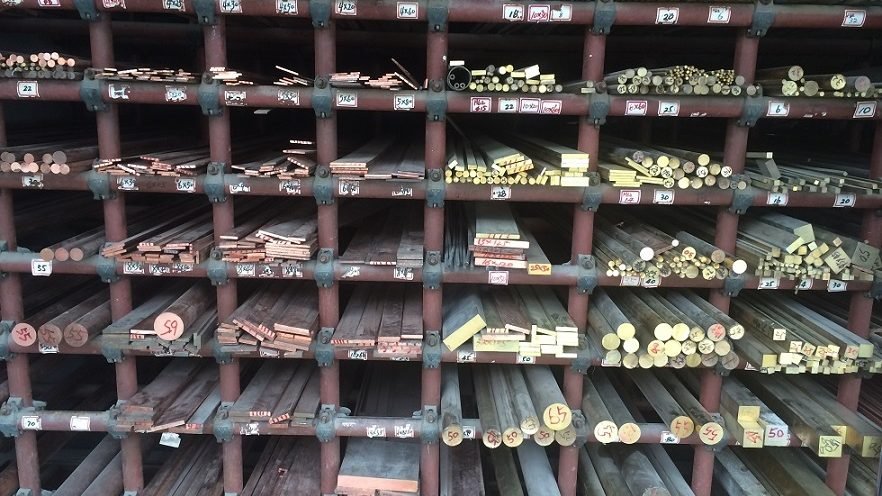
Storage Rules That Prevent Rust
Cold rolled steel rusts because moisture condenses on a cold surface. The three rules are: keep the coil off the floor, keep the temperature stable, and keep air moving.
Store coils on timber or plastic dunnage at least 100 mm above the floor, never directly on concrete. Concrete absorbs and releases moisture and will rust the bottom wraps of a coil within weeks. Cover the coil with a breathable cover, not a sealed plastic sheet, unless the cover is a proper VCI bag: a sealed plastic sheet traps condensation underneath and makes the problem worse.
Avoid moving a cold coil into a warm, humid space. The classic failure is a coil delivered in winter and stored in an unheated warehouse, then moved into a warm production hall; the moisture in the air condenses on the still-cold steel and the entire outer wrap rusts overnight. Allow the coil to equalise temperature under cover before unwrapping.
Stack coils only with proper saddles or on their side in a rack designed for it. Standing a coil on its edge on a hard floor dents the bottom edge, and that dent propagates through several wraps.
Edge Condition and Coil Geometry
Cold rolled master coils usually have a mill edge, which is slightly rounded and may carry a thin oxide line. Slit coils have a sheared edge with a small burr. For painting, a burred edge is a problem because paint does not cover a sharp burr evenly, and the burr rusts first. Specify a deburred or shaved edge for exposed painted parts.
Coil ID is normally 508 milímetros, com 610 mm available. Coil weight ranges from 3 para 20 tonnes depending on the mill and the strip width. Telescoping and camber limits should be stated in the purchase order; for cold rolled material feeding a press line, a camber limit of 1 mm per metre is reasonable.
Incoming Inspection Checklist
Check the coil tag against the certificate: nota, grossura, largura, weight, número de calor. Measure thickness at five points across the width at both ends. Check width at both ends. Inspect the outer two wraps for rust, edge damage and handling marks. Check for telescoping by standing behind the coil and looking along the bore; more than 5 mm offset is a reject for automated uncoiling.
Take a short sample from the coil end and check hardness, elongation and coating adhesion if applicable. On a sample, perform a bend test around a mandrel matching the part’s minimum bend radius; cracking on the outside of the bend indicates insufficient formability or an edge problem.
Record the oil weight on a weighed sample if the part will be painted, because oil that cannot be removed is a costly surprise downstream.
Press Feeding, Blank Yield and Scrap
Cold rolled coil is usually consumed through a press feed line: decoiler, leveller, feeder and press. Each stage has a requirement on the coil, and a coil that meets the metallurgical specification can still fail at the feed line.
The decoiler requires a coil bore that fits the mandrel without slipping and a coil that is not telescoped. The leveller requires a coil with consistent yield strength; if the hardness varies along the length, the leveller setting that works at the start of the coil will over-level or under-level at the end. The feeder requires consistent thickness, because the feed length is set by roll rotation and a gauge change alters the blank length.
Blank yield is where the commercial value is decided. A nested layout that uses 85 percent of the coil width produces 15 percent scrap, and at a coil price of several hundred dollars per tonne the scrap is a significant cost. The nesting should be agreed between the tool designer and the material supplier, because the coil width can often be ordered to fit the nest rather than being cut down from a standard width.
Slit coil width tolerance matters here. If the coil is supplied at 1200 mm and the nest needs 1180 milímetros, the slitting operation adds cost and loses material. Ordering the coil at the nest width directly from the mill avoids both, provided the volume justifies a custom width.
Coil Joining and Continuous Lines
On a continuous processing line — galvanizing, revestimento, or a long roll-forming run — the end of one coil must be joined to the start of the next without stopping the line. This is done by a welder that joins the strip ends, followed by a loop accumulator that holds enough strip to keep the line running while the weld is made.
The weld is a potential defect. It is usually a flash butt weld or a laser weld, and the weld zone has a different microstructure from the parent strip. On a coated line, the weld may not coat uniformly; on a cold rolled line, the weld may be harder and crack during subsequent rolling. Many lines mark the weld with a hole punch or a paint mark so that the customer can identify and remove it.
For buyers, the practical point is to ask whether the coil contains welds and where they are marked. A weld in the middle of a coil that is fed into an automated press will cause a stoppage at best and a die crash at worst. Specify weld-free coils for critical press work, and expect to pay a premium for the yield loss at the mill.
Perguntas frequentes
What is the difference between cold rolled and hot rolled coil? Hot rolled is rolled at high temperature and has a scaled, rougher surface and wider thickness tolerance. Cold rolled is pickled, rolled cold, annealed and temper passed, giving a smooth surface, tighter thickness and better formability.
Is cold rolled stronger than hot rolled? In the full hard condition, sim, because of work hardening. In the annealed condition, the strength is similar to hot rolled; the advantage is formability and surface quality, not strength.
Can I use cold rolled coil outdoors? Not bare. Cold rolled steel has no zinc coating and will rust quickly. It must be painted, powder coated or galvanized.
Why does my coil have a wavy edge? Edge waviness usually comes from uneven tension during rolling or from a slit edge with residual stress. It causes strip wander in a press feed and should be rejected if severe.
What does “skin passed” mean? A final light rolling pass of 0.5 para 1.5 percent that flattens the coil, sets the surface roughness and suppresses yield point elongation, which otherwise causes stretcher strains during forming.
View carbon steel product specifications ou Request a cold rolled coil quote

