 PROGRÈS
SPHC vs Q235B: Which Hot Rolled Steel Sheet Should You Choose?
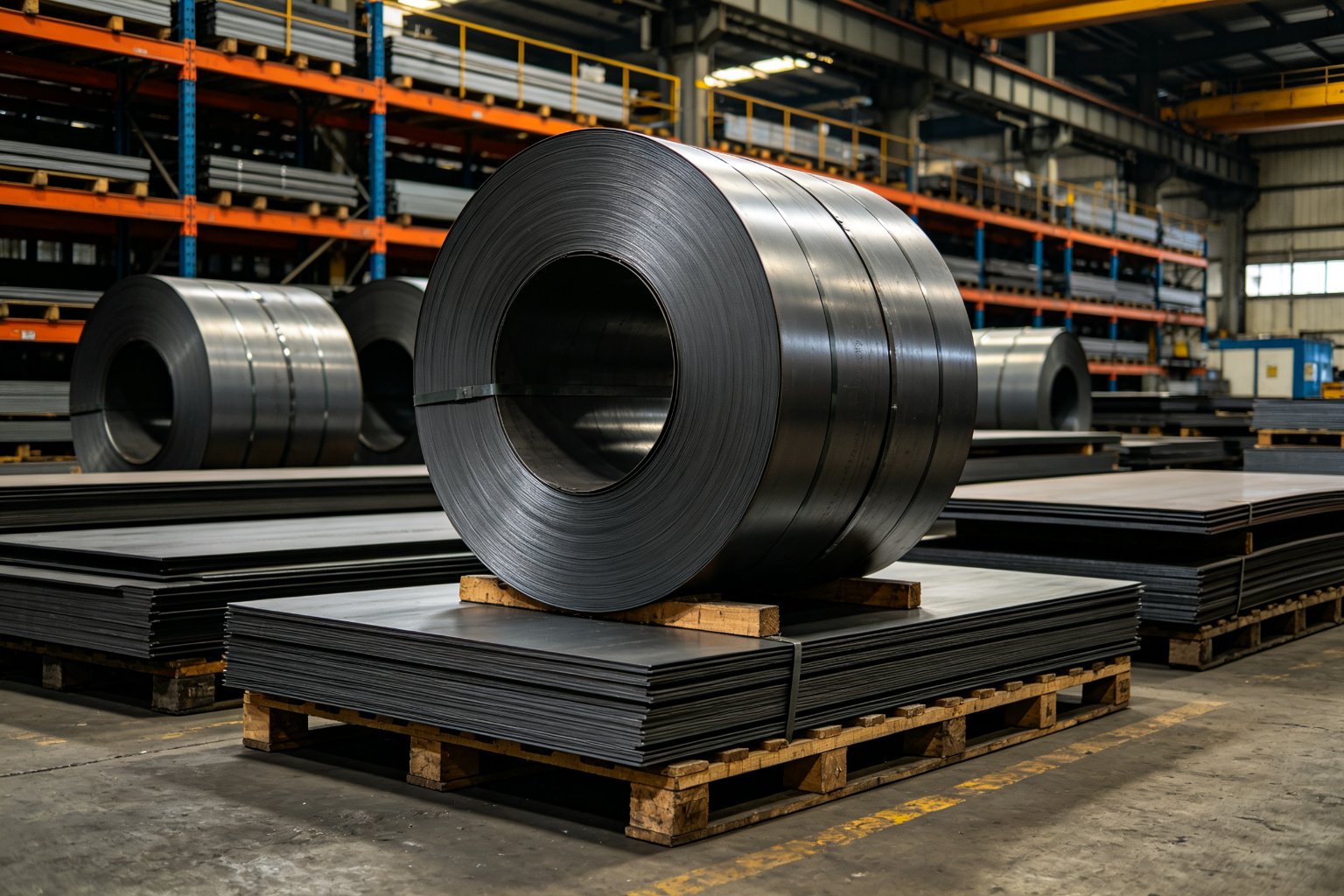
SPHC hot rolled steel sheet et Q235B are two of the most widely quoted carbon steel sheet grades in the export market — but they are often confused. One follows the Japanese JIS standard, the other follows the Chinese GB standard. This article compares their chemistry, mechanical properties, typical applications and buying considerations, so you can pick the right SPHC hot rolled steel sheet ou Plaque d'acier Q235B for your order.
What Is SPHC Hot Rolled Steel Sheet?
SPHC is a hot-rolled commercial-quality steel strip and sheet defined by JUSTE G3131. The letters stand for “Steel, Plaque, Hot-rolled, Commercial”. It is a low-carbon grade delivered in the hot-rolled condition, with a mill-scale surface, designed for general forming and structural use. SPHC is one of the most common substrate materials used before cold rolling into SPCC, and it is also supplied directly to customers who need an economical, formable sheet.
Typical applications include general pressing and forming, automotive parts that do not need high strength, agricultural equipment, and the raw material for galvanizing lines. Because the carbon content is low, SPHC is easy to bend, punch and weld.
What Is Q235B Steel?
Q235B is a carbon structural steel defined by GB/T 700. Le “Q” stands for yield strength (“屈” in Chinese), et 235 means a minimum yield strength of 235 MPa. The suffix B guarantees a Charpy impact requirement of 27 J at +20 °C. It is the default general-purpose structural carbon steel in China and is widely exported for buildings, machinery, bridges and infrastructure. The same family covers plates, flat bars, angles, channels, tubes and round bars — all available from QIDAMT, such as the Q235B carbon steel flat bar.
Chemical Composition Comparison
| Élément (%) | SPHC (JUSTE G3131) | Q235B (GB/T 700) |
|---|---|---|
| C | ≤ 0.15 | ≤ 0.20 |
| Mn | ≤ 0.60 | ≤ 1.40 |
| Et | — | ≤ 0.35 |
| P. | ≤ 0.050 | ≤ 0.045 |
| S | ≤ 0.050 | ≤ 0.045 |
SPHC keeps carbon below 0.15 % for better formability; Q235B allows slightly higher carbon and manganese for higher strength. Neither grade is intended for corrosion-resistant service — apply hot-dip galvanizing when outdoor exposure matters, and you can read our article on the galvanized steel coil production process for guidance.
Mechanical Properties Comparison
| Propriété | SPHC | Q235B |
|---|---|---|
| Limite d'élasticité | ≥ 205 MPa | ≥ 235 MPa |
| Résistance à la traction | 270 – 410 MPa | 370 – 500 MPa |
| Élongation | ≥ 27 % | ≥ 26 % |
| Impact (20 °C) | Not specified | ≥ 27 J |
Key Differences and How to Choose
- Standard system: SPHC follows JIS (japonais), Q235B follows GB (Chinese). Some buyers specify JIS for Japanese-designed equipment, while GB is common for projects built to Chinese design codes.
- Strength level: Q235B is about 15 % stronger in yield — choose Q235B when the design is load-bearing. Choose SPHC when forming and drawing matter more than strength.
- Formability: SPHC’s lower carbon gives slightly better bending and deep-drawing behaviour, which is why it is the preferred substrate for galvanizing and cold rolling.
- Impact requirement: Only Q235B carries a specified Charpy test, which matters for welded structures subject to dynamic load.
- Availability: QIDAMT supplies both as SPHC hot rolled sheet et Q235B hot rolled plate, plus the whole Q235B family in angles and flat bars.
Common Applications
SPHC is used for enclosures, supports, pressed panels, vehicle chassis parts and galvanized base material. Q235B is used for building frames, supports, machine bases, fences, gates, tanks and general fabrication. For anything galvanized, the base steel is usually SPHC or a Q235B variant — the choice depends on the final strength requirement of the coated part.
Send us your thickness, largeur, length, surface requirement (black, pickled, huilé, galvanized) and the end use — our engineers will confirm the right grade, mill certificate and delivery schedule within 24 hours.
REQUEST A QUOTE