 TOSO
SPCC Cold Rolled Steel Sheet: Cudru, Tolerance and Appliance Use
SPCC is the commercial-quality cold rolled steel sheet grade of JIS G3141. It is low-carbon, vakamamacataki, temper-rolled and oiled, and it is the substrate behind a large share of the world’s appliance panels, Kabineti, biuta, drum, furniture and galvanized strip. E sau lailai, formable and consistent, but it is also bare steel that will rust without a coating, and its temper grade decides whether it bends, draws or cracks.
What SPCC Is and Where It Is Used
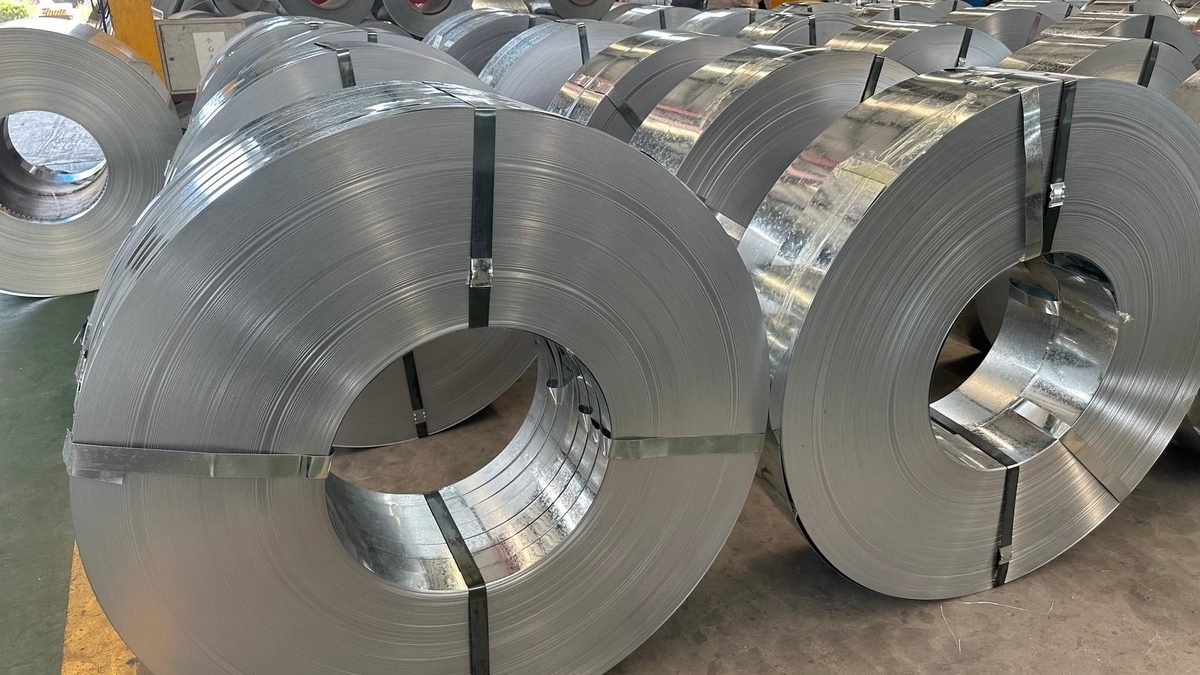
SPCC stands for Steel Plate Cold Commercial, the base grade in the JIS G3141 family of cold-reduced carbon steel sheet and strip. The coil is cold rolled from pickled hot-rolled coil, annealed to restore ductility, temper-rolled to adjust surface and hardness, and finally oiled. It is supplied as coil, slit strip or cut sheet, usually in thicknesses from 0.25 mm ki na . 3.2 mm.
The applications divide into visible and hidden parts. Visible parts include refrigerator doors and liners, washing-machine cabinets, air-conditioner chassis, microwave shells, iyaya ni vale kaukamea, filing cabinets, biuta, display stands and light signage. Hidden parts include brackets, motor mounts, fan housings, duct connectors, can bodies, drum closures, pipe hangers and electrical enclosures. A large volume also goes into galvanizing lines as the substrate for zinc-coated strip.
SPCC is not a structural steel and not a weathering steel. Its carbon is deliberately low and its strength is modest; it is designed for forming, not for carrying load. When a part needs strength, the designer either increases thickness, changes to a higher-strength grade, or moves to a micro-alloyed or high-strength low-alloy sheet. Using SPCC as a structural member because it is cheap is a common and expensive mistake.
Grade Structure and Chemistry
JIS G3141 defines three quality levels: SPCC for commercial quality, SPCD for drawing quality and SPCE for deep-drawing quality. The difference is the residual element control and the cleanliness of the steel. SPCC has the widest carbon, phosphorus and sulphur windows and is intended for simple bending and moderate forming. SPCD and SPCE tighten those limits and improve elongation and drawability.
| Ivakatakilakila | SPCC (%) | SPCD (%) | SPCE (%) | Ivakamacala |
|---|---|---|---|---|
| C | ≤ 0.15 | ≤ 0.12 | ≤ 0.10 | Lower carbon improves drawability |
| Mn | ≤ 0.60 | ≤ 0.50 | ≤ 0.45 | Strength and toughness |
| P | ≤ 0.100 | ≤ 0.040 | ≤ 0.030 | Phosphorus raises strength, lowers ductility |
| S | ≤ 0.050 | ≤ 0.040 | ≤ 0.035 | Sulphur forms inclusions |
| Kei | ≤ 0.05 typical | ≤ 0.05 | ≤ 0.05 | Killed or rimmed depending on mill |
| Al | — | ≥ 0.020 | ≥ 0.020 | Grain refinement in drawing grades |
| N | — | ≤ 0.008 | ≤ 0.006 | Low nitrogen improves aging resistance |
Typical JIS G3141 windows. The standard should be confirmed for the exact edition and product form; some mills also supply SPCC according to an equivalent GB/T 11253 ivakatagedegede.
The chemistry has two practical effects. Taumada, carbon and manganese set the strength and the weldability; a high-carbon SPCC is stronger but less ductile and more prone to cracking in a tight bend. Ikarua, phosphorus and sulphur set the inclusion content; a high-phosphorus heat is fine for a simple bracket but can crack in a deep draw. For a part with a drawn corner, specify SPCD or SPCE rather than hoping that SPCC will behave.
Mechanical Properties and Temper Grades
Cold rolled sheet is supplied in several tempers, from fully annealed to full hard. The temper is produced by controlled temper rolling after annealing, which introduces a small amount of cold work. The table gives typical ranges; the exact hardness and tensile values depend on the mill, the thickness and the temper designation.
| Cudru | Ituvaki | Rp0.2 (MPa) | Rm (MPa) | Vakabalavutaki (%) | Dureza típica |
|---|---|---|---|---|---|
| T1. | Sa vakawaicalataki taucoko | 140–210 | 270–370 | 32–42 | ≤ 60 HRB |
| T2. | 1/4 kaukauwa | 200–280 | 330–430 | 24–32 | 60–70 HRB |
| T3. | 1/2 kaukauwa | 280–380 | 400–520 | 15–24 | 70–80 HRB |
| T4. | 3/4 kaukauwa | 380–480 | 480–600 | 8–15 | 80–88 HRB |
| T5. | Taucoko dredre | 480–620 | 550–700 | 3–8 | ≥ 88 HRB |
Typical values for SPCC sheet at 0.5–1.5 mm. Temper grade and thickness both affect the result; confirm the mill’s actual test for a forming-critical part.
Temper selection is the single most important forming decision. T1 is soft and draws well but dents easily; T2 is the general-purpose choice for cabinets and brackets; T3 is used where stiffness matters and bends are gentle; T4 and T5 are used for panels that need to resist denting or for parts that will be seamed rather than deeply drawn. A full-hard sheet can be very strong in the flat, but it has almost no elongation left for a bend, and it will crack at a sharp radius.
Aging is a second consideration. Annealed SPCC can age after a few weeks, raising yield strength and reducing ductility, especially if it was temper-rolled lightly. If the coil will sit in storage before drawing, specify a non-aging or stabilized grade, or plan the production so that the oldest coil is used first. This is one reason a mill certificate alone does not predict press performance months later.
Veimama kei na vosota
SPCC is commonly supplied from 0.25 mm ki na . 3.2 mm thickness, in widths from 600 mm ki na . 1850 mm. Coils usually have an inside diameter of 508 mm se . 610 mm and a weight of 3–15 tonnes; cut sheets are supplied in standard or custom lengths. The table gives normal commercial windows; precision blanking may need a tighter thickness class and a flatness limit.
| Ivakatakilakila | Common range | Typical tolerance | Notes |
|---|---|---|---|
| Matolu | 0.25–3.2 mm | ±0.03 to ±0.10 mm | Tighter class for precision blanking |
| Raba | 600–1850 mm | +3 / 0 mm | Na yasana |
| ID ni coil | 508 se 610 mm | ±5 mm | Check uncoiler mandrel |
| Bibi ni coil | 3–15 t | ±5% | Crane and decoiler capacity |
| Vakababa | — | ≤ 4 mm/m | Tension-leveled is better |
| Camber | — | ≤ 3 mm ena 2 m | Affects coil feeding |
| IYaya ni vanua | Oiled | Per agreed sample | Oil film is not a long-term coating |
Typical commercial windows. For a progressive die, specify thickness, camber and flatness together; a good thickness with a bad camber still misfeeds.
Thickness tolerance is often quoted as a nominal plus a minus, and the minus side is what matters for a formed part. KEI 1.0 mm sheet at the low end of a ±0.08 mm window is 8% thinner than nominal, which reduces bending stiffness by about 15%. If the part is stiffness-critical, specify a minimum thickness and verify it with a micrometer at several points across the width.
How SPCC Sheet Is Made
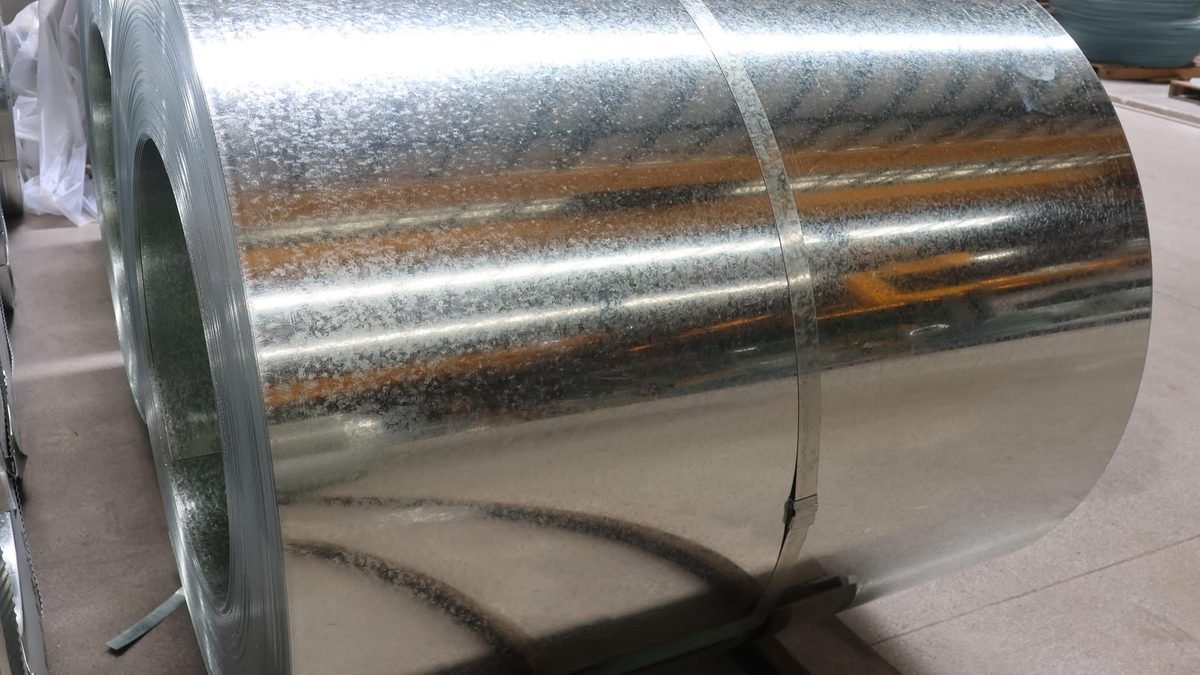
The route begins with hot-rolled coil that has been pickled to remove scale. The coil is cold rolled through a tandem mill to the final thickness, which work-hardens the steel and raises its strength. The hard coil is then annealed, either in a batch furnace or in a continuous annealing line. Continuous annealing gives a more uniform grain size and better flatness; batch annealing is slower but can be economical for thick sheet and small lots.
Ni oti na kena vakamamacataki, the sheet is temper-rolled to the required hardness and surface roughness, then oiled and coiled. Temper rolling also improves flatness and controls the yield-point elongation that causes stretcher strains in drawing. A sheet that is not temper-rolled enough will show Lüders bands on a drawn panel; a sheet that is temper-rolled too hard will lose ductility. The mill balances these two effects for the specified temper.
The common defects are scale, ramusu, maka ni rola, edge cracks and oil smudges. Scale comes from incomplete pickling; scratches come from handling or from a dirty roll; roll marks come from a worn temper roll; edge cracks come from a poor slit or from a hard coil edge. For a visible appliance panel, these defects are rejection criteria, so the surface grade should be agreed on a standard sample rather than described as “good.”
Lawa ni Veibuli
Blanking and shearing: SPCC shears cleanly if the clearance is set for the thickness. Too much clearance produces a burr and a distorted edge; too little clearance raises tool wear and can crack a hard temper. For T4 and T5, use a slightly larger clearance and a sharper tool, and keep the strip flat to avoid a camber-induced misfeed.
Tekiduru: the minimum bend radius depends on temper. For T1, an inside radius of about 1.0–1.5 times thickness is practical; for T3, 1.5–2.0 times; for T5, 2.5–3.0 times or more. Bend across the rolling direction where possible, and use a radiused punch. A sharp die edge on full-hard sheet is a crack starter.
Drawing: use SPCD or SPCE for anything deeper than a shallow pan. SPCC can draw a shallow cover, but a deep shell needs better elongation and a cleaner steel. Use a proper drawing lubricant, control blank-holder pressure and avoid a tight die radius. If the part has a re-entrant corner, add a draw bead or change the geometry rather than forcing the steel.
Soldadura: SPCC welds readily by spot, seam, MIG and laser. The low carbon and manganese keep the weld ductile, but the sheet is thin and heat input must be controlled to avoid distortion. For appliance panels, spot welding is the usual process; check the electrode force and the weld nugget diameter on a coupon. After welding, clean the oil and any zinc-rich primer from the joint, because contaminated welds produce porosity.
Kote: bare SPCC will rust in humid air within days if the oil film is removed. For indoor parts, a powder coat or paint system is normal; for outdoor parts, a galvanized or Zinc-Alu coating is normal. The oil applied at the mill is a temporary transit protection, not a service coating. Do not specify SPCC for an unpainted outdoor part.
Lawa ni Digidigi
- SPCC T1/T2 for cabinets, braketi, shells and general forming where cost is the priority.
- SPCD/SPCE for deep drawn parts, complex geometry and parts with tight corner radii.
- T3–T5 for panels that need stiffness or dent resistance, or for parts that will be seamed rather than drawn.
- Galvanized or coated sheet for any outdoor or wet application; bare SPCC is an indoor material.
- Higher-strength steel for load-bearing members; SPCC is a forming grade, not a structural grade.
- Non-aging grade when coils will be stored for months before drawing.
A useful screening rule is to match the temper to the severest forming operation, not to the final part’s stiffness. If the part is deep drawn, the temper must be soft enough to survive the draw even if the finished panel would be stiffer in a harder temper. Conversely, if the part is only bent and then painted, a harder temper can save weight and resist dents.
For export orders, state the standard, the temper, the thickness tolerance, the surface grade, the oil type and the coil size. A quotation that says only “SPCC 1.0 mm” leaves the mill free to supply a T2 or a T3, a bright or a dull surface, and a coil that may not fit the customer’s decoiler. These details are cheap to specify and expensive to fix after shipment.
Common Misconceptions
- “SPCC is the same as Q235B.” Sega. SPCC is a low-carbon cold-rolled forming grade; Q235B is a structural hot-rolled grade with higher strength and different weldability.
- “All SPCC has the same hardness.” Sega. Temper grades T1–T5 cover a wide range, and the same grade name can be supplied in different tempers.
- “The oil film protects it outdoors.” Sega. Mill oil is a transit protection; it washes off and does not replace paint or zinc.
- “Thicker sheet is always stronger.” Strength also depends on temper and chemistry; a thicker T1 can be weaker than a thinner T3.
- “SPCC can be deep drawn like SPCE.” It can draw shallow parts, but deep draws need the cleaner, more ductile drawing grades.
Inspection and Acceptance
Receiving inspection for SPCC should check thickness, raba, vale, iYaya ni vanua, oil condition and hardness. Use a micrometer at five points across the width; use a straight edge and a feeler gauge for camber; inspect the surface under oblique light for scratches, roll marks and scale. Hardness can be checked with a portable tester, but the reading is affected by the oil film and the anvil, so clean the spot and use a calibrated instrument.
For a forming-critical order, ask for a coil sample and run a trial blank through the actual die. A hardness test predicts the average, not the local formability; a single inclusion or a hard edge can fail a part that the average values say should pass. If the coil will be stored, record the production date and use the oldest coil first, because aging changes the yield strength.
Taro e dau tarogi wasoma
What does SPCC stand for?
Steel Plate Cold Commercial: a commercial-quality cold-reduced carbon steel sheet grade in JIS G3141.
Can SPCC be galvanized?
Io. SPCC is a common substrate for hot-dip and electro-galvanized strip, although a dedicated galvanizing grade with controlled chemistry is preferred for critical coating adhesion.
Which temper should I order for a refrigerator door?
Usually T2 or T3 for the outer panel, with SPCD or SPCE for a deep inner liner. Confirm by a trial draw, because the die and the lubricant also matter.
Why does my SPCC part crack at the bend?
Most often the temper is too hard, the bend radius is too tight, or the bend is along the rolling direction. Use a softer temper, a larger radius or bend across the grain.
Is SPCC suitable for outdoor use?
Not bare. It rusts quickly when the oil film is lost. Use a painted, powder-coated or galvanized product for outdoor service.
What is the difference between SPCC and SPCD?
SPCD is the drawing-quality grade with tighter carbon, phosphorus and sulphur limits and better elongation. Use it for deeper or more complex draws.
Need SPCC coil or slit strip with a stated temper and tolerance?
QIDAMT supplies cold-rolled and galvanized steel strip from Liaocheng. Vakauta mai na matolu, raba, cudru, coil weight and destination for a quotation.