 TOSO
Q235B Carbon Steel Plate: Vosota na mavoa, Edge Condition and Cutting
Q235B carbon steel plate is the workhorse structural plate of the Chinese and Southeast Asian market. It is a mild carbon steel with a minimum yield strength of 235 MPa, delivered in the hot rolled condition, and it covers the largest volume of any single plate grade in general fabrication. Fabricators buy it by the tonne for base plates, guseti, fremu, hoppers, ituvatuva, machine guards and temporary works.
The problems that arise with Q235B plate are rarely metallurgical. They are dimensional and practical: a plate that is 0.4 mm under nominal thickness, a plate that arrived with a rolled edge from a shear, a plate whose cut edge was never primed and now rusts under the paint, or a plate that was ordered as 10 mm and turned out to weigh like 9 mm across a whole bundle. This guide explains what Q235B plate is, how its thickness and edge tolerances actually work, how cutting choices affect the finished part, and which purchasing details prevent the usual arguments at the receiving bay.
1. What Q235B Carbon Steel Plate Is and Where It Is Used
Q235B is defined in GB/T 700, the Chinese standard for carbon structural steel. The designation breaks down into a minimum yield strength of 235 MPa and a B quality level, which means the steel is killed (fully deoxidised) and has a specified impact toughness at room temperature, with tighter limits on sulphur and phosphorus than the A grade. It is not a fine grain or a low alloy grade; it is a plain carbon manganese steel intended for welded and bolted structures.
Plate is produced by hot rolling a slab to thickness and then cooling. It is supplied in the as rolled condition, with a mill scale surface, and is not normally normalised or annealed unless the order asks for it. That production route explains the surface and the residual stress pattern: the plate is straight when it leaves the mill, and it moves when it is cut because the internal stress is released.
Na kena ivakarau e oka kina na .:
- Base plates, anchor plates and machine foundation plates.
- Na isema ni ituvatuva, braketi, gussets and stiffeners.
- Platforms, sala ni lako, stair stringers and floor plates.
- Hoppers, bini, chutes and light duty tanks.
- Machine guards, covers and enclosures.
- Scaffolding components, temporary works and site fabrication.
- General engineering where strength is moderate and cost is decisive.
Q235B is not a pressure vessel grade, not a low temperature grade, and not a grade for dynamic loading at sub zero temperatures. It is a general structural plate, and the correct choice for the applications above is usually driven by availability and price rather than by a detailed design calculation.
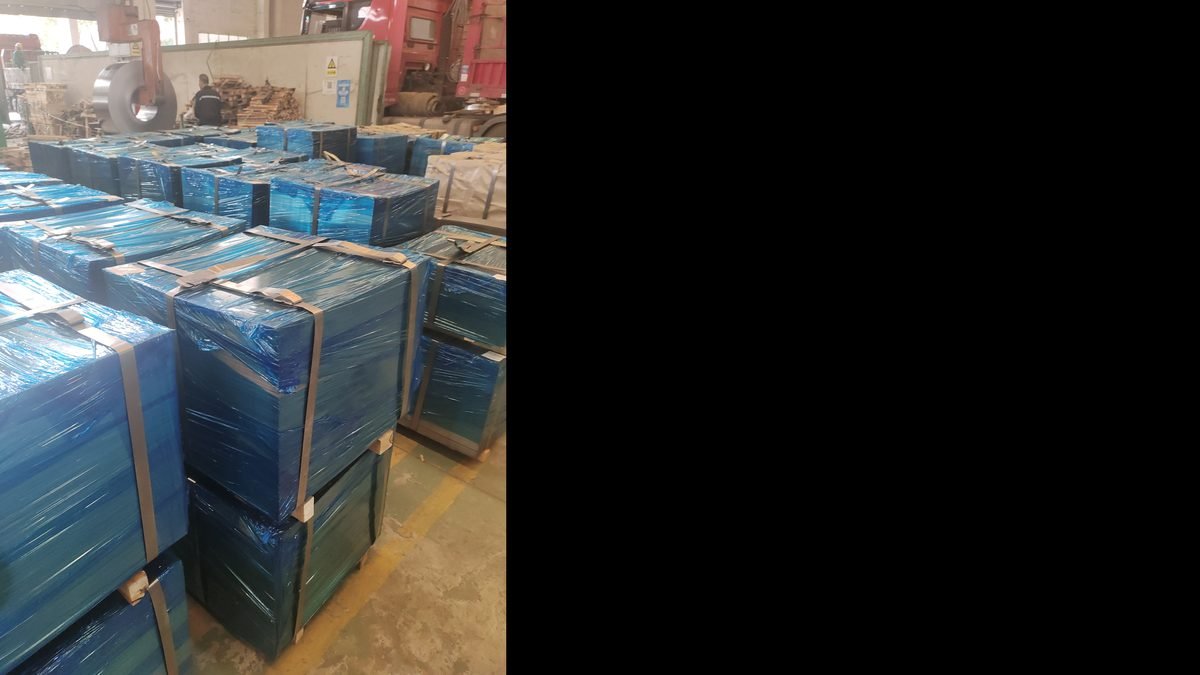
2. Grade and Chemical Composition
GB/T 700 specifies the chemistry for Q235B, and the limits are wide because the grade is intended to be made from a range of raw materials. The table below gives the standard limits alongside the values that matter in fabrication.
| Ivakatakilakila | Q235B limit (%) | Effect in fabrication |
|---|---|---|
| C | 0.12 me 0.20 | Strength and hardenability; higher carbon narrows the weld window |
| Kei | 0.30 max | Deoxidation; affects slag and weld appearance |
| Mn | 0.30 me 0.70 | Strength and toughness; low manganese limits impact values |
| P | 0.045 max | Segregation and cold brittleness; the B grade tightens this |
| S | 0.045 max | Hot cracking and lamellar tearing risk |
| Alt | 0.015 min when requested | Fine grain practice; improves toughness |
| CE equivalent | Vakavuqa 0.30 me 0.38 | Rawa ni vakawaicalataka; e cake 0.40 requires preheat on thick sections |
Two practical points follow. Taumada, Q235B covers a wide carbon range, and a plate at 0.20 percent carbon behaves differently from one at 0.13 percent when it is welded or flame cut: the higher carbon plate hardens more in the heat affected zone and is more likely to crack in a thick section without preheat. Ikarua, the B suffix is a quality claim about phosphorus and sulphur and impact testing, so a certificate that shows only yield strength is incomplete.
3. Na iyau vakamisini
| Iyau | Na kena isau | Standard minimum | Design note |
|---|---|---|---|
| Yield strength ReH | 245 me 300 MPa | 235 MPa | Thickness dependent in GB/T 700 |
| Tensile strength Rm | 400 me 490 MPa | 370 me 500 MPa | Range narrows as thickness rises |
| Vakabalavutaki A | 22 me 30 % | 21 % ena 16 mm and below | Bend radius and forming limits |
| Kena revurevu, Chapi V 20 °C | 27 J minimum for B | 27 J | Not a low temperature grade |
| Kena rawa ni vude | 7.85 g/sm3 | Reference value | Plate weight calculation |
| Elastic modulus | 206 GPa | Reference value | Stiffness of frames and platforms |
| Hardness HB | 120 me 160 | Sega ni vakamacalataki | Machinability and tool life |
The yield strength is quoted by thickness band, and this is where a specification can go wrong. GB/T 700 reduces the minimum yield for thicker plate, o koya gona 40 mm plate is not required to reach 235 MPa in the same way a 10 mm plate is. A designer who applies 235 MPa to a 40 mm section may be overestimating the material, and a fabricator who compares a 40 mm plate against a 10 mm plate and finds it softer is not looking at a defective plate.
4. Veimama kei na vosota
Thickness tolerance is the single most negotiated number in a Q235B plate order, because plate is sold by weight and the tolerance translates directly into money. The table below reflects the common commercial tables; the purchase order should name the standard and the tolerance class, not just the nominal thickness.
| Paramita | Iwiliwili | Typical tolerance | Veivakadikevi |
|---|---|---|---|
| Matolu 3 me 5 mm | 3.0 me 5.0 | vakalevutaka se vakalailaitaka 0.3 mm, or minus 0.4 mm only by agreement | Micrometer at five points |
| Matolu 6 me 16 mm | 6.0 me 16.0 | vakalevutaka se vakalailaitaka 0.4 me 0.6 mm | Micrometer at five points |
| Matolu 20 me 40 mm | 20 me 40 | vakalevutaka se vakalailaitaka 0.7 me 1.1 mm | Micrometer, avoid rolled edges |
| Raba | 1000 me 2500 mm | 0 to plus 10 mm | Tape at both ends |
| Balavu | 2000 me 12000 mm | 0 to plus 15 mm | Tape along both edges |
| Vakababa | All plates | 10 mm per metre for 3 me 10 mm, 8 mm per metre above | Straight edge and feeler |
| Borde cortado | Cut to size | Rake 2 me 4 mm on 10 mm peleti, burr 0.3 mm cecere | Visual and straight edge |
| Camber | Full length | 0.2 percent of length | String line |
A minus only tolerance is common in the market because it saves the mill metal, and it is legal when it is agreed. The commercial consequence is that a 10 mm plate ordered with a minus 0.6 mm allowance weighs about 6 percent less than the theoretical weight, and a buyer who pays by theoretical weight is paying for steel that is not there. The correct response is either to order to a minimum thickness and accept a plus tolerance, or to pay by actual weighbridge weight and inspect the thickness on arrival.
The second dimensional trap is the rolled edge. Shearing a plate does not produce a square edge; it produces an edge with a rake, and the rake grows with thickness. On a 20 mm peleti, the rake can be 4 me 6 mm, which means the edge is not vertical and a joint that assumes a square edge will have a gap. Plasma and waterjet cutting produce a squarer edge, at a different cost.
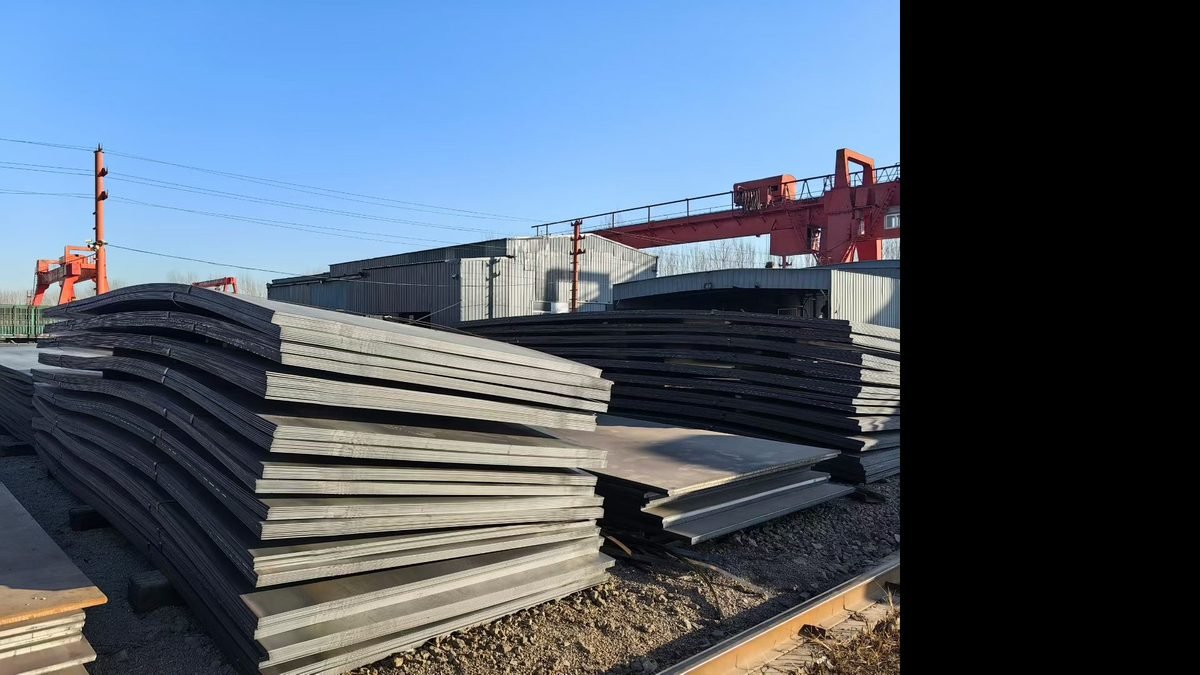
5. Cutting and Edge Preparation
Veisele is the cheapest way to cut a straight line, and it is limited by thickness and by the rake it leaves. A guillotine shear on 6 mm plate is fast and accurate in length, but the cut edge is slightly inclined and work hardened. That edge is acceptable for a base plate that will sit on concrete, and unacceptable for an edge that will be welded without grinding.
Plasma cutting handles any thickness and any profile, and leaves a heat affected zone with a hardened rim. On Q235B with 0.18 percent carbon, the rim can reach 40 me 45 HRC, which is hard enough to damage a drill or a tap if the hole is plasma cut and then machined. The practical fix is to leave 2 mm of stock and machine through the hardened layer, or to cut the hole with a smaller plasma kerf and drill it out.
Flame cutting is the traditional method for thick plate. It requires preheat on plate above about 25 mm, and it leaves a wider heat affected zone than plasma. For Q235B the process is forgiving, but a flame cut edge on a plate that will be painted needs the scale and dross removed before priming, or the paint will fail along the edge within a season.
Waterjet cutting leaves no heat affected zone and a square edge, and it is the right choice when the edge will be machined or when the plate is already coated. It is slower and more expensive per metre, and the abrasive cost rises quickly on thick plate.
Sawing is used for thick plate that needs a machined edge, such as a base plate with a flatness requirement. A band saw leaves a smooth edge and no heat effect, but the cut takes time and the plate has to be handled on a table.
Edge preparation for welding is not optional. Na ivakarau ni moli, rust and paint must be removed for at least 25 mm either side of the joint. Q235B with a mill scale surface welds acceptably if the scale is wire brushed, but a plate that has been stored outdoors and has a rust layer needs grinding back to bright metal. Welding over rust produces porosity and slag inclusions, and the resulting joint will fail an inspection even if it looks sound.
6. Selection and Installation Rules
- Order to a minimum thickness where the plate is a structural member, and state whether a minus only tolerance is acceptable.
- Decide the edge process before the order. A sheared edge and a plasma edge are not interchangeable for a welded joint.
- For plate above 20 mm that will be welded, ask for the carbon equivalent and preheat accordingly. KEI 0.20 percent carbon plate at 30 mm needs preheat even though the grade is mild.
- Inspect thickness on arrival with a micrometer, not a tape, and record the readings against the certificate.
- Store plate on timber, clear of the ground, and keep the bundles tagged so the heat number can be traced after the bundle is opened.
- Prime cut edges before the plate leaves the shop. A Q235B edge that is left bare will rust in transit and the rust will bleed through the finish coat.
- Do not substitute Q235B for Q355B in a design that was calculated for the higher yield. The plate is cheaper and the section is the same, but the capacity is not.
Where the plate is used as a base for a frame that also carries galvanized components, the coating system has to be compatible. Na galvanized steel strip DX51D page covers the coated strip counterpart, and mixing bare Q235B plate with galvanized strip in one assembly requires that the plate be primed before the two are brought into contact.
Where a small flat bar section is required rather than plate, the same grade is available in bar form; na Q235B kaboni sitila barasi page covers the rolled bar product, which is produced to different dimensional tolerances than plate.
7. Common Misconceptions
Misconception one: Q235B is Q235B, whatever the mill. The standard allows a range of chemistry, and two plates that both meet it can differ in carbon equivalent, kaukauwa kei na kaukauwa. The certificate is the only way to know which one you have.
Misconception two: thickness tolerance is a rounding error. On a 10 mm peleti, a minus 0.6 mm tolerance is 6 percent of the weight. On a 20 tonne order that is more than a tonne of steel.
Misconception three: a shear cut is as good as a plasma cut. It is cheaper and faster, and it leaves a raked, work hardened edge. For a welded joint the difference has to be ground out.
Misconception four: mild steel does not need preheat. Mild refers to the alloy content, not to the welding behaviour of a 30 mm section. Thick sections conduct heat away and cool fast, and the heat affected zone hardens.
Misconception five: mill scale protects the plate. Mill scale is a rolled oxide that is brittle and loosely bonded. It traps moisture and undercuts paint adhesion, and it must be removed before a protective coating is applied.
8. Taro e dau tarogi wasoma
What is the difference between Q235A and Q235B?
The B grade has tighter phosphorus and sulphur limits and a specified room temperature impact value. The A grade is not impact tested and is not intended for welded structures that carry dynamic load.
How is Q235B plate weight calculated?
Length times width times thickness times 7.85 g/sm3. KEI 10 mm plate of 1500 x 6000 mm weighs about 707 kg at nominal thickness, kei 665 kg if it is delivered at the minus tolerance limit.
E rawa ni vakalivalivataki na Q235B?
Io, and it is one of the most common substrates for hot dip galvanizing. The silicon content matters: a silicon level near 0.1 percent can produce a very thick, iubi malumu, so the galvanizer should check the chemistry before dipping.
What is the maximum thickness of Q235B plate?
Standard plate mills supply up to about 60 mm, with heavier sections available on request. E cake 40 mm the yield strength minimum drops according to the standard’s thickness table.
Does Q235B need a mill certificate?
For structural work, Io. The certificate ties the plate to a heat number and gives chemistry, mechanical results and the impact test that distinguishes the B grade from the A grade.
How much does a plate bow after cutting?
It depends on the residual stress in the plate and on the cut pattern. Cutting a large plate into long strips releases stress asymmetrically and the strips can bow several millimetres. Cutting a symmetric pattern keeps the balance and the bow is smaller.
9. Kalawa e tarava
If you are buying Q235B plate, put the standard, the thickness with a minimum, the tolerance class, the cut process and the certificate requirement on the enquiry. Those five items decide the delivered weight, the weldability and the condition of the edge, and they are much cheaper to agree before shipment than to argue about after arrival.
Na draunipepa ni ivoli veiwekani: Q235B kaboni sitila barasi, galvanized steel strip DX51D.

