 TOSO
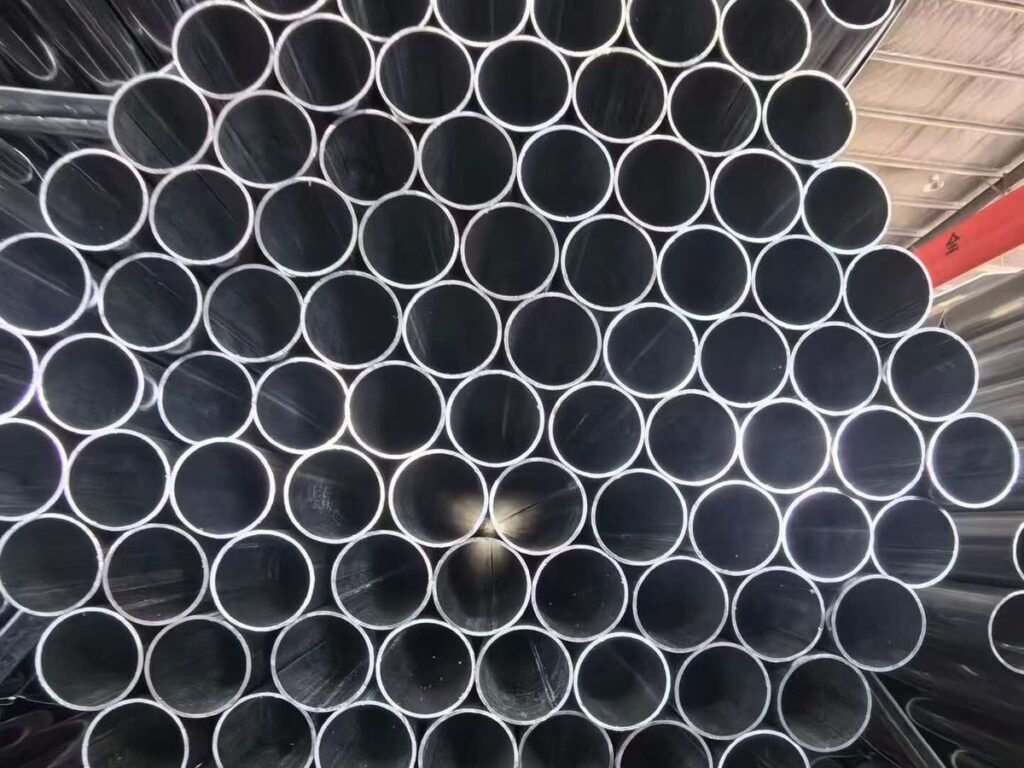
TOSO | GALVANIZED STEEL TUBE
Hot-Dip Galvanized Round Steel Tube for Fabrication
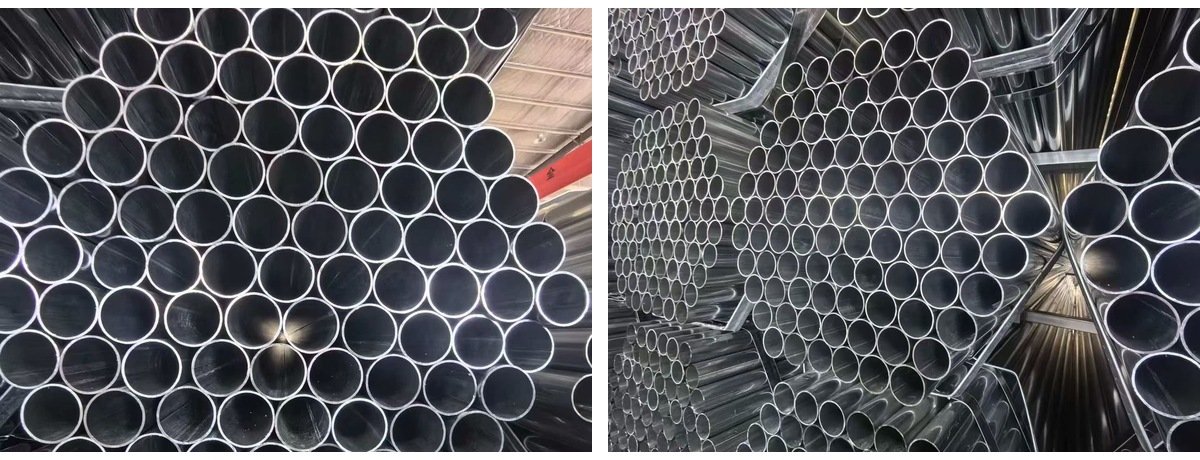
QIDAMT hot dip galvanized round steel tube combines a hollow circular steel section with a zinc coating applied after tube forming. Plain ends provide a practical starting point for cut-length components, railing assemblies, fence frames and general metal fabrication. The finished tube is immersed in a zinc bath, treating accessible internal and external surfaces after the black tube has been formed.
Product Advantages
- Post-forming zinc protection: galvanizing follows tube production, allowing the formed section and accessible weld area to receive the coating in the same immersion process.
- Plain-end versatility: the open circular section suits cutting, drilling and mechanically connected assemblies. Tube outside diameter and wall thickness can be specified independently to match the component drawing.
- Practical circular geometry: a round section fits common clamps, sleeves and curved fabrication layouts. Select the diameter for the mating component and the wall thickness for the design load.
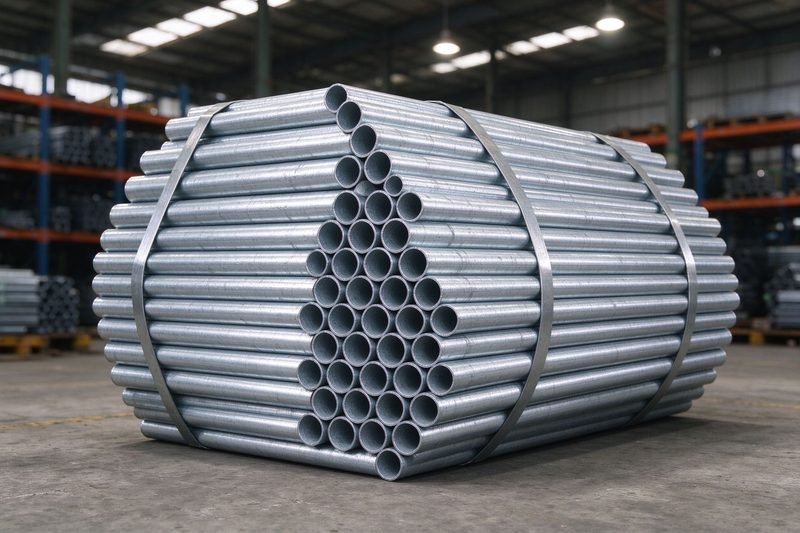
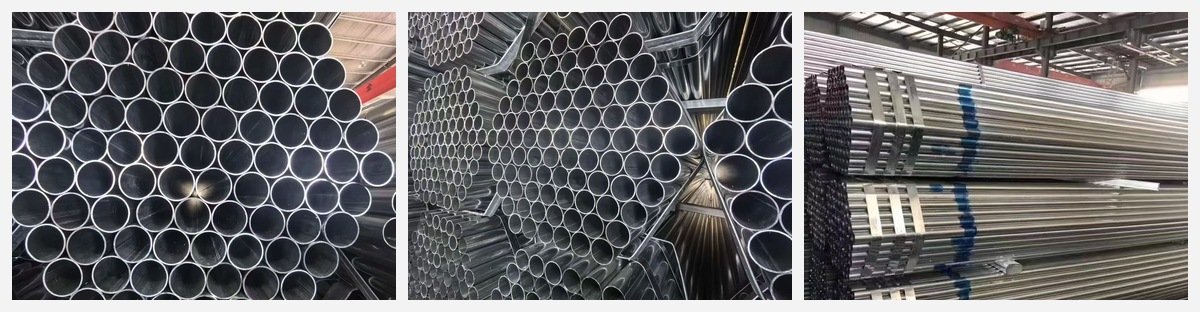
- Bundled handling: aligned lengths and strapped packs simplify counting, identification and unloading. Keep different grades and dimensions separated during storage.
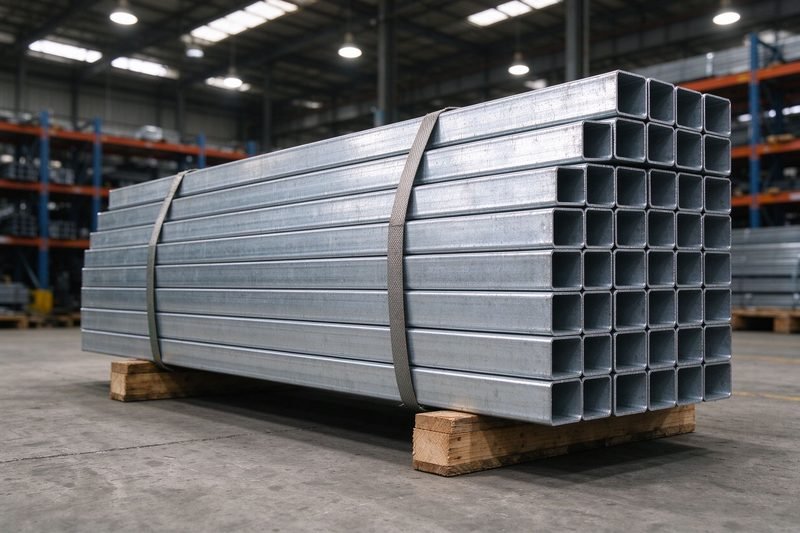
- Coordinated material selection: QIDAMT’s galvanized tube range supports projects that combine round sections with square and rectangular members, helping keep the material schedule consistent across an assembly.
Technical Specification Framework
The manufacturing route is black-tube forming followed by whole-tube hot-dip galvanizing. The tables below identify national-standard requirements for specification selection. They are not batch test results or a declaration that every grade and size is held in stock. The purchase specification must identify the base steel grade, finished-tube standard, diameter, matolu ni bai, length and coating requirement together.
| IYaya | Standard basis / requirement |
|---|---|
| Product form | Circular hollow steel tube; plain ends; hot-dip galvanized after forming |
| General batch hot-dip coating | GB/T 13912-2020; non-centrifuged steel articles, Table 3 |
| Round-tube dimensional system | GB/T 17395-2024 |
| Carbon structural steel grade basis | GB/T 700-2006; grade-specific requirements apply to the base material |
| Low-pressure fluid pipe specification option | GB/T 3091-2025; applicable only when specified for the order and all its product requirements are met |
| Usual length under GB/T 17395-2024 | 3,000–12,000 mm |
| Vakacavara / end configuration | Hot-dip galvanized surface; unthreaded plain ends |
Common National-Standard Round-Pipe Sizes
The following schedule reproduces Series 1 outside diameters and minimum nominal walls from GB/T 3091-2025, Table 1. It is a specification option for orders to that standard, rather than a stock list. DN is a nominal designation, not the measured inside diameter.
| DN | Veitaravi 1 outside diameter D (mm) | Minimum nominal wall t (mm) |
|---|---|---|
| 15 | 21.3 | 2.2 |
| 20 | 26.9 | 2.2 |
| 25 | 33.7 | 2.5 |
| 32 | 42.4 | 2.8 |
| 40 | 48.3 | 3.0 |
| 50 | 60.3 | 3.2 |
| 65 | 76.1 | 3.2 |
| 80 | 88.9 | 3.2 |
| 100 | 114.3 | 3.5 |
| 125 | 139.7 | 3.5 |
| 150 | 165.1 | 3.5 |
| 200 | 219.1 | 4.0 |
For the sizes above, GB/T 3091-2025 specifies outside-diameter tolerances of ±0.5 mm for D ≤ 48.3 mm and ±1% D for D ≥ 60.3 mm; wall tolerance is ±10% t. These dimensional requirements apply before galvanizing. Minimum nominal wall is a lower limit, not a complete wall-thickness schedule.
Base Steel Grades
Common carbon structural steel choices include Q195, Q215 and Q235. The following GB/T 700-2006 values apply to the base steel within the stated thickness band; finished-tube requirements remain those of the selected product standard. Grade suffixes identify additional quality requirements and must be retained in the material designation.
| Base grade | Base-steel thickness | Na kaukauwa ni solibula (MPa) | Fuerza de tensión (MPa) |
|---|---|---|---|
| Q195 | ≤16 mm | 195 (reference value) | 315–430 |
| Q215A / Q215B | ≤16 mm | ≥215 | 335–450 |
| Q235A / Q235B | ≤16 mm | ≥235 | 370–500 |
GB/T 700-2006 treats the Q195 yield value as a reference rather than a delivery acceptance requirement. A base-material grade alone does not establish a pipe pressure rating, structural capacity or finished-tube certification.
Hot-Dip Galvanized Coating Requirements
For non-centrifuged steel articles specified to GB/T 13912-2020, the minimum coating requirements depend on steel thickness. Local and mean values are separate standard acceptance criteria; neither column contains measured production data.
| Steel thickness t (mm) | Minimum local thickness (μm) | Minimum mean thickness (μm) | Minimum local coating mass (g/m2) | Minimum mean coating mass (g/m2) |
|---|---|---|---|---|
| t < 1.5 | 35 | 45 | 250 | 325 |
| 1.5 ≤ t ≤ 3 | 45 | 55 | 325 | 395 |
| 3 < t ≤ 6 | 55 | 70 | 395 | 505 |
| t > 6 | 70 | 85 | 505 | 610 |
These are the general requirements in Table 3. A specific finished-product standard may set its own coating requirements and takes precedence for that order. For pipe ordered to GB/T 3091-2025, its coating-mass requirement is at least 300 g/m² for the total zinc mass per unit area of the internal and external surfaces; the standard also provides a 500 g/m² option by agreement stated in the contract. Do not substitute the general article table for the product-specific acceptance method.
Dimension and Surface Inspection
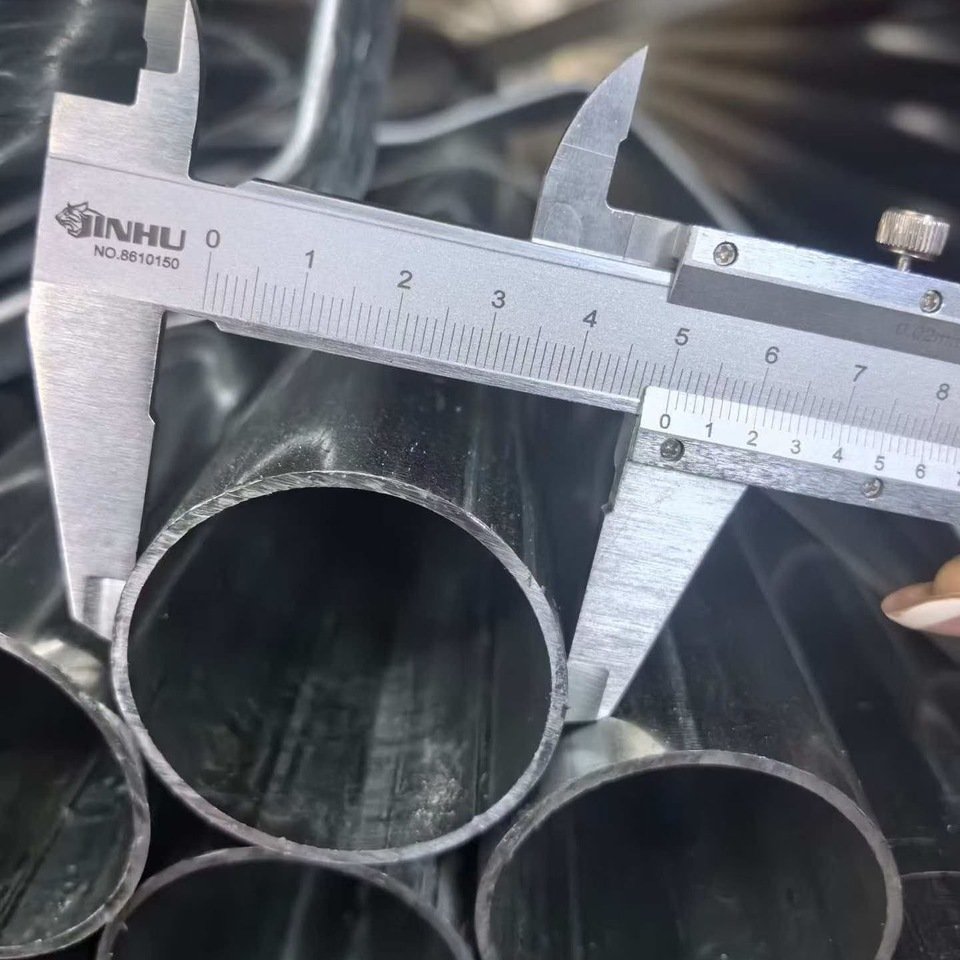
A complete inspection plan checks outside diameter, matolu ni bai, balavu, end condition, straightness and the specified coating criteria. Check the tube against its designated dimensional standard; a DN marking alone is insufficient for matching clamps or fittings.
Under GB/T 13912-2020, magnetic coating assessment uses at least five readings within each reference area of at least 10 cm². Their arithmetic mean determines local coating thickness. Measurements are excluded from cut faces and areas within 10 mm of edges. Coating appearance should be assessed together with the specified thickness and surface requirements, rather than judged solely by brightness or zinc-spangle pattern.
Applications and Fabrication Selection
- Railings and barriers: select outside diameter for the handrail, clamp or connector, then check member strength and connection details against the design.
- Fence and enclosure frames: use the circular section for posts and rails where the drawing calls for round tubing and a galvanized finish.
- Agricultural and light framing: match wall thickness, span and bracing to the calculated loading; tube size alone does not determine permissible span.
- General fabricated components: plain ends support length cutting and mechanical assembly. Cutting or welding after galvanizing requires a specified treatment for the affected coating.
Vakavodoki, Identification and Storage
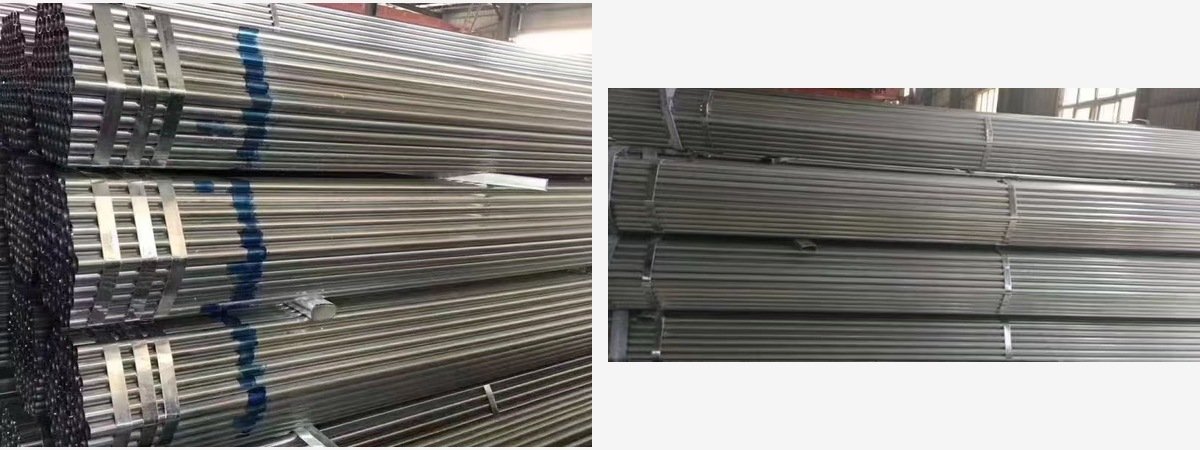
Organize packs by grade, outside diameter, wall thickness and length. Bundle identification should remain connected to the corresponding quality documentation through receipt and fabrication. Provide support along long packs and use lifting arrangements that avoid tube distortion and unnecessary zinc-surface damage.
Store galvanized tube above ground with drainage and ventilation between packs. Prevent trapped moisture, stagnant water and contact with corrosive materials. Bundle straps secure the pack for handling but do not replace suitable supports or load restraint during transport.
Technical Questions
Is this tube galvanized before or after forming?
It is hot-dip galvanized after the black tube has been formed. The whole tube receives the immersion treatment.
Does the coating have one universal minimum thickness?
Sega. GB/T 13912-2020 divides general steel articles into four thickness bands, while a specific tube standard can use its own coating-mass acceptance requirements. Specify the applicable standard in the order.
Can DN be used as the actual inside diameter?
Sega. Select mating parts using the specified outside diameter, wall thickness and connection details. DN identifies a nominal size.
Can the tube be used for pressure service?
Pressure service requires the applicable finished-pipe standard, kalasi ni iyaya, required inspections and project design. A galvanized surface and a listed diameter do not by themselves establish pressure suitability.
How should a round-tube specification be written?
State the finished-tube standard, full steel grade, outside diameter × nominal wall × length, plain-end condition, hot-dip coating requirement and required inspection documents. This gives purchasing, fabrication and incoming inspection a consistent material description.