 EDISTYMINEN
904L Stainless Steel Plate RFQ: Service Conditions and Inspection Checklist
A useful 904L stainless steel plate RFQ begins with the service conditions, not simply the thickness and price per tonne. Buyers often know the proposed grade but have not yet agreed the product standard, inspection scope or surface condition. Those missing details can produce quotations that look comparable while covering different materials or responsibilities. This guide explains what to prepare before requesting 904L plate for process equipment, replacement components or fabrication. It also separates material identification from engineering approval, so a purchasing decision does not unintentionally become an unverified material substitution.
Start with the process environment
Describe the liquid, gas or mixture that will contact the plate. Include operating temperature, concentration, possible contaminants and whether the equipment experiences cleaning cycles or shutdown conditions. A single phrase such as acid service is too broad to support a reliable selection. Conditions during cleaning may be more demanding than normal production, while deposits or stagnant pockets can create local conditions that differ from the bulk process fluid. Give the responsible engineer enough information to assess these differences before a material is ordered.
904L is an austenitic stainless steel commonly identified as UNS N08904 or EN 1.4539. Producer guidance describes its use in selected acidic and chloride-containing environments. That does not make the grade suitable for every acid concentration, temperature or equipment geometry. Where corrosion performance is critical, ask the designer to approve the grade against the actual duty. Purchasing teams should record that approval rather than treating a supplier quotation as a guarantee of service life.
Identify the material and product standard
State the complete material designation and the required plate specification, including the edition when the project requires one. ASTM A240/A240M is commonly referenced for stainless plate, sheet and strip, but the material ordered must satisfy the specific specification accepted by the project. A European material number alone does not define every delivery condition or test requirement. Similarly, a commercial description such as marine grade or acid resistant plate is not a substitute for a recognized material designation.
For pressure equipment, provide the design code and the material specification required by that code. Confirm any certificate, approval or additional testing requirements with the responsible engineer. Do not assume that a grade listed in a general product brochure automatically satisfies a particular vessel design or local regulatory requirement. If the supplier proposes an alternative standard, obtain written technical approval before accepting the change.
Specify dimensions and the finished component
Write thickness, width and length in a consistent unit system. Identify whether these are raw plate dimensions or finished component dimensions. A fabricator cutting several pieces from a parent plate may need machining allowance, edge trimming or extra material for forming. Ask the fabricator to confirm those allowances before the purchase order fixes the plate size. Otherwise, the lowest quoted sheet size may create additional fabrication cost or leave insufficient material for the drawing.
Include dimensional tolerances where they matter, especially flatness, thickness variation, squareness and cut length. Avoid a general instruction such as strict tolerance without a measurement method or acceptable limit. Where a standard tolerance is sufficient, identify the standard. Where a component requires tighter control, show the special requirement on a drawing and ask the supplier to confirm it explicitly. Separate mandatory requirements from preferences that may be adjusted during quotation.
Agree the surface and processing requirements
Specify the surface finish needed for the component rather than requesting only a smooth or bright plate. State whether the surface will remain exposed, receive polishing, be welded or contact process fluid. Identify both faces when their requirements differ. If surface roughness is important, provide the required value, measurement direction and acceptance method. Finish names alone may not capture the actual performance requirement.
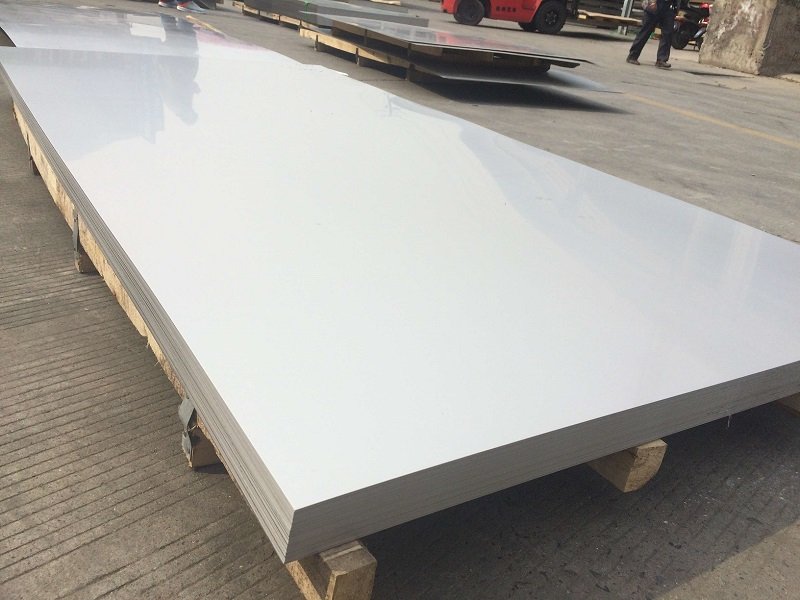
List any requested cutting, edge preparation or protective film separately. These are quotation items to confirm, not assumptions about standard supply. Provide a drawing revision for processed parts and identify the inspection stage: before cutting, after cutting or after additional fabrication. The photograph of stainless stock accompanying an enquiry can illustrate the required product form, but the material certificate and traceability establish the supplied grade.
Define inspection before the order is placed
Ask what documentation will accompany the plate. If an EN 10204 3.1 certificate or another certificate type is required, state that requirement in the RFQ and confirm availability before ordering. Check how the heat number will remain linked to the material after cutting or repacking. A certificate that cannot be matched to the delivered pieces is much less useful than a traceable inspection record.
Additional inspection may include positive material identification, dimensional checks or project-specific testing. Define the scope, acceptance criteria and reporting requirements rather than requesting a general quality check. Establish who will perform the inspection and whether witnessing is required. More testing can affect cost and delivery, so it should be included in the quotation comparison instead of being added after production or dispatch arrangements have been agreed.
Compare quotations on the same basis
Review grade, standardi, mitat, finish, quantity, documents, packing and delivery terms line by line. Record any exception beside the corresponding requirement. A lower price may reflect a different size, document scope, freight basis or processing allowance rather than a better offer for the same product. Ask for clarification when an item is omitted; silence should not be interpreted as acceptance of the buyer’s specification.
Before approval, circulate the final quotation to purchasing, engineering and the receiving team. Confirm what will be inspected on arrival and who can authorize a deviation. Keep the accepted drawing revision and specification with the order. This creates a practical reference if a later question concerns markings, appearance or dimensions.
Prepare a complete 904L plate enquiry
A concise enquiry should include the approved material designation, product standard, thickness by width by length, quantity, pintakäsittely, intended duty, required inspection documents and destination. Add drawings and special tolerances where applicable. Ask for separate confirmation of availability, minimum order, processing options and lead time.
Send your 904L plate requirements to QIDAMT at sales@qidamt.com or WhatsApp +86 139 6951 8618. For a broader purchasing framework, katso meidän mill test certificate guide. Material selection background is available in Outokumpu's 904L guidance; project acceptance should follow the agreed specification.