 ΠΡΟΟΔΟΣ
304 Stainless Steel Checker Plate: Πρότυπο, Thickness and Slip Resistance
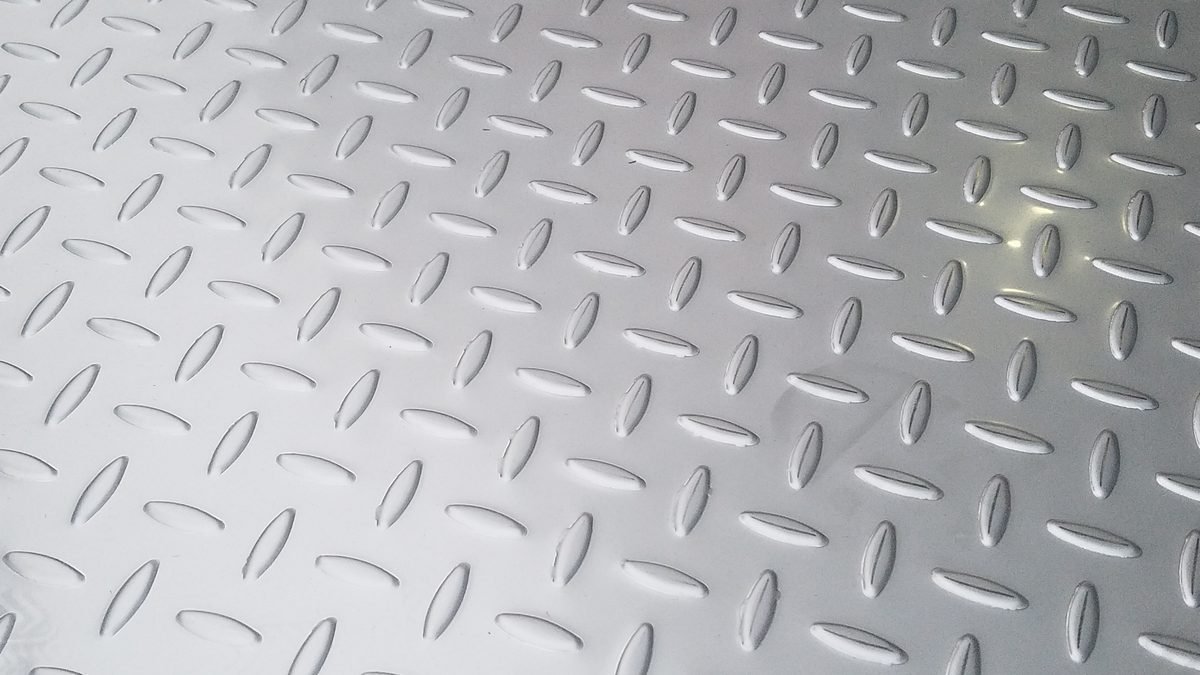
Stainless steel checker plate is a 304 sheet with a raised pattern rolled into one face. The pattern is usually a diamond or lentil shape, sometimes a five-bar tread, and its purpose is to provide slip resistance while keeping the corrosion resistance of the base alloy. Buyers often ask for “3 mm checker plate” without saying whether that is the base thickness or the overall height including the pattern. That single ambiguity causes more disputes than any other point in this product line. This guide explains what the pattern does, how the sheet is made, which thickness to specify, and how to avoid the common mistakes in flooring and platform work.
Τι 304 Checker Plate Is and Where It Is Used
Checker plate, also called tread plate, diamond plate or anti-slip plate, is produced by passing a stainless sheet between patterned rolls. The rolls press a raised profile into the surface without cutting it. The base sheet remains continuous, so the plate retains the corrosion resistance, cleanability and weldability of 304 ανοξείδωτο χάλυβα. The pattern raises the surface locally and creates edges that grip a boot sole.
The product is used for walkways, σκαλοπάτια, platform floors, κρεβάτια φορτηγών, προφυλακτήρες μηχανών, food-processing platforms, marine gangways, and drainage covers. In food and pharmaceutical plants the stainless grade is chosen for washdown and hygiene; in industrial plants it is chosen for corrosion resistance in wet or mildly acidic environments. In architectural work it appears as decorative cladding and elevator floors, where the pattern is visual rather than functional.
The pattern is not a coating and does not add a separate layer. It is displaced metal. That matters for two reasons: the plate cannot be thinned by wear without losing pattern depth, and the raised areas are cold-worked, so they are harder and less ductile than the base sheet.
Grade and Chemical Composition
The substrate is normally 304 (US S30400, ΣΕ 1.4301, 06Cr19Ni10). For coastal, pool or chloride-bearing service, 316L is used instead. The pattern rolling does not change the chemistry, so the grade is confirmed from the mill certificate of the base coil, not from a surface test of the finished plate.
| Στοιχείο | 304 (%) | 316μεγάλο (%) | Relevance to checker plate |
|---|---|---|---|
| Ανθρακας (ντο) | ≤ 0.08 | ≤ 0.03 | Weldability and intergranular corrosion |
| Πυρίτιο (Και) | ≤ 1.00 | ≤ 1.00 | Scale and pickling behaviour |
| Μαγγάνιο (Mn) | ≤ 2.00 | ≤ 2.00 | Δύναμη; not a corrosion element |
| Φώσφορος (Π) | ≤ 0.045 | ≤ 0.045 | Toughness at the pattern edges |
| Sulphur (μικρό) | ≤ 0.030 | ≤ 0.030 | Inclusions can start pitting in wet service |
| Χρώμιο (Cr) | 18.0–20.0 | 16.0–18.0 | Passive film; the reason the plate resist rust |
| Νικέλιο (Σε) | 8.0–10.5 | 10.0–14.0 | Austenite stability and formability |
| Μολυβδαίνιο (Μο) | — | 2.0–3.0 | Chloride pitting resistance |
| Σίδερο (Fe) | Ισορροπία | Ισορροπία | Matrix |
Typical ladle analysis to ASTM A240 / ΣΕ 10088-2. Check the heat number against the certificate.
Μηχανικές Ιδιότητες
The base sheet is supplied annealed, with the properties expected of 304. Pattern rolling cold-works the raised bars and the immediate subsurface, raising local hardness and reducing local elongation. Designers should use the annealed base properties for global bending and deflection, and treat the pattern as a surface feature that improves wear resistance but not section modulus in a meaningful way.
| Ιδιοκτησία | 304 βάση | 316L base | Σχόλιο |
|---|---|---|---|
| 0.2% proof stress | ≥ 205 MPa | ≥ 170 MPa | Use for floor plate bending checks |
| Αντοχή σε εφελκυσμό | ≥ 515 MPa | ≥ 485 MPa | Base metal, not the pattern crest |
| Επιμήκυνση (Α50) | ≥ 40% | ≥ 40% | Pattern crest may be 10–20% lower |
| Σκληρότητα (HBW) | ≤ 201 | ≤ 217 | Pattern crest can read 20–40 HB higher |
| Πυκνότητα | 7.93 g/cm³ | 7.93 g/cm³ | Mass calculation uses base thickness |
| Thermal expansion | 17–18 × 10⁻⁶ /Κ | 17–18 × 10⁻⁶ /Κ | Allow movement at floor joints |
Minimum annealed values. Do not use a pattern-crest hardness reading as a substitute for the grade certificate.
A checker plate floor is usually governed by stiffness, not strength. ΕΝΑ 3 mm plate spanning 600 mm deflects visibly under a person’s weight even though the stress is low. The pattern does not change the second moment of area appreciably, because the raised bars are shallow and local. If the floor feels springy, the answer is a thicker base or more supports, not a deeper pattern.
Dimensions and Tolerances
The key commercial point is the difference between base thickness and overall height. A “3 mm” checker plate normally means a 3.0 mm base sheet, with an overall height of roughly 3.5–4.0 mm depending on the pattern. Some suppliers quote the overall height as the nominal thickness, which means the base is thinner and the plate is weaker. The purchase order must state both.
| Πάχος βάσης (mm) | Approx. overall height (mm) | Typical width (mm) | Typical length (mm) | Usual application |
|---|---|---|---|---|
| 1.5 | 1.8–2.0 | 1000–1219 | 2000–2438 | Machine guards, linings |
| 2.0 | 2.3–2.6 | 1219–1500 | 2438–3048 | Light platforms, vehicle floors |
| 3.0 | 3.4–3.9 | 1219–1500 | 2438–3048 | Διαδρομές πεζών, σκαλοπάτια |
| 4.0 | 4.5–5.1 | 1219–1500 | 2438–3048 | Βαριές πλατφόρμες, κρεβάτια φορτηγών |
| 5.0 | 5.6–6.2 | 1219–1500 | 2438–3048 | Industrial floors, ράμπες |
| 6.0 | 6.6–7.3 | 1219–1500 | 2438–3048 | Heavy-duty decking |
Indicative values; pattern height varies by pattern type and roll wear. State base thickness and overall height separately on the order.
| Παράμετρος | Typical tolerance | Inspection method |
|---|---|---|
| Πάχος βάσης | ±0.10 mm (t ≤ 3); ±0.15 mm (t > 3) | Micrometer on a flat land, not on a crest |
| Overall height | +0.3/−0.1 mm | Dial gauge across the pattern |
| Πλάτος | +2/0 mm | Steel tape at three points |
| Μήκος | +5/0 mm | Steel tape |
| Ομαλότητα | ≤ 3 mm/m | Straightedge and feeler gauge |
| Diagonal difference | ≤ 2 mm on a 1500 × 3000 panel | Two diagonal measurements |
| Pattern pitch | ±1.0 mm | Template or caliper over ten pitches |
| Squareness of cut | ≤ 1.5° | Square and feeler gauge |
Tolerances are indicative for mill product. Cut-to-size panels need a separate agreed tolerance, συνήθως ±1 mm.
Πώς φτιάχνεται το Checker Plate
Base coil selection
Production starts with a 304 cold-rolled or hot-rolled coil of the required base thickness. The coil must have enough ductility to accept the pattern without cracking at the crest. A hard, heavily cold-worked substrate can tear at the pattern edges, especially on thick plate. Mills that produce good checker plate control the anneal and the surface before rolling.
Pattern rolling
The sheet passes through a two-high or four-high mill with engraved rolls. The rolls press the pattern into the top face; the bottom face remains flat unless a matching bottom pattern is specified. Roll pressure, speed and temperature determine pattern depth. Too little pressure gives a shallow pattern that wears away quickly; too much pressure can crack the sheet at the edges or distort the flatness.
Annealing and pickling
Μετά την κύλιση, the plate may be annealed and pickled to restore corrosion resistance and remove scale. Annealing also relieves the cold-work stress, but it can soften the pattern crest slightly. The balance between pattern hardness and corrosion resistance is a mill process decision; buyers should specify the final surface condition (μαρινάτος, bright annealed or as-rolled) rather than assume it.
Leveling and cutting
The plate is tension-leveled or stretched to correct flatness, στη συνέχεια κόψτε σε μήκος. Cut edges should be square and free of burrs. A shear cut leaves a slightly rounded edge on the pattern side; a plasma or laser cut leaves a cleaner edge but a heat-affected zone that must be removed before welding. For stair treads, the pattern orientation relative to the nosing is a fabrication detail that should be agreed before cutting.
Κανόνες Επιλογής
The following rules apply to flooring, platforms and stair treads. Decorative use has different priorities, mainly pattern visibility and flatness.
- Specify base thickness, not overall height. ΕΝΑ 3.5 mm overall plate may have a 3.0 mm base or a 2.8 mm base. The base carries the load.
- Check deflection before strength. Use the base thickness and the span between supports. ΕΝΑ 3 mm plate at 600 mm span is comfortable for foot traffic; στο 900 mm it is not.
- Choose the pattern for the sole, not the photograph. Diamond and lentil patterns drain water well; five-bar patterns give a more directional grip. For ramps, orient the pattern across the slope.
- Use 316L for wet chloride service. Coastal walkways, pool surrounds and marine gangways should not use 304, because the pattern edges are crevices that collect salt.
- Think about cleaning. In food plants, a pattern that traps product is a hygiene problem. A shallow lentil pattern with radiused edges is easier to wash than a sharp diamond.
- Match the edge detail. A checker plate floor needs a solid edge angle or a folded nosing. The pattern itself is not a finished edge and will cut hands if left exposed.
Fabrication and Installation Rules
Checker plate is fabricated like any 304 σεντόνι, with two extra considerations: the pattern makes a seal weld difficult, and the cold-worked crest is less forgiving of bending.
- Weld on the flat face where possible. A weld on the pattern side will not sit flush and will leave a crevice that collects water. If a pattern-side weld is unavoidable, grind the pattern back locally and restore the finish.
- Use a backing gas for full penetration welds. 304 needs purging on the root to prevent oxidation and lost corrosion resistance. This matters more on a floor that will be washed.
- Do not bend a thick checker plate over a tight radius. The pattern crest can crack on the outside of the bend. For stair nosings, use a folded edge detail or a machined nosing bar.
- Provide a drainage slope and weep holes. Water trapped under a platform is the main cause of crevice corrosion at the supports, even on 304.
- Allow thermal movement. ΕΝΑ 3 m stainless floor expands about 1 mm over a 20 °C change. Restrain it at one edge and let the other edge slide.
- Protect the surface during construction. Mortar, plaster and carbon steel grinding dust are the enemies of a stainless floor. Cover it until handover and clean with a neutral cleaner.
Common Misconceptions
“The pattern thickness is the plate thickness”
The pattern is displaced metal, not added metal. ΕΝΑ 3 βάση mm με α 0.8 mm pattern has an overall height of about 3.8 mm, but the load-carrying section is still 3 mm. Quoting overall height as thickness is a common way to sell a lighter plate at a heavier price.
“Checker plate is stronger because of the pattern”
The pattern adds surface hardness and wear resistance, but its contribution to bending stiffness is small. A patterned 2 mm sheet is not equivalent to a flat 3 mm sheet. For floors, calculate with the base thickness and the actual span.
“All checker patterns are the same”
Διαμάντι, φακή, five-bar and tear-drop patterns have different pitch, height and drainage behaviour. A five-bar tread is directional and suits ramps; a diamond pattern drains in two directions. The pattern also affects cleanability and the appearance of the finished floor.
“Stainless steel cannot be slippery”
A polished stainless floor is extremely slippery when wet. The pattern is what provides grip. A worn pattern, or a floor installed with the pattern face down, loses that grip entirely. Specify the pattern face up and check it at handover.
“304 is sufficient for any wet area”
304 is adequate for potable water and mild detergents. It is not adequate for seawater, pool water with high chloride, or bleach-heavy washdown. In those environments the pattern edges pit first, because they are crevices with a depleted passive film.
Inspection and Receiving Checks
Measure the base thickness with a micrometer on a flat land between pattern bars, and measure the overall height with a dial gauge. Check the pattern pitch over ten repeats, and look for rolled-in scale, cracks at the crest, and any area where the pattern is shallow or missing. Confirm flatness with a straightedge, and check the diagonal difference on cut panels. Verify the grade from the mill certificate and, for critical work, a PMI test. Check that the pattern face is the face specified; a plate supplied pattern-down is difficult to correct without re-rolling.
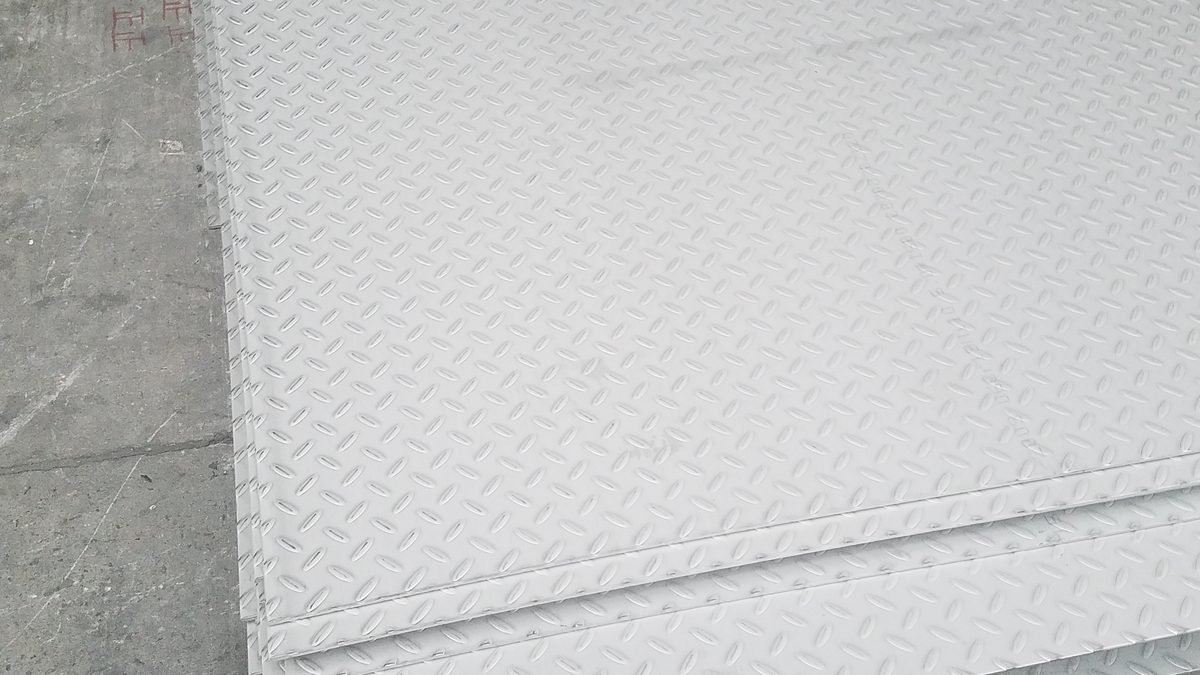
Store the plate flat on timber, pattern face up, with the edges supported. Do not stack heavy sections on top, and do not drag panels across each other; the pattern of one sheet will scratch the flat face of the next.
FAQ
Είναι 3 mm checker plate 3 mm overall or 3 mm base?
It should mean 3 mm base. Always state both base thickness and overall height in the purchase order, and specify that the base thickness is the load-carrying dimension.
Can checker plate be used for stair treads?
Ναί, και είναι κοινό. Use a base thickness that suits the tread span, specify the pattern orientation, and provide a folded or machined nosing so the exposed edge is not a sharp pattern.
Does the pattern affect weldability?
The pattern makes a flush weld difficult on the patterned face. Weld on the flat face where possible, purge the root, and grind back the pattern locally if a pattern-side weld is required.
What is the maximum panel size?
Width is typically limited to 1219–1500 mm by the rolling mill; length is limited by handling, commonly 3048 mm. Longer runs are fabricated from several panels with designed joints.
Can I get a mirror-polished checker plate?
It is possible to polish the pattern face, but the crests and valleys polish differently and the result is usually a satin finish. Mirror polishing is normally reserved for flat sheet.
How do I remove rust spots from a stainless checker plate floor?
Treat them as contamination first: clean with a neutral detergent, then a dilute citric or oxalic acid gel if the spot is free iron. Do not use hydrochloric acid or chloride bleach, which will make the pitting worse.
Ανάγκη 304 or 316L checker plate cut to size?
Send base thickness, overall height, pattern type, panel sizes and the service environment to sales@qidamt.com. Συγγενεύων: 316Πλάκα L από ανοξείδωτο χάλυβα for coastal or washdown duty, ή request a quotation.
Προμήθειες QIDAMT 304 and 316L sheet, checker plate and cut-to-size panels from Liaocheng. Send the span and the load with the enquiry; the base thickness follows from deflection, not from the pattern depth.