 تقدم
Copper Pancake Coil C12200: سمك الحائط, Bending and Brazing Guide
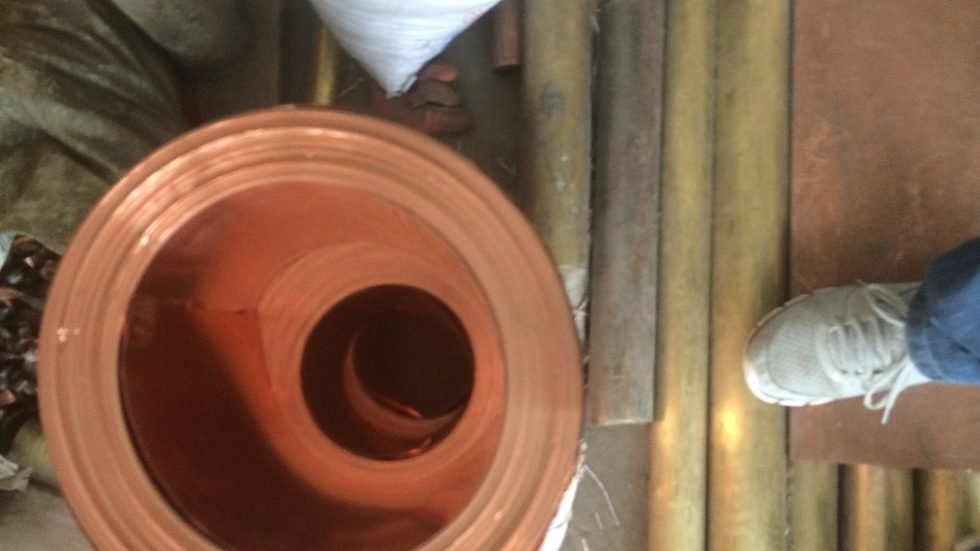
A copper pancake coil is a soft temper copper tube wound into a flat spiral and supplied in a box or a shrink-wrapped roll. It is the standard delivery form for refrigeration and air conditioning work because it allows long continuous runs with few joints, and joints are where refrigeration systems leak. The material is almost always C12200, the phosphorous-deoxidised high-copper alloy known as DHP copper, and the performance of the coil depends on three things that are easy to specify and easy to get wrong: the wall thickness, the temper, and the cleanliness of the inside surface. This guide covers the chemistry, the mechanical and thermal properties, the coil formats, the pressure ratings that follow from wall thickness, the bending and brazing practice, and the installation rules that keep a soft coil from becoming a kinked, contaminated or leaking line.
What C12200 Copper Is
C12200 is designated as 99.9 percent minimum copper with phosphorus added for deoxidation. The phosphorus range is typically 0.015 ل 0.040 percent. That small addition does two things: it removes residual oxygen so the tube does not suffer hydrogen embrittlement when brazed or annealed in a reducing atmosphere, and it improves fluidity during casting. The trade names are DHP (deoxidised high phosphorus) و, in plumbing grades, Type L and Type K copper.
The conductivity of C12200 is lower than that of oxygen-free copper because phosphorus scatters electrons. Typical thermal conductivity is around 355 W/m·K at room temperature, and electrical conductivity is about 85 percent of the International Annealed Copper Standard. For heat exchangers and refrigerant lines that is entirely adequate. Where the highest conductivity is required, such as busbar or high-frequency conductors, C11000 ETP copper is used instead, at the cost of hydrogen embrittlement sensitivity during brazing.
| ملكية | C12200 (دي إتش بي) | C11000 (إي تي بي) |
|---|---|---|
| نحاس, دقيقة % | 99.9 | 99.90 |
| الفوسفور % | 0.015–0.040 | — |
| Oxygen % | — | 0.02–0.05 |
| الموصلية الحرارية, ث / م · ك | ≈355 | ≈390 |
| الموصلية الكهربائية, % IACS | ≈85 | ≈101 |
| Brazing behaviour | Stable, no embrittlement | Hydrogen embrittlement risk |
For HVAC and refrigeration the choice is settled: C12200. It brazes safely, it tolerates the annealing cycles used to soften coils, and the small conductivity penalty is irrelevant at the temperatures and fluxes involved.
حِدّة, Grain and Bendability
Pancake coil is supplied in the annealed, soft temper, designated O50 or O60 depending on the standard, with tensile strength around 205 ل 250 الآلام والكروب الذهنية, yield around 60 ل 90 MPa and elongation above 40 percent. That low yield is deliberate: it lets the installer bend the tube by hand or with a simple lever bender without cracking, and it lets the coil be re-coiled after a length has been cut off.
The annealed grain size matters more than the tensile value. A coarse grain structure bends easily but has lower resistance to fatigue and to erosion-corrosion at brazed joints; a fine grain bends with more springback. Reputable mills control grain size to a specified range and state it on the certificate. A coil that cracks on a bend that worked on the previous delivery usually indicates a grain size or a temper problem rather than an installation error.
Hard temper tube, supplied straight in lengths, has yield around 250 MPa or more and will not bend without annealing. Soft coil and hard straight length are not interchangeable. If a run needs many bends, the soft coil wins; if the run is straight and long, the hard length is cheaper per metre and easier to support.
Dimensions and Coil Formats
Pancake coils are specified by outside diameter, wall thickness and coil weight. The common imperial sizes are 1/4, 3/8, 1/2, 5/8, 3/4 و 7/8 inch, with metric equivalents of 6, 9.52, 12.7, 15.88, 19.05 و 22.22 مم. Wall thickness is stated in millimetres or as a gauge: 0.6, 0.7, 0.8, 0.9, 1.0 و 1.2 mm are the usual HVAC values.
Coil weight drives handling and waste. Small coils of 10 ل 15 kg suit service work and small splits; 25 kg coils suit residential installations; 50 kg coils suit commercial runs. A coil that is too heavy for the site is a handling hazard and often ends up partly wasted; a coil that is too light creates many joints, and every joint is a potential leak.
| مقاس, inch / مم | حائط, مم | Typical coil weight, كجم | Typical duty |
|---|---|---|---|
| 1/4 في / 6.35 مم | 0.6–0.8 | 10–25 | Capillary, small splits, instruments |
| 3/8 في / 9.52 مم | 0.7–0.9 | 15–25 | Liquid lines, small AC units |
| 1/2 في / 12.7 مم | 0.8–1.0 | 25–50 | Split AC, refrigeration suction |
| 5/8 في / 15.88 مم | 0.9–1.1 | 25–50 | Commercial suction lines |
| 3/4 في / 19.05 مم | 1.0–1.2 | 50 | VRF, chiller lines |
| 7/8 في / 22.22 مم | 1.1–1.3 | 50 | Large suction, risers |
Tolerance on outside diameter is typically ±0.05 mm to ±0.08 mm, and wall thickness tolerance is around ±0.05 mm or ±5 percent, whichever is greater. For a flared or pressed fitting, the outside diameter tolerance is the critical one; for pressure duty, the wall tolerance is. Both should appear on the certificate, together with the temper and the grain size.
Pressure Rating and Wall Selection
Refrigerant systems are pressure systems, and R410A raised the working pressure substantially compared with R22. A typical R410A system runs a high-side pressure around 2.8 ل 4.0 MPa at normal condensing conditions, with design pressures stated higher, and the piping must be rated with a safety margin.
The burst pressure of a soft copper tube can be estimated from the thin-wall formula: P equals 2 × S × t divided by D, where S is the tensile strength, t is wall thickness and D is outside diameter. Using a conservative tensile value for annealed C12200 of about 205 الآلام والكروب الذهنية, أ 12.7 mm tube with a 0.8 mm wall gives a calculated burst pressure near 25 MPa before any safety factor. Applying a factor of four gives an allowable working pressure around 6 الآلام والكروب الذهنية, which is adequate for R410A service. أ 0.6 mm wall in the same diameter gives roughly 19 MPa burst and about 4.8 MPa allowable, which is marginal once you account for brazing, bending and vibration.
The practical rule is not to use the thinnest wall that passes the arithmetic. Thin walls kink more easily, tolerate less vibration fatigue at the brazed joint, and are less forgiving of a poor flare. For R410A and R32 systems, most suppliers recommend a minimum of 0.8 mm for 1/2 inch and smaller, و 1.0 mm for larger sizes. For R22 and low-pressure systems, 0.7 مم شائع.
Standards worth naming in the purchase order are ASTM B280 for air conditioning and refrigeration copper tube, ASTM B88 for plumbing water tube, و إن 12735 for the European equivalent. Each standard sets the chemistry, the temper, the dimensions, the test pressure and the cleanliness requirements, and a certificate that cites the standard is more useful than a certificate that only states “copper tube”.
Cleanliness: The Requirement Nobody Checks
Refrigeration tube is supplied cleaned and capped, with a specified maximum residue and a nitrogen fill in some grades. The inside surface must be free of drawing lubricant, oxide and particles, because a refrigeration system with a capillary expansion device can be blocked by a particle smaller than the eye can see, and oil residue will carbonise during brazing and form a scale that migrates through the circuit.
Two habits protect the coil. أولاً, keep the caps on until the moment of connection; a coil left open in a workshop draws in moisture and dust. Second, if the system will not be completed the same day, purge with dry nitrogen and cap the ends rather than leaving them open. Moisture in a refrigeration circuit forms acids with the lubricant and eventually damages the compressor.
Bending and Paying Out the Coil
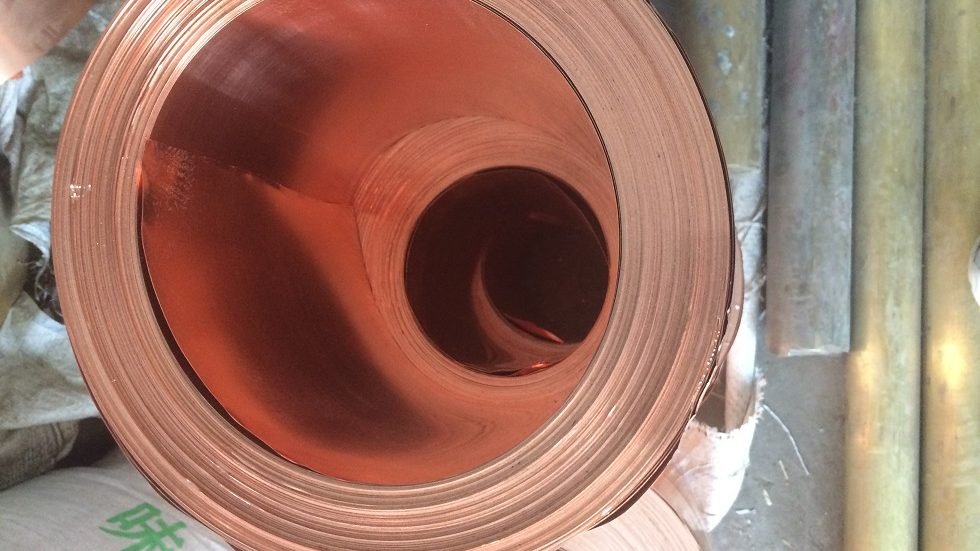
Pay the coil out from the outside in, on a turntable or a coil stand, with the tube kept straight as it leaves the coil. Pulling from the inside or lifting the coil off the ground while pulling creates a spiral twist that turns into a kink. One person should feed and one should guide on long runs; a single installer trying to do both is the usual cause of a kinked 50 kg coil.
For bends, use a lever bender or a spring bender matched to the tube diameter. The minimum bend radius for soft copper is commonly quoted as 3 ل 5 times the outside diameter depending on wall thickness; below that the tube ovalises and the pressure drop rises. Do not bend a tube that has already been work hardened by handling; anneal the bend zone with a soft flame to a dull red and let it air cool, then bend. Quenching after annealing makes the copper soft but leaves the surface wet, which matters if the line is about to be brazed.
Where a bend is made close to a brazed joint, keep at least two tube diameters between the bend and the joint. Bending after brazing stresses the joint and can open a capillary gap that was originally sound, and the leak will appear weeks later.
Brazing and Jointing
Brazing is the standard jointing method for refrigeration copper. Use a silver-based filler such as BAg-15 or BAg-5 with a flux suitable for copper, or a self-fluxing alloy for accessible joints. The critical procedure point is the nitrogen purge: pass dry nitrogen through the line at a low flow during brazing so the inside of the tube does not oxidise. Without purge, black copper oxide scale forms inside the joint and later migrates to the expansion valve, the filter drier or the compressor. This is the single most common cause of premature refrigeration failure, and it is invisible from outside.
Heat the joint evenly, bring the filler to the joint by capillary action rather than by melting it onto the surface, and let the joint cool without quenching. Do not disturb the joint while the filler is solidifying. After brazing, pressure test with dry nitrogen at the specified test pressure, then evacuate to the required micron level before charging. A joint that passes a pressure test can still leak under thermal cycling if it was overheated and the filler lost its alloying elements.
Flare joints are acceptable where the system may need to be opened for service, and they require a proper flaring tool, a clean cut and a torque wrench. Over-tightened flares crack the cone; under-tightened flares leak. Press fittings are increasingly used for water and some refrigerant lines, but they must be rated by the manufacturer for the refrigerant and the pressure, and the tube must be the correct temper and wall for the fitting system.
Installation, Support and Insulation
Support the line at intervals that prevent sag and vibration: typically every 1.5 ل 2 m for small diameters, and closer where the line crosses a span or is exposed to vibration. Supports must not clamp the tube hard enough to flatten it; use a saddle or a split clamp with a resilient insert. On long horizontal runs, allow for expansion and contraction by leaving one end free rather than anchoring both.
Insulate the suction line with closed-cell elastomeric insulation of the correct thickness for the pipe diameter and the ambient conditions. The insulation must be continuous, with no gaps at fittings, because a gap becomes a condensation point and eventually ice. The liquid line normally does not need insulation unless it runs through a hot space or is exposed to solar gain, where insulating it improves subcooling.
Keep copper away from dissimilar metals in wet locations. Copper in contact with galvanised steel or aluminium in the presence of moisture forms a galvanic couple, and the copper usually survives while the other metal corrodes. Isolate the contact with a suitable tape or a plastic saddle.
Common Mistakes
Choosing wall thickness by price rather than by working pressure. Pulling the coil off the ground and kinking the inner windings. Leaving the factory caps off overnight. Brazing without a nitrogen purge. Overheating a joint until the filler loses its silver content. Bending a joint after it has been brazed. Using a hard temper straight length where a soft coil was intended and then wondering why the bend cracked. Insulating the suction line with gaps at the fittings. Pressure testing with oxygen, which is dangerous and prohibited. Charging the system without evacuation to the specified level.
الأسئلة المتداولة
Is C12200 the same as Type L copper? Type L is a plumbing designation based on wall thickness, and it is normally made from C12200. The alloy and the type are different concepts: the alloy defines the chemistry, the type defines the wall.
Can I bend a pancake coil without annealing? نعم, within the recommended radius. For tight radii or for a tube that has work hardened, anneal the bend zone first. Never bend a brazed joint.
Why must nitrogen purge be used during brazing? It prevents internal oxidation. Without it, black oxide scale forms inside the tube and travels to valves, driers and the compressor, causing blockages and wear that are expensive to fix.
What wall thickness for R410A? A minimum of 0.8 mm for 1/2 inch and smaller, و 1.0 mm for larger diameters, is the practical rule. Always check the system design pressure and the local code.
How should a coil be stored? Indoors, dry, on its side or in its original box, with the caps on, away from heavy items that could deform the spiral. Do not stack coils on top of each other without a pallet between them.
Purchase checklist: alloy C12200, standard ASTM B280 or EN 12735, temper O50/O60, outside diameter and wall with tolerance, وزن الملف, grain size, cleanliness and cap type, certificate with heat number. State the refrigerant and the design pressure so the wall can be checked against the duty.
A pancake coil is the cheapest part of a refrigeration system per metre and the most expensive part when it fails, because the failure is usually a leak behind insulation or a blocked expansion valve. Specify the wall, keep the coil capped, pay it out properly, purge while brazing and evacuate before charging. Those five habits cover almost every failure mode described above.
Related material: أنبوب النحاس C12200, لفائف النحاس C11000, و لوحة النحاس C11000 for busbar and conductor work.

